How to Communicate Effectively with Customers
Learn the key principles of clear, consistent and trustworthy customer communication and how CRM can help teams maintain better customer context.
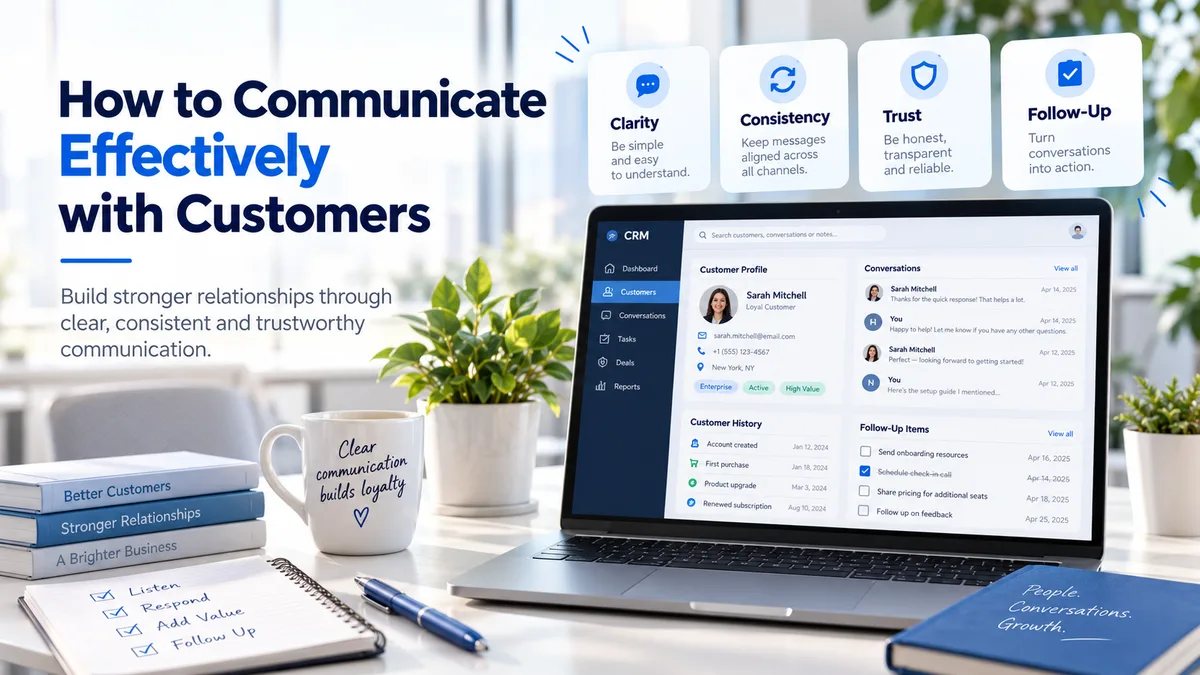
Effective customer communication is about more than answering questions or making sales. It also involves understanding customer needs, providing accurate information at the right time and maintaining context across interactions.
Every customer interaction, from the first sales conversation to post-sales support, can influence the overall customer experience.
What Is Effective Customer Communication?
Effective customer communication means understanding what the customer needs and responding with clear, consistent and relevant information.
Communication quality also depends on response time, accuracy, follow-up, access to previous interactions and whether commitments are kept.
1. Listen Before Responding
Effective communication starts with understanding what the customer is actually saying.
Responding too quickly without understanding the request can create unnecessary conversations or incorrect guidance.
2. Use Clear and Understandable Language
Excessive technical terminology or complex explanations can make customer communication harder to understand.
Product, service and process information should be communicated as clearly as possible.
3. Provide Consistent Information
Customers should not receive conflicting information from different teams.
Pricing, product details, delivery expectations, support processes and next actions should be communicated consistently.
4. Understand Customer History
Customers may become frustrated when they have to repeat the same information during every interaction.
Maintaining previous conversations and requests in CRM can provide useful context for both sales and customer service teams.
Read 7 Benefits of Centralizing Customer Data .
5. Follow Up at the Right Time
Fast initial responses are useful, but effective communication also requires timely follow-up.
Proposal follow-ups, support updates, meetings and future calls can be planned as tasks or activities.
Explore Task Tracking .
6. Manage Customer Expectations Realistically
Effective communication does not always mean being able to provide the result a customer wants.
When something cannot be done, explaining the current situation and available options clearly is better than making unrealistic commitments.
Read What Do Customers Expect? .
7. Make Communication Relevant to the Customer
The same communication style may not be appropriate for every customer.
Industry, customer history, products used and previous requests can all provide important context.
8. Be Clear in Written Communication
Email and messaging can be easier to misunderstand than face-to-face communication.
Written messages should clearly state:
- The subject
- The relevant information
- The expected action
- Any required date or timeline
- The next step
9. Record Customer Requests
Information from phone calls or conversations should not remain only in an employee's memory.
Recording requests, notes and next actions helps maintain continuity.
10. Maintain Context Across Channels
A customer may begin a conversation by email and later continue by phone.
If previous interactions are unavailable when the channel changes, the customer may need to repeat the entire story.
Read Why Is Centralized Communication Important in Customer Service? .
11. Avoid Becoming Defensive During Complaints
Responding defensively can make a difficult conversation even harder.
First understand the issue, review the available information and explain how the request will be handled.
Explore Customer Complaint Management .
12. Track Commitments
Statements such as "we will call tomorrow" or "we will send the proposal" create an expectation.
Recording commitments as tasks or follow-up activities can help teams keep those promises.
Customer Communication and Customer Satisfaction
Communication can have a significant impact on overall customer satisfaction.
Even when an issue is eventually resolved, poor communication during the process may negatively affect the customer's experience.
Read What Is Customer Satisfaction? .
Effective Communication During the Sales Process
Sales communication involves more than explaining products and services.
Understanding needs, asking the right questions, defining next steps and preserving meeting notes are also important.
Explore Sales Management .
Why Should Communication Continue After the Sale?
Customer communication does not end when the sale is completed.
Support, product use, renewals, complaints and additional requirements all remain part of the customer relationship.
Read How to Manage Post-Sales Support and Customer Relationships .
How Can CRM Support Customer Communication?
One of CRM's main contributions is reducing dependence on personal memory and disconnected notes.
CRM can keep information such as:
- Customer details
- Interaction history
- Notes
- Activities
- Tasks
- Sales opportunities
- Complaints and requests
within the same customer context.
This can help different teams communicate with customers more consistently.
How Can Customer Communication Be Evaluated?
Communication quality cannot always be measured with a single metric, but several indicators can provide useful context.
- Response time
- Resolution time
- Recurring requests
- Complaint categories
- Missed follow-up tasks
- Customer feedback
Learn more in Why CRM Reporting Matters .
Make Customer Communication Systematic
Effective customer communication should not depend only on individual communication skills.
Maintaining customer history, defining responsibility, planning follow-up and enabling teams to work from shared information can create a more consistent customer experience.
Explore Customer Service and Customer Management for the broader solution context.
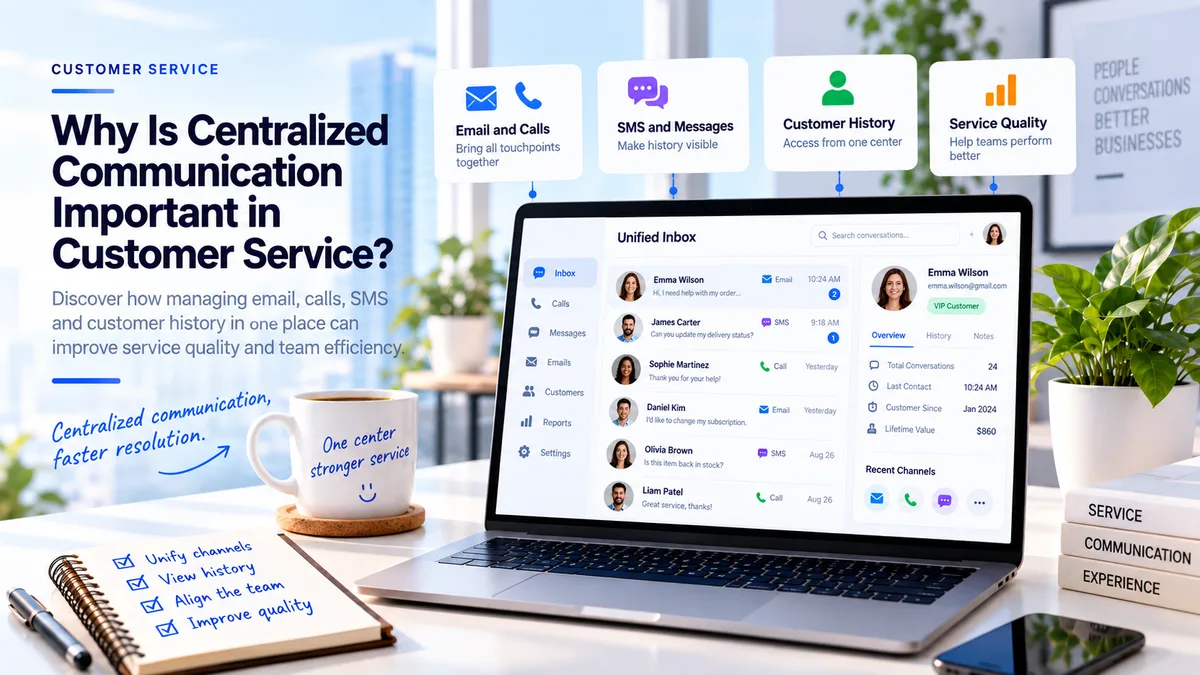
Why Is Centralized Communication Important in Customer Service?
Learn how managing email, calls, SMS and customer history from one place can improve service quality and team productivity.
Read More
Why the Human Touch Matters in Digital Customer Experience
Discover why human interaction, trust and personalized communication remain important in customer experience in the age of digitalization and AI.
Read More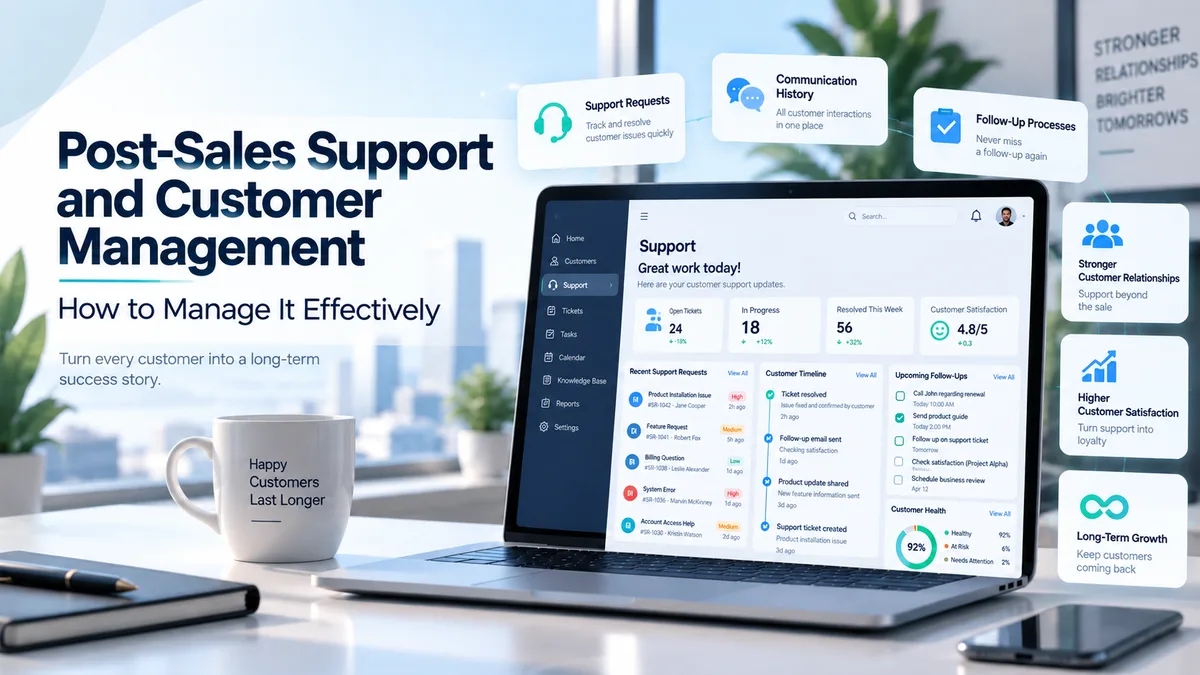
How to Manage Post-Sales Support and Customer Relationships
Learn how CRM can help businesses manage post-sales requests, communication history, follow-up tasks and customer service processes more consistently.
Read More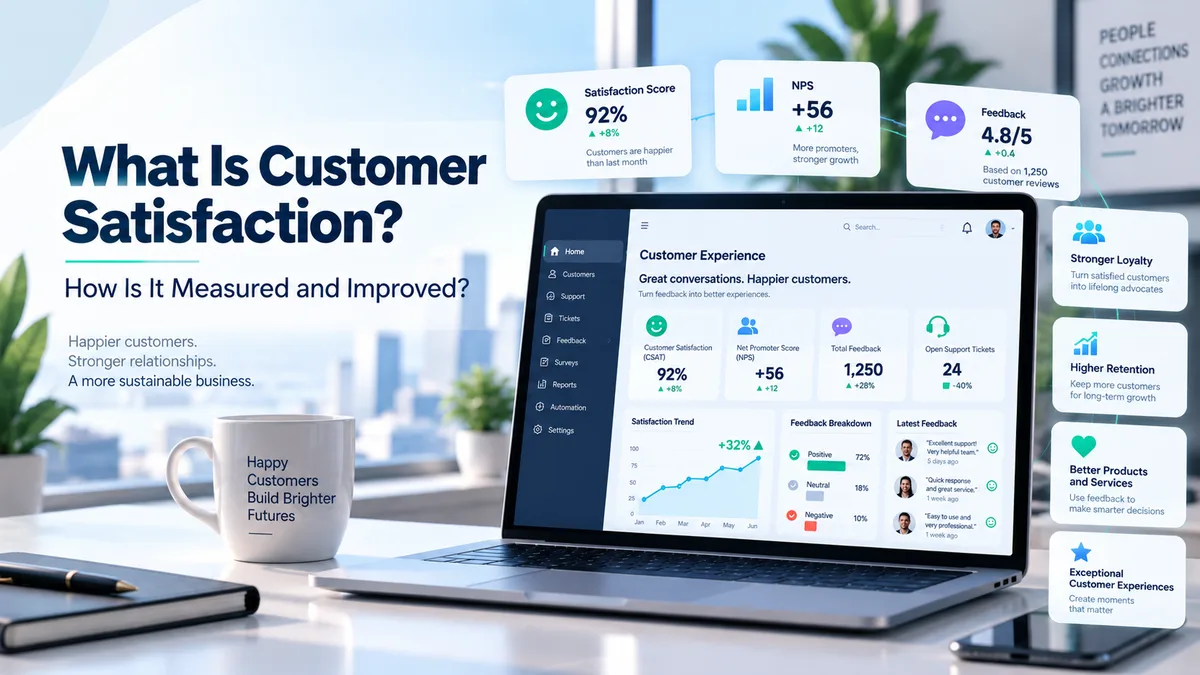
What Is Customer Satisfaction? How Is It Measured and Improved?
Learn what customer satisfaction means, which factors influence it, how it can be measured and how CRM processes can support more consistent customer experiences.
Read More
What Do Customers Expect? Key Expectations Businesses Should Manage
Explore common customer expectations such as speed, clear communication, convenience, personalization and trust, and how CRM can help teams manage them more consistently.
Read More
How Is AI Changing CRM?
Explore how AI is transforming CRM by interpreting customer data, guiding sales teams, strengthening automation and helping businesses make faster decisions.
Read More