What Is Customer Satisfaction? How Is It Measured and Improved?
Learn what customer satisfaction means, which factors influence it, how it can be measured and how CRM processes can support more consistent customer experiences.
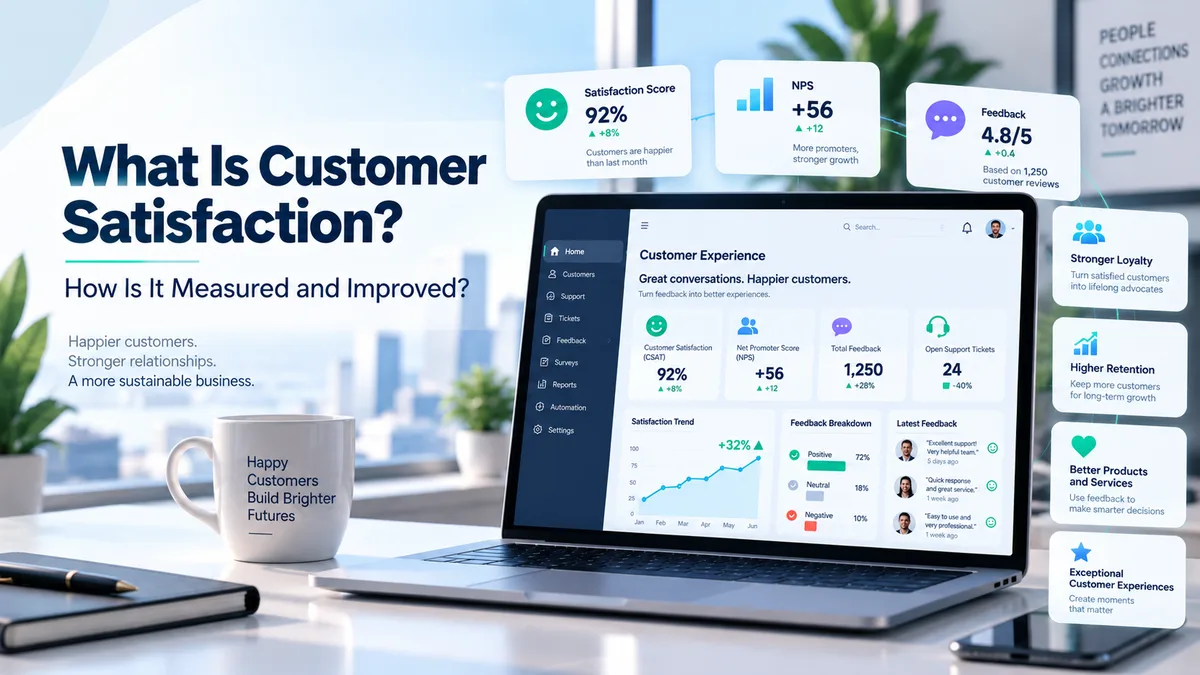
Customer satisfaction describes how well a product, service or overall customer experience meets a customer's expectations.
Satisfaction is influenced by more than product quality. Sales, communication, delivery, support, problem resolution and post-sale service can all shape how customers evaluate a business.
What Is Customer Satisfaction?
Customer satisfaction is the result of the relationship between customer expectations and the experience they actually receive.
When the experience meets expectations, satisfaction may increase. When it falls below expectations, dissatisfaction may occur.
Why Is Customer Satisfaction Important?
Customer satisfaction is important for maintaining sustainable customer relationships.
Consistent positive experiences may help businesses:
- Support customer loyalty
- Encourage repeat purchases
- Reduce recurring complaints
- Generate referrals
- Understand why customers leave
What Influences Customer Satisfaction?
Product or Service Quality
Customers expect the product or service they purchase to address the need that was promised.
Communication Quality
Clear, consistent and timely communication can help create trust throughout the customer relationship.
Response and Resolution Time
How quickly customer requests are addressed can influence satisfaction, but providing the correct solution is just as important as responding quickly.
Post-Sale Service
The customer relationship does not end when a sale is completed. Support, training and problem-resolution processes remain part of the overall customer experience.
What Is the Difference Between Customer Satisfaction and Customer Experience?
Customer experience describes the complete set of interactions a customer has with a business.
Customer satisfaction focuses on how well that experience meets customer expectations.
Customer experience is therefore the broader concept, while satisfaction can be considered one outcome of that experience.
How Can Customer Satisfaction Be Measured?
There is no single measurement method that fits every organization. Businesses can use different approaches depending on their customer processes.
Customer Satisfaction Surveys
Businesses can request direct feedback after a purchase, service request or support interaction.
Complaint and Request Data
Complaint topics, recurring issues and resolution times can provide useful signals about customer experience.
Explore Customer Complaint Management for the broader process.
Customer Retention and Repeat Purchases
Repeat purchases and customer loss can provide additional context, though these indicators should not be treated as direct measures of satisfaction on their own.
How Can Customer Satisfaction Be Improved?
1. Understand Customer History
When teams can see previous interactions, requests and purchase history, customers do not need to repeat the same information during every conversation.
Read 7 Benefits of Centralizing Customer Data for more information.
2. Record Customer Requests
Requests received by phone, email or other communication channels should be recorded so they are less likely to be forgotten or lost between teams.
3. Define Responsibility Clearly
When every request has a clear owner, the follow-up process can be managed more consistently.
4. Keep Customers Informed
Even when an issue cannot be resolved immediately, customers benefit from knowing that the request has been received and what stage the process is in.
5. Analyze Recurring Problems
Repeated complaints may point to a wider product, service or process issue rather than isolated customer cases.
How Can CRM Support Customer Satisfaction?
CRM systems help businesses maintain customer information, interaction history and activities within a shared structure.
CRM can support customer service processes through:
- Centralized customer information
- Interaction history
- Tasks and follow-up activities
- Complaint and request records
- Shared information across teams
- Customer process reporting
Explore Customer Service for DinamikCRM's broader approach.
Customer Satisfaction and Centralized Communication
When customer conversations are managed separately across different channels, important context can be lost.
Connecting email, calls, messages and customer history to the same customer context can help teams understand previous interactions.
Read Why Is Centralized Communication Important in Customer Service? for more information.
Why Are Customer Complaints Valuable?
Complaints should not only be viewed as negative feedback. They can show where customers experience problems and where processes may need improvement.
Are Customer Satisfaction and Customer Loyalty the Same?
No. Satisfaction and loyalty are related but different concepts.
A customer may be satisfied with a service and still choose another provider for other reasons. Loyalty is related to longer-term customer behavior.
Customer Satisfaction Across the Customer Lifecycle
Satisfaction is not created only during support interactions. First contact, sales, onboarding, product use and post-sale support can all influence the overall experience.
Read What Is Customer Lifecycle Management? for the broader lifecycle perspective.
Can Customer Satisfaction Be Reported?
When feedback, complaints, requests and customer activities are recorded consistently, businesses can evaluate different indicators over time.
Examples may include:
- Number of requests
- Complaint topics
- Recurring issues
- Resolution time
- Feedback results
Learn more in Why CRM Reporting Matters .
Manage Customer Satisfaction as an Ongoing Process
Customer satisfaction is not a one-time project. Customer expectations, products and service processes change over time.
Consistently tracking customer feedback, maintaining interaction history and enabling teams to work from shared customer information can support a more sustainable customer service process.
Explore Customer Management for the wider customer relationship context.

What Do Customers Expect? Key Expectations Businesses Should Manage
Explore common customer expectations such as speed, clear communication, convenience, personalization and trust, and how CRM can help teams manage them more consistently.
Read More
Why the Human Touch Matters in Digital Customer Experience
Discover why human interaction, trust and personalized communication remain important in customer experience in the age of digitalization and AI.
Read More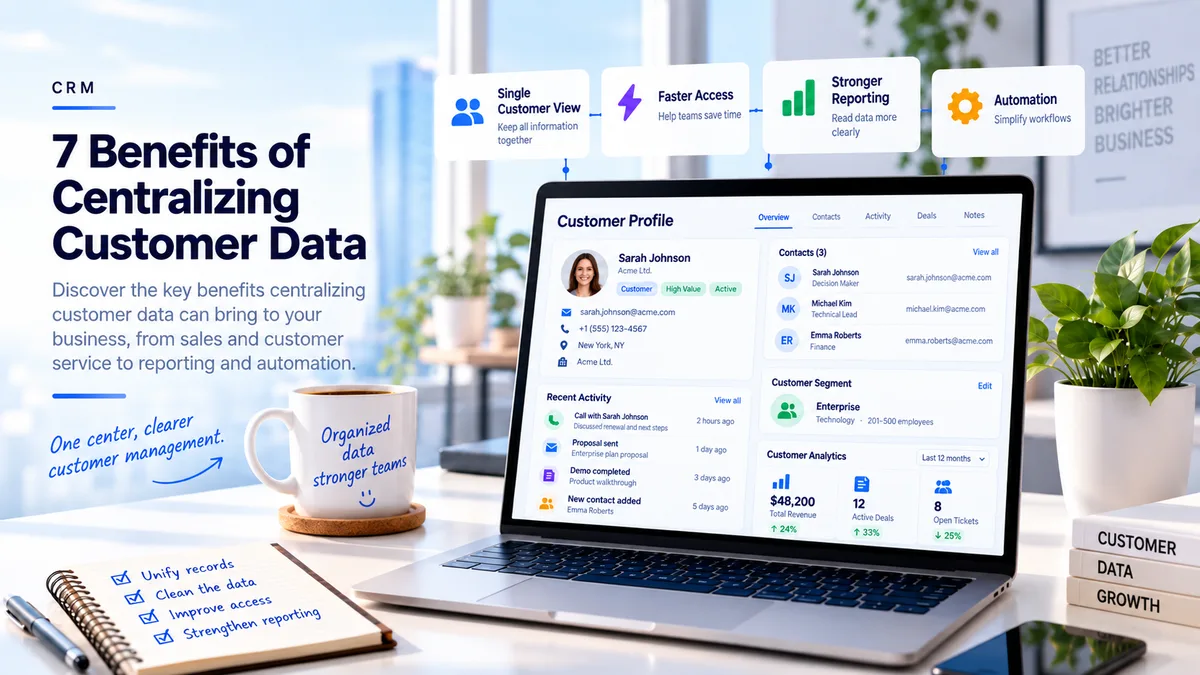
7 Benefits of Centralizing Customer Data
Discover how centralizing customer data can support sales, customer service, reporting, automation and stronger collaboration across your business.
Read More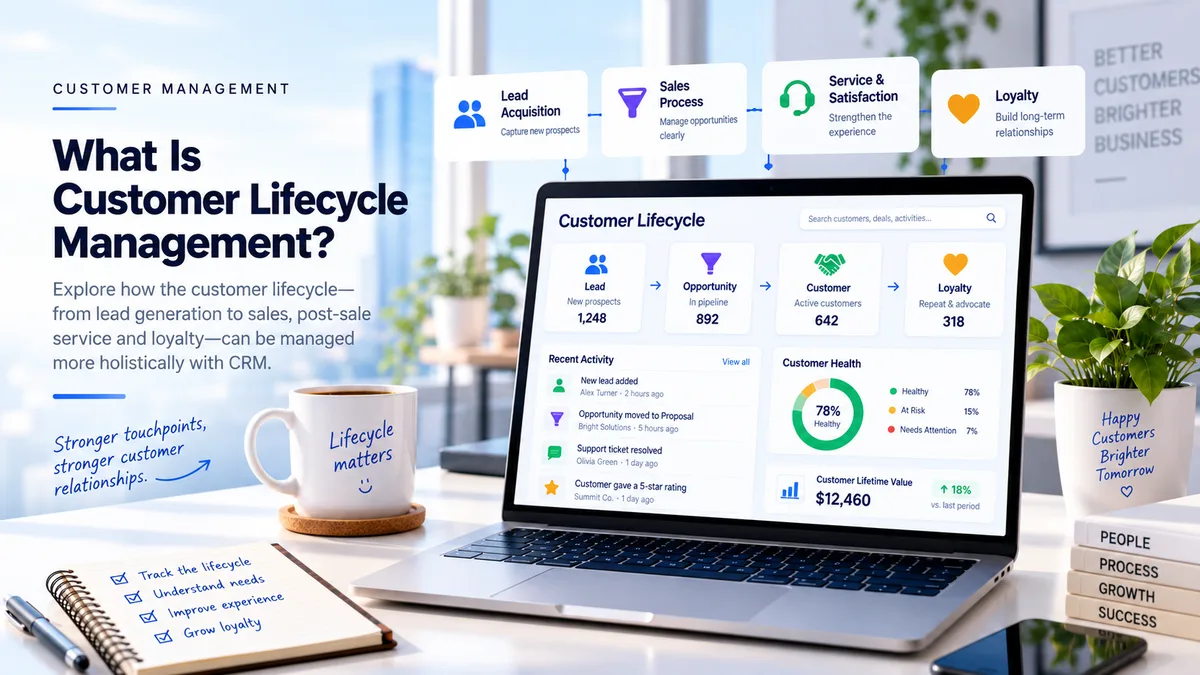
What Is Customer Lifecycle Management?
Discover how CRM can help manage the customer lifecycle more holistically, from the first opportunity and sale to post-sale service and long-term loyalty.
Read More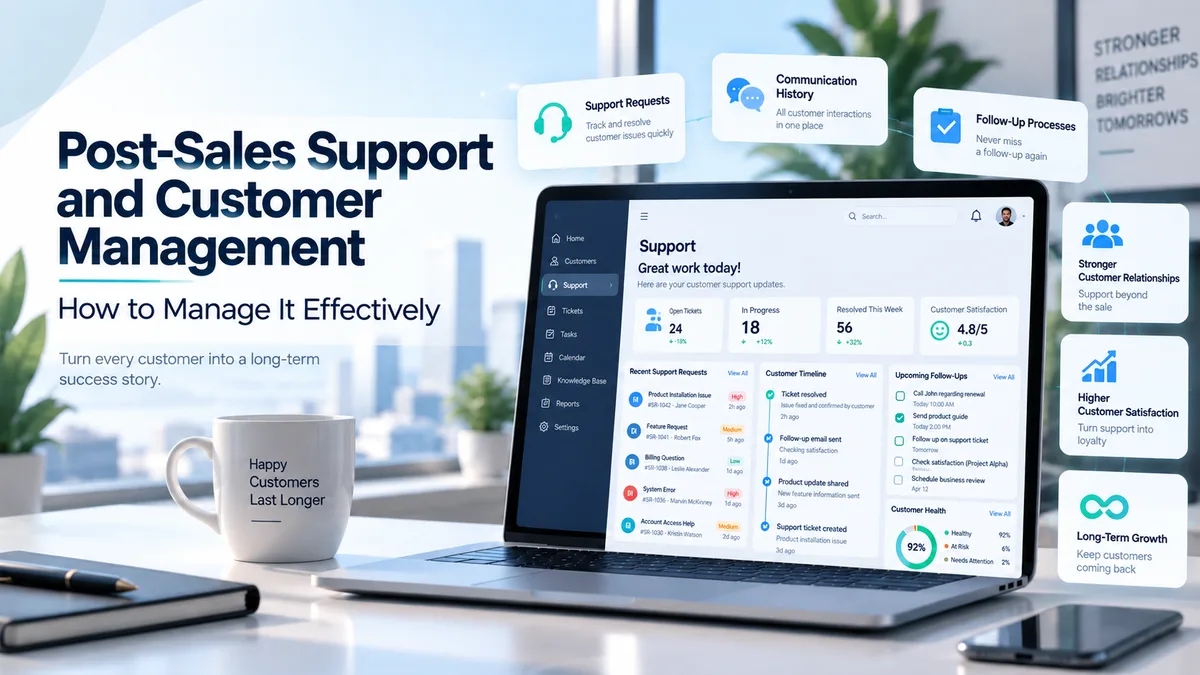
How to Manage Post-Sales Support and Customer Relationships
Learn how CRM can help businesses manage post-sales requests, communication history, follow-up tasks and customer service processes more consistently.
Read More
How to Communicate Effectively with Customers
Learn the key principles of clear, consistent and trustworthy customer communication and how CRM can help teams maintain better customer context.
Read More