How to Make Sales Forecasting More Reliable
Discover how current pipeline data, opportunity probabilities, close dates and activity history can help improve the reliability of sales forecasts.
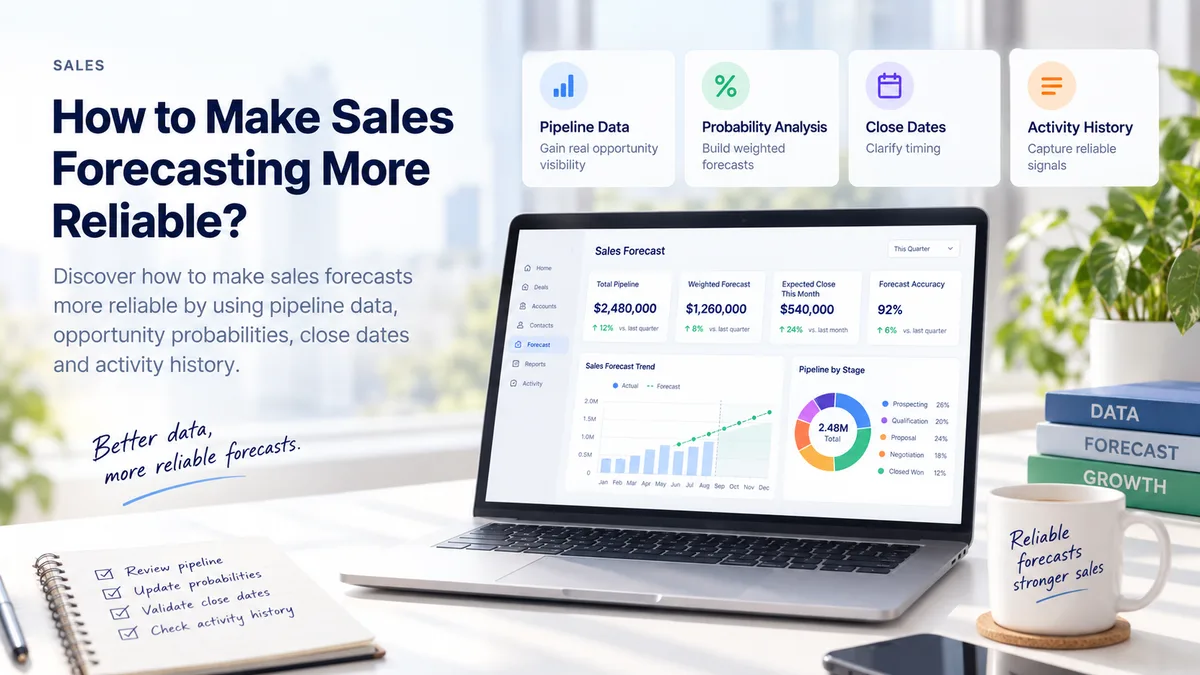
Sales forecasting helps businesses estimate future revenue. However, relying only on individual sales opinions or total pipeline value is rarely enough. Reliable forecasting requires current pipeline data, clearly defined sales stages and consistent measurement.
What is sales forecasting?
Sales forecasting is the process of estimating the sales expected within a specific period using available data. Forecasts can influence budgeting, cash flow, team targets and operational capacity.
Why are sales forecasts often inaccurate?
One of the biggest problems is outdated pipeline data. Opportunities with no recent activity may remain open, expected close dates may be unrealistic, or sales stages may be interpreted differently by team members.
Another common problem is failing to separate optimistic expectations from probability based on actual sales data.
1. Define sales stages clearly
Every pipeline stage should have a specific business meaning. Stages such as “meeting completed,” “proposal sent” or “decision pending” should be used with the same criteria across the team.
Ambiguous stages can make opportunities appear more advanced than they really are and inflate forecasts.
2. Keep expected close dates current
The expected close date is one of the most important inputs in a sales forecast. An unrealistic date can cause an opportunity to be included in the wrong forecast period.
Regularly reviewing overdue close dates in the CRM can significantly improve forecast quality.
3. Base opportunity probabilities on data
Probability can be assigned to each sales stage using historical performance. For example, teams can analyze how often opportunities in the proposal stage have historically converted into wins.
This makes it possible to calculate a weighted pipeline instead of treating every open opportunity as equally likely to close.
4. Track opportunity age
The amount of time an opportunity remains in the same stage can be an important signal. Opportunities that stay inactive for much longer than normal may have a lower probability of closing.
Forecasting should therefore consider not only opportunity value, but also age and last activity date.
5. Include activity data
Recent calls, scheduled meetings, submitted proposals and follow-up tasks provide useful context about opportunity momentum. A high-value opportunity with no recent activity should be evaluated carefully.
6. Analyze win and loss reasons
Recording why deals are won or lost helps improve forecasting over time. Factors such as price, competition, timing or product fit can provide useful context when evaluating future opportunities.
7. Compare forecast with actual results
Forecasting should not end once a report is created. At the end of each period, forecasted sales should be compared with actual results.
If forecasts are consistently too high, probability assumptions or stage definitions may need to be reviewed. If forecasts are consistently too low, teams may be recognizing deal potential too late.
How does CRM support sales forecasting?
CRM brings together opportunity value, stage, expected close date, customer activity and sales ownership in one structure. When this information is current, managers can evaluate sales performance more accurately.
Dashboards and reporting tools can help teams monitor open opportunities and expected revenue from a single view.
Quick checklist for improving sales forecasts
- Define pipeline stages with clear and measurable criteria.
- Update outdated expected close dates regularly.
- Use historical data when assigning opportunity probabilities.
- Review opportunities that remain inactive for too long.
- Include activity history in opportunity assessment.
- Compare forecasts with actual outcomes consistently.
Conclusion
Reliable forecasting is not only about collecting more data. It depends on keeping the right data current and interpreting it with consistent sales rules.
A centralized sales management platform such as DinamikCRM can bring pipeline, activity, reporting and automation data together to support more consistent sales forecasts.
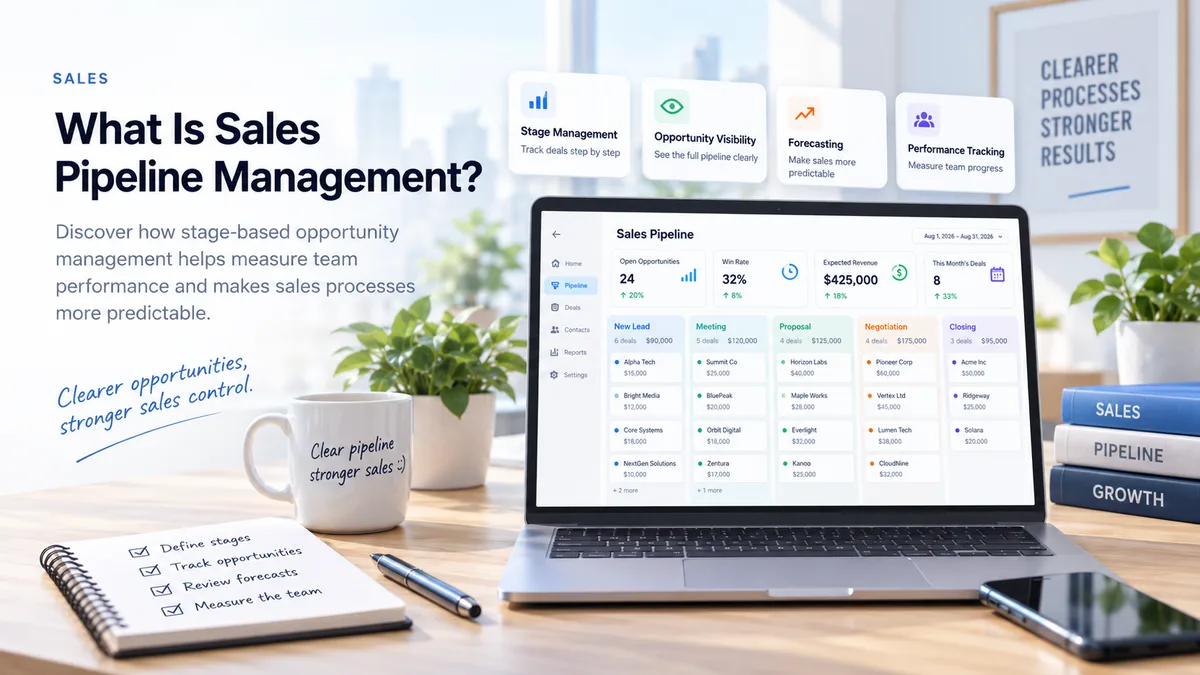
What Is Sales Pipeline Management?
Discover how managing opportunities by sales stage helps teams measure performance and build a more predictable sales process.
Read More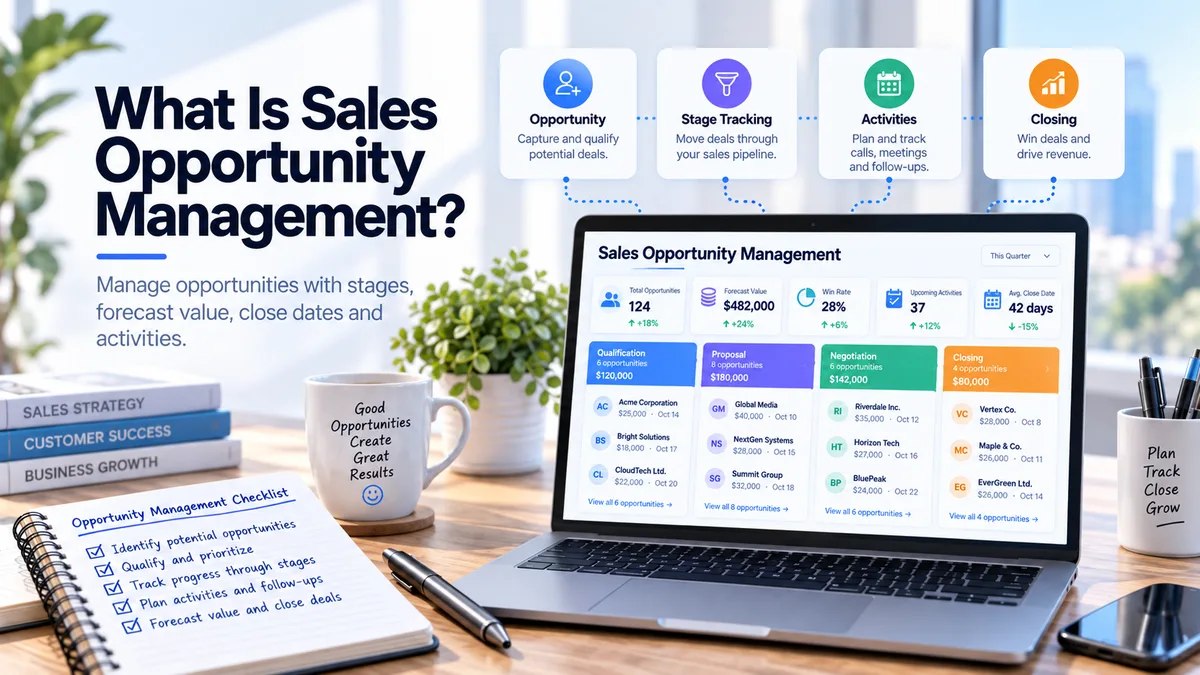
What Is Sales Opportunity Management?
Learn how sales opportunities can be managed through stages, expected values, close dates, activities and performance metrics.
Read More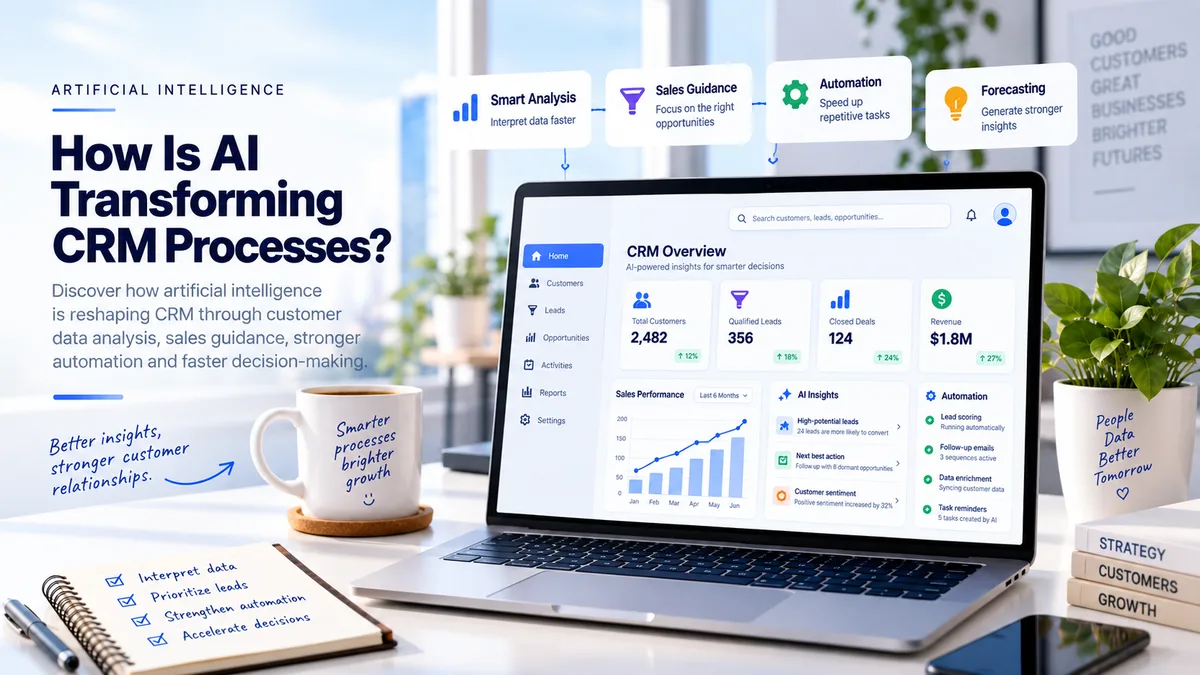
How Is AI Changing CRM?
Explore how AI is transforming CRM by interpreting customer data, guiding sales teams, strengthening automation and helping businesses make faster decisions.
Read More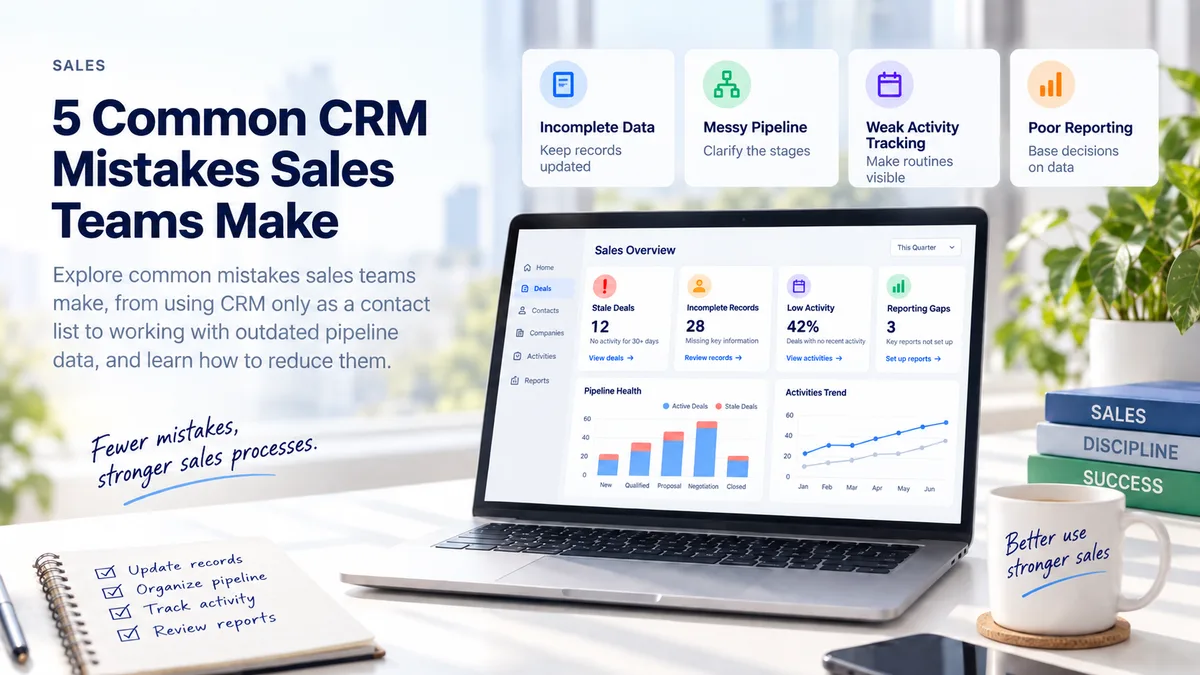
5 Common CRM Mistakes Sales Teams Make
Explore common CRM mistakes sales teams make, from using CRM only as a contact list to working with outdated pipeline data, and learn how to improve adoption.
Read More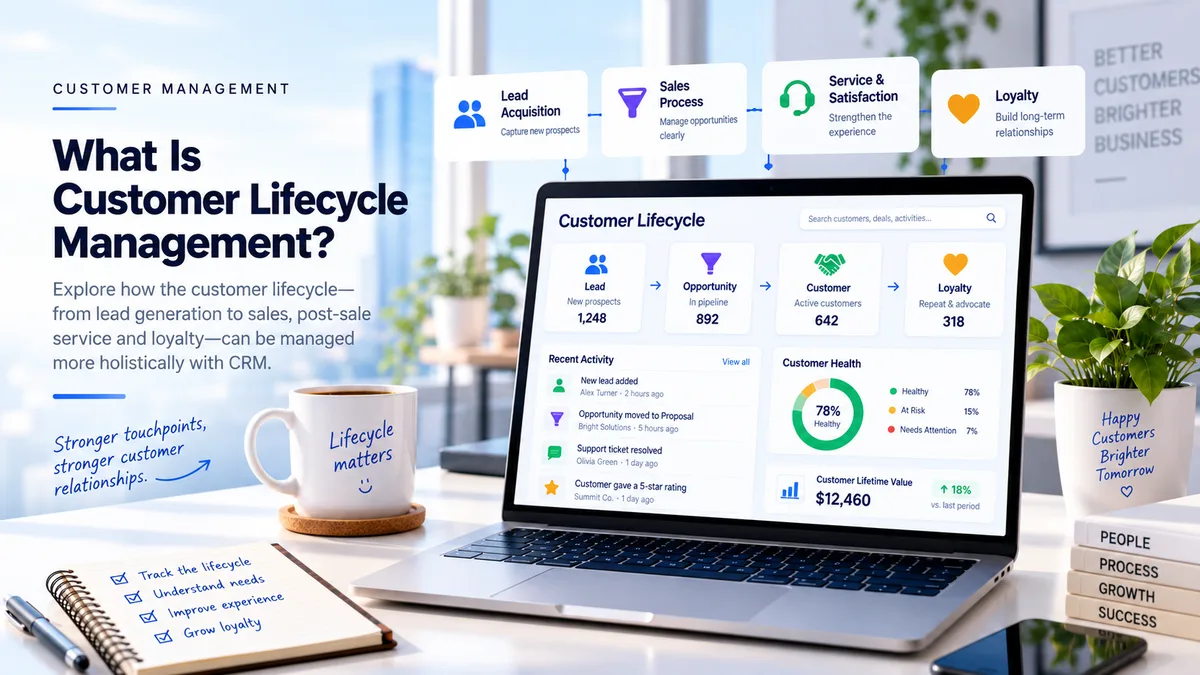
What Is Customer Lifecycle Management?
Discover how CRM can help manage the customer lifecycle more holistically, from the first opportunity and sale to post-sale service and long-term loyalty.
Read More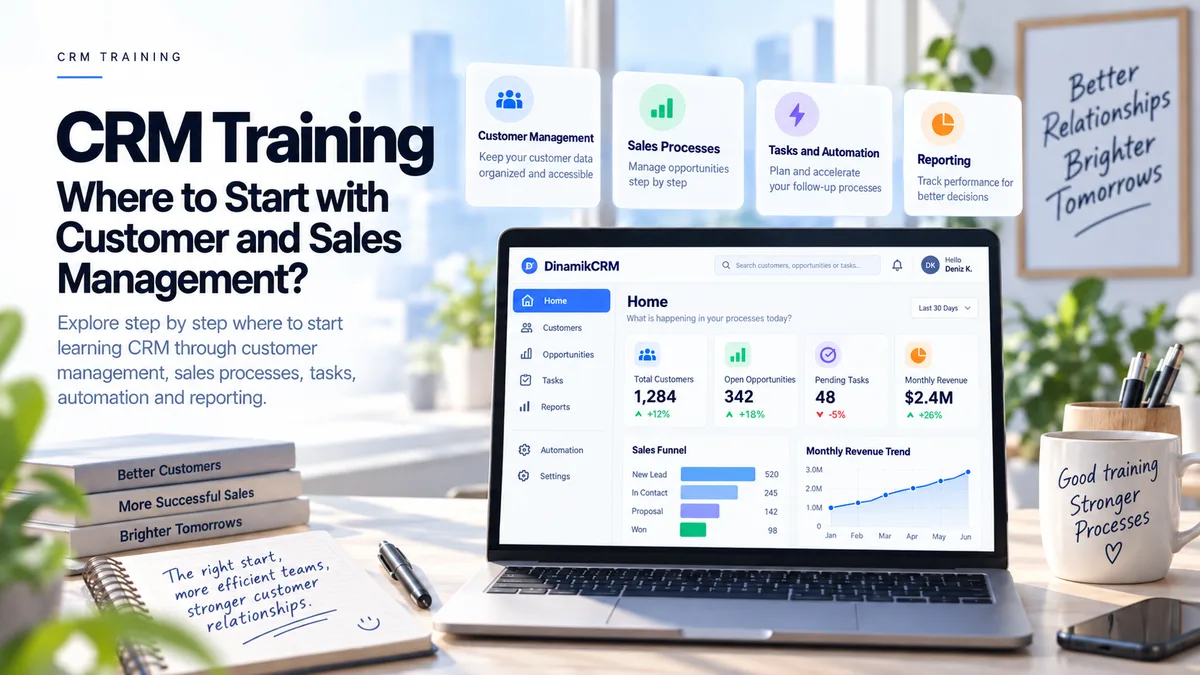
CRM Training: Where to Start with Customer and Sales Management
Learn where to start with CRM training through customer management, sales processes, tasks, automation and reporting.
Read More