CRM and Digital Transformation for SMEs: Where Should Businesses Start?
Learn how SMEs can use CRM to manage customers, sales, tasks and follow-up more consistently and how CRM can support digital transformation.
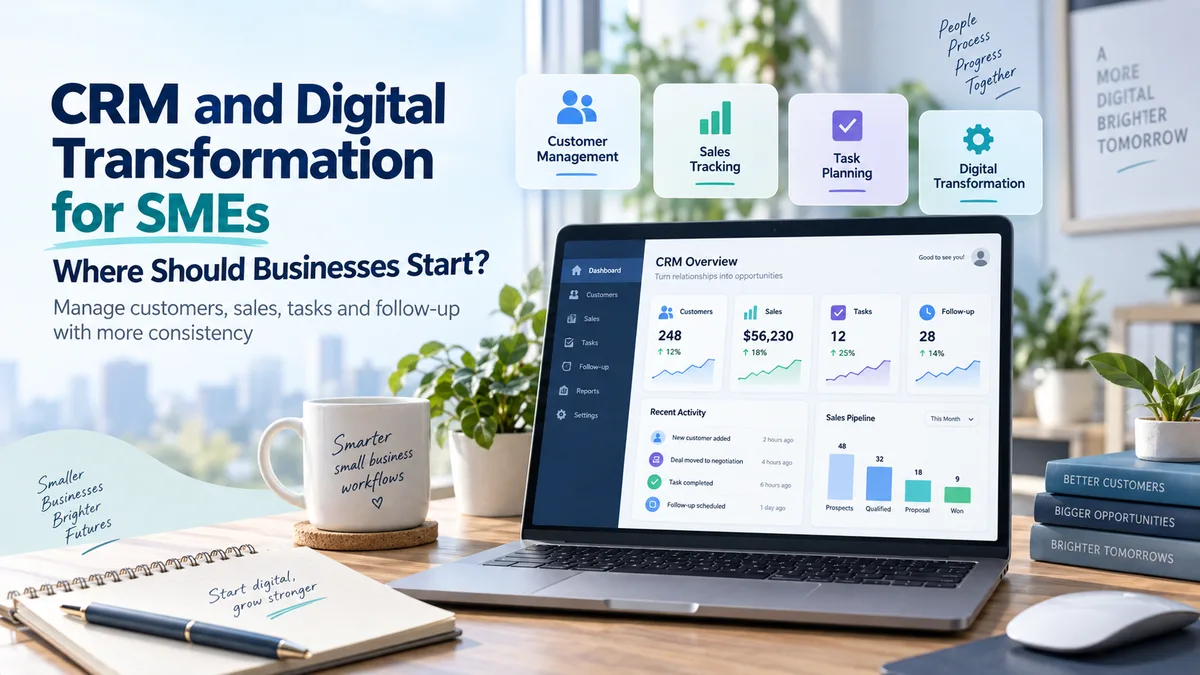
As small and medium-sized businesses grow, customer and sales processes often become more difficult to manage.
Spreadsheets, email, phone notes and personal tracking methods may work at the beginning, but information can become fragmented as customer volume and team size increase.
CRM can help SMEs manage customer information, sales opportunities, tasks and activities within a shared structure.
What Does Digital Transformation Mean for SMEs?
Digital transformation is not simply moving paper records or spreadsheets into software.
The goal is to make business processes more structured, accessible, measurable and easier to share across teams.
For SMEs, this transformation can begin with customer management, sales, task tracking, work tracking, reporting, communication and post-sales processes.
As the team grows, it also becomes more important to see who owns ongoing work, when it is due and which items are already overdue.
Why Do SMEs Use CRM?
CRM helps reduce dependence on personal memory and disconnected files.
SMEs can use CRM to:
- Centralize customer and company information
- Track potential customers
- Manage sales opportunities
- Plan tasks and activities
- Maintain interaction history
- Report on customer and sales processes
1. Understand the Limits of Spreadsheet-Based Tracking
Spreadsheets can be useful in the early stages of a business.
As the number of customers, opportunities and users grows, however, different versions of the same information may appear.
The same problem can affect day-to-day work. When open work is spread across spreadsheets, personal notes and messages, it becomes harder to see who is responsible, what the deadline is or whether an item is already overdue.
Explore CRM Instead of Spreadsheets .
2. Centralize Customer Information
When customer information is stored in individual phones, inboxes and files, the business does not have a shared customer memory.
CRM can help maintain customer, company, interaction and activity information in a shared structure.
Read 7 Benefits of Centralizing Customer Data .
3. Manage Potential Customers Systematically
Leads can come from websites, phone calls, referrals, events and direct sales activities.
Keeping those leads in one place makes ownership and follow-up easier to manage.
Explore Lead Management .
4. Make Sales Opportunities Visible
A customer list alone does not provide enough visibility for sales management.
Opportunity value, stage, expected close date and ownership can help teams understand what is currently in progress.
Explore Sales Opportunity Management .
5. Do Not Depend on Personal Memory for Follow-Up
Small teams can often coordinate verbally at first, but this becomes harder as the business grows.
Proposal follow-up, customer calls and meetings can be managed as tasks and activities.
Teams may also need visibility into broader ongoing work, including who is responsible, when each item is due and whether it is open, in progress or overdue.
To manage day-to-day work in a shared structure, explore Work Tracking Software .
For more detailed task management, explore Task Tracking .
6. Track the Sales Pipeline
A sales pipeline shows where active opportunities are positioned in the sales process.
This allows SME managers to see not only completed sales, but also opportunities that are still in progress.
Explore Sales Pipeline .
7. Turn Customer Communication into Shared Business Knowledge
Customer history should remain available when responsibilities change or employees leave the organization.
Keeping previous conversations and notes in CRM can help new owners continue the relationship with more context.
8. Include Post-Sales Processes
CRM should not be used only for acquiring new customers.
Existing customer requests, complaints, support needs and future follow-up are also part of customer management.
Read How to Manage Post-Sales Support and Customer Relationships .
9. Reduce Dependency on Individual Employees
When all customer knowledge exists with one employee, the business may become dependent on that person's personal records.
CRM can help turn customer history into shared organizational data.
The same principle applies to everyday work. When work ownership, deadlines and current status are stored in a shared system, business continuity becomes less dependent on individual memory.
Read How Can CRM Strengthen Customer Relationships? .
10. Make Reporting Less Manual
Preparing sales reports from several spreadsheets can take time and may quickly become outdated.
Structured CRM data can make it easier to evaluate:
- New leads
- Active opportunities
- Pipeline value
- Won and lost opportunities
- Tasks and activities
- Customer sources
When work tracking is also centralized, managers can gain additional visibility into open work, completed items and overdue work.
Read Why CRM Reporting Matters .
When Should an SME Start Using CRM?
There is no single customer or employee count that determines when CRM is necessary.
CRM may be worth evaluating when:
- Customer information is spread across different files
- Follow-up is being missed
- Opportunity status is difficult to understand
- Customer history is difficult to find
- Teams work from different versions of the same data
- Sales reporting is highly manual
- People frequently ask who owns a piece of work
- Overdue work is noticed only after it becomes a problem
The final two points can also indicate that the business needs a more systematic approach to everyday work tracking, not only customer management.
What Should SMEs Consider When Choosing CRM?
The CRM with the most features is not automatically the best option for every SME.
Businesses should focus on their real processes and usability.
Relevant areas can include:
- Customer management
- Lead and opportunity tracking
- Task management
- Work and responsibility tracking
- Reporting
- Automation
- Integrations
- User adoption
Read How to Choose a CRM .
Start the CRM Project Simply
Trying to redesign every business process on the first day can make CRM adoption more difficult.
SMEs can begin with core customer and sales processes and add additional functionality as requirements become clearer.
Once customer and sales tracking are established, bringing everyday work into the same structure can also reduce the need to switch between separate tools.
To track work, owners and deadlines in one shared system, explore the work tracking solution .
Read How Can You Improve CRM User Adoption? .
Digital Transformation Is More Than Buying Software
CRM can be an important part of digital transformation, but installing software does not create transformation by itself.
Processes need to be defined, users need to work consistently, data needs to remain current and reporting needs to support decisions.
Daily operational work also needs to become part of the digital structure. Making work, owners and deadlines visible can strengthen the operational side of digital transformation.
SMEs planning digital transformation or software investments may also want to review available public support programs before making an investment decision. For an overview of programs in Türkiye, see our digital transformation support programs guide.
Read Digital Customer Relationship Management .
CRM Automation for SMEs
Some repetitive customer and sales activities can be supported through automation.
Automation should solve real workflow problems rather than create unnecessary complexity.
Explore CRM Automation .
Where Should SMEs Begin?
The first step is understanding the current customer and sales process.
Businesses should identify where customer data is stored, how sales are tracked, how follow-up is planned and which reports are actually needed.
They should also review how daily work is assigned and followed. If it is unclear who owns each item, how deadlines are monitored or how completion becomes visible, work tracking should be included in the digital transformation plan.
Build a More Controlled CRM Process
One of CRM's main benefits for SMEs is turning customer and sales information into shared business knowledge.
When customers, opportunities, tasks and activities are managed within the same structure, teams can work with greater visibility.
Adding everyday work, ownership and deadlines to that shared structure can also make internal operations easier to understand and follow.
To see how DinamikCRM can support this approach, explore DinamikCRM Work Tracking Software .
Explore CRM for SMEs and CRM Software .
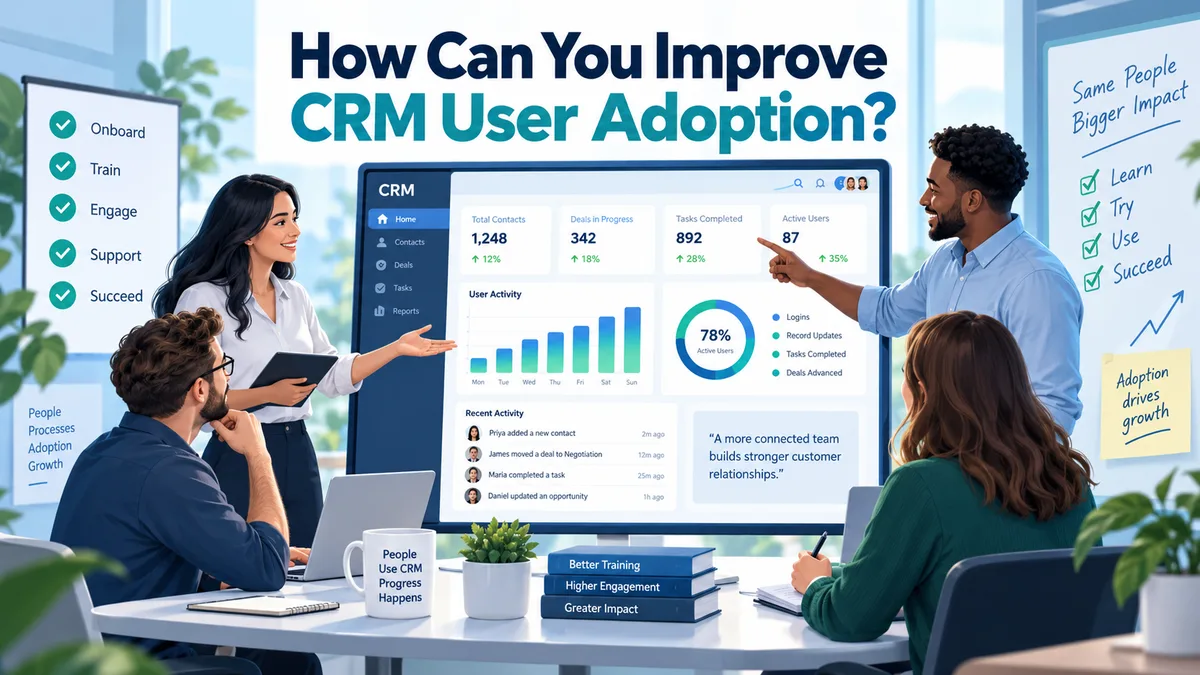
How Can You Improve CRM User Adoption?
Explore the key steps that can help teams adopt CRM more consistently, improve data quality and make CRM part of everyday customer and sales workflows.
Read More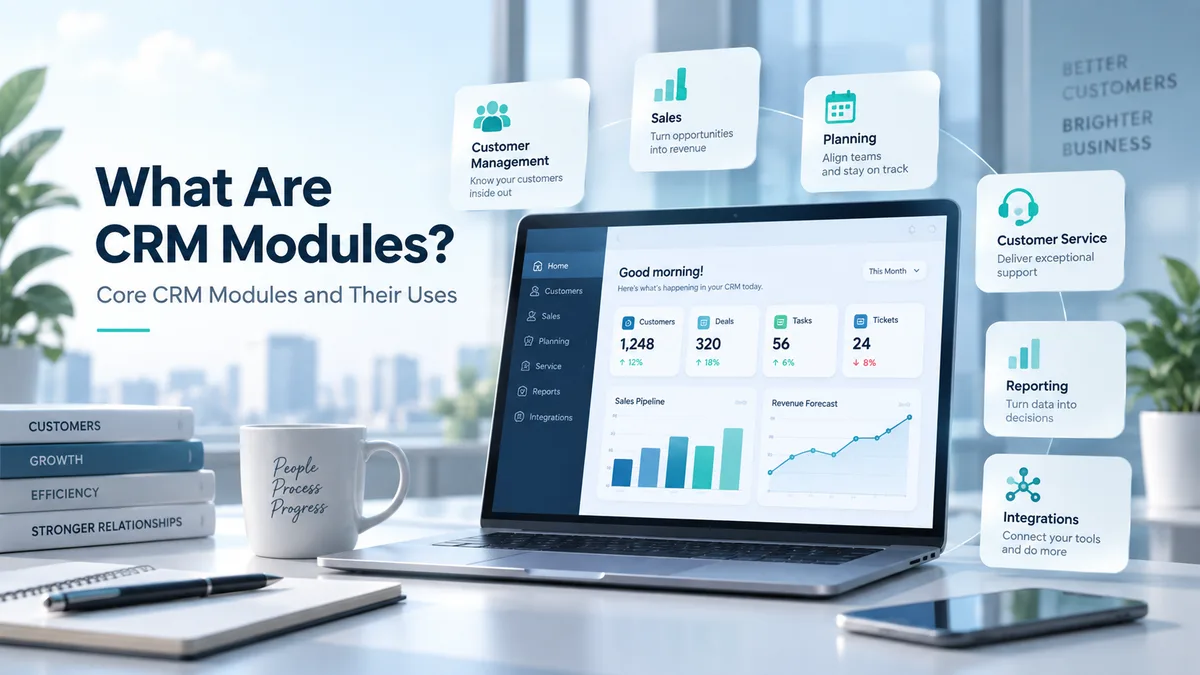
What Are CRM Modules? Core CRM Modules and Their Uses
Explore the core modules of a CRM system, including customer management, sales, planning, customer service, reporting and integrations.
Read More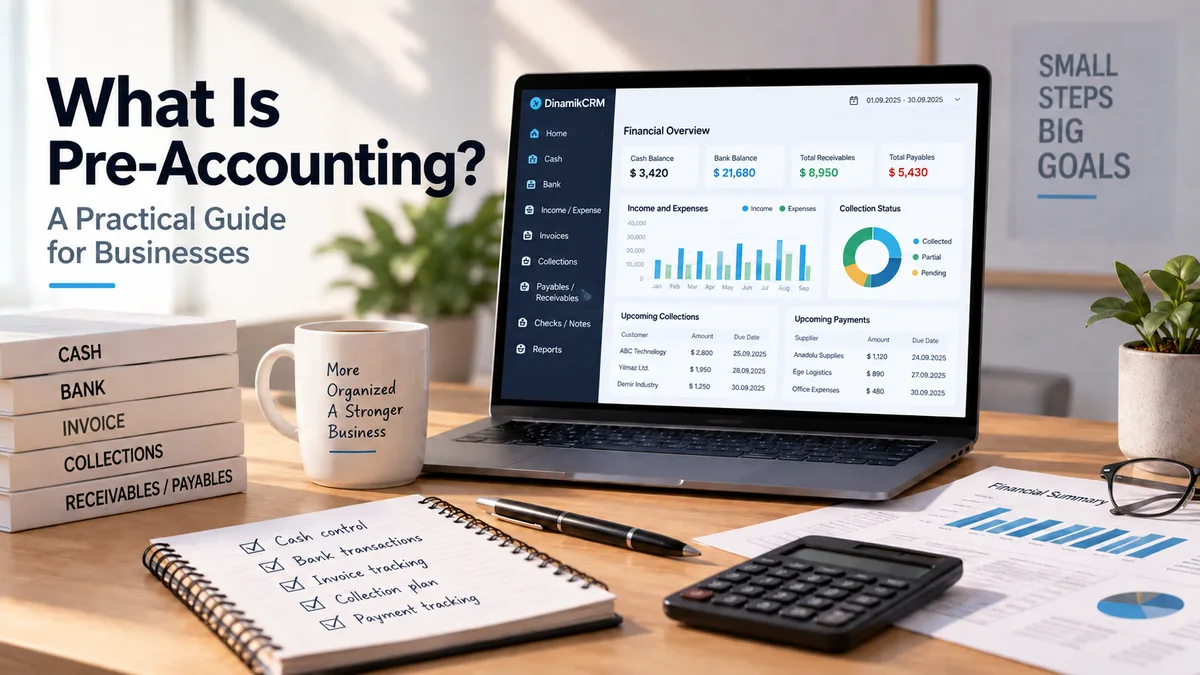
What Is Pre-Accounting? A Practical Guide for Businesses
Learn what pre-accounting is, which day-to-day financial processes it covers, and how businesses can track cash, bank accounts, income, expenses, invoices, collections, receivables and payables more systematically.
Read More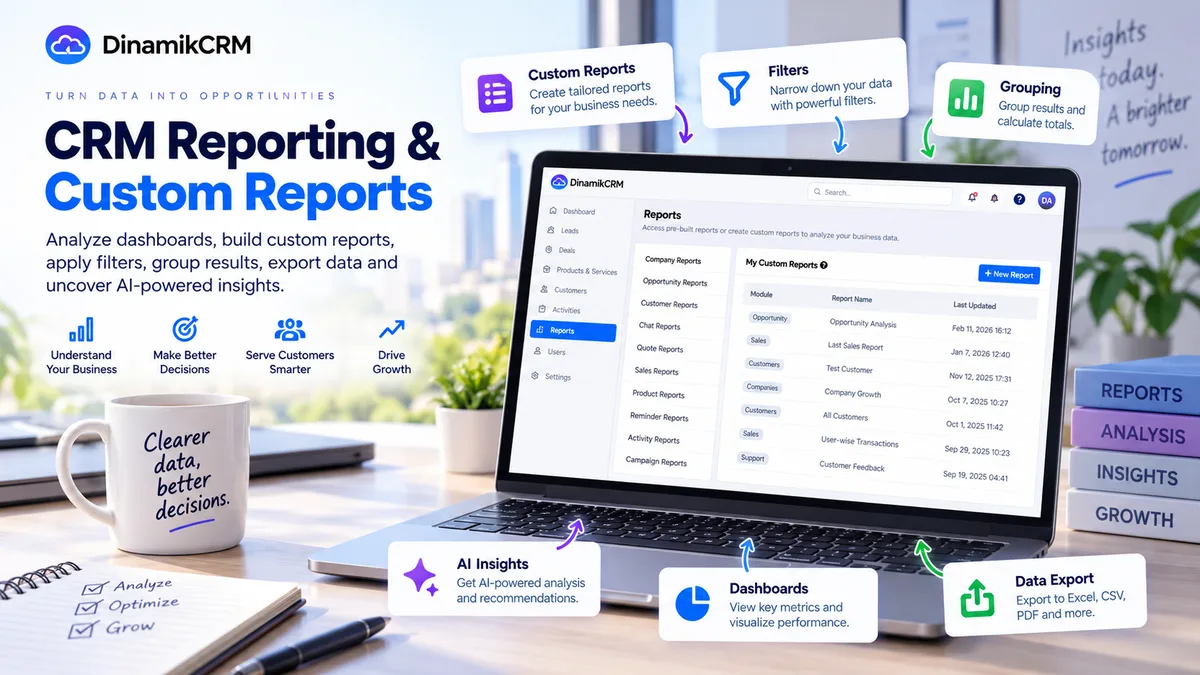
What Is CRM Reporting? How to Analyze CRM Data
Learn what CRM reporting is, how to create custom reports, and how filtering, grouping, calculations, charts and AI-assisted analysis can help businesses understand CRM data.
Read More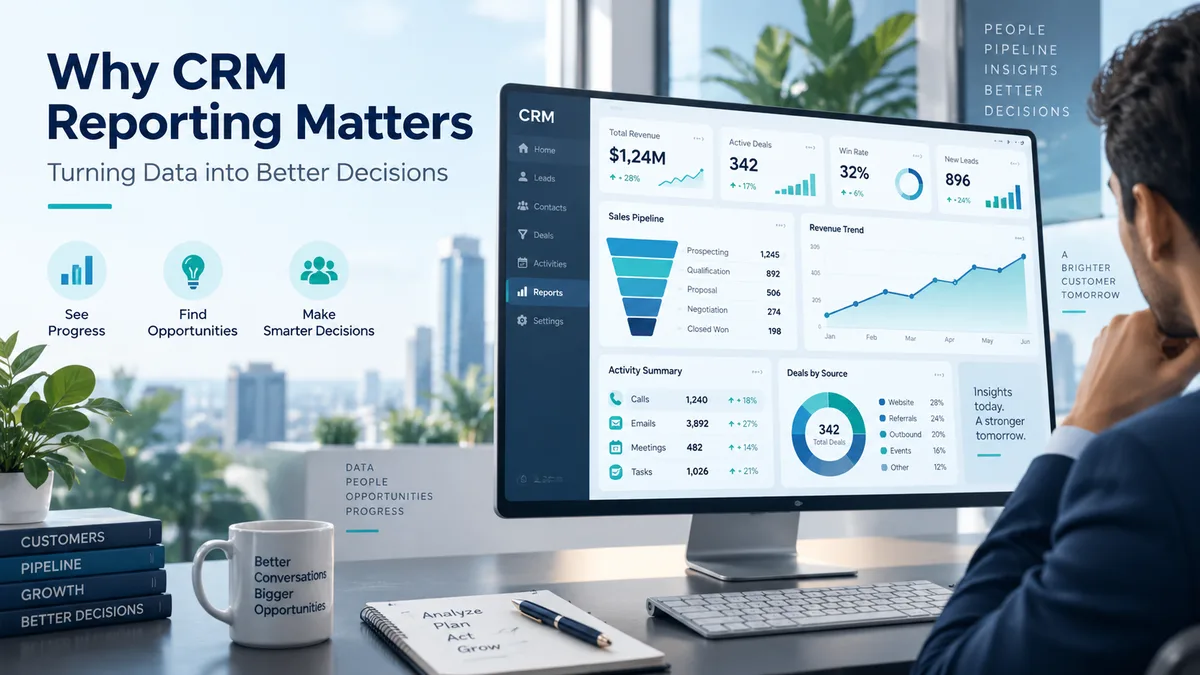
Why CRM Reporting Matters: Turning Data into Better Decisions
Learn how CRM reporting can help businesses understand customer, sales, pipeline, activity and team performance data.
Read More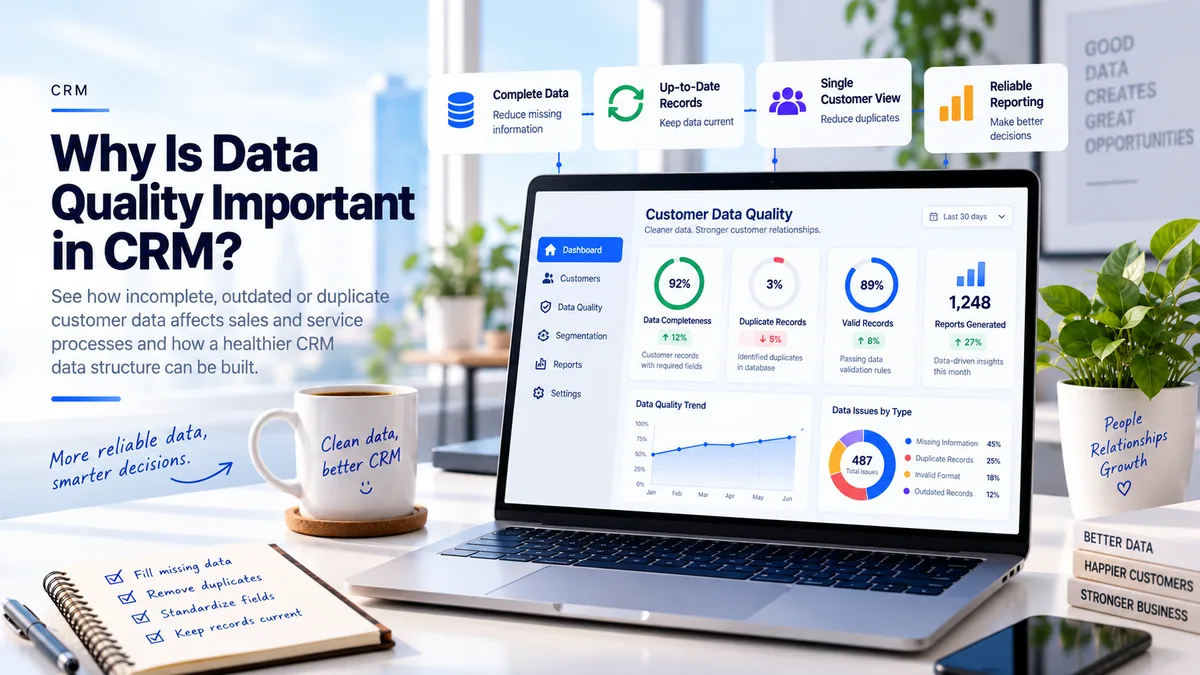
Why Data Quality Matters in CRM
Learn how incomplete, outdated or duplicate customer data can affect sales and service processes, and how to build a healthier CRM data structure.
Read More