What Determines CRM Pricing?
Explore the key factors that influence CRM pricing, including users, features, integrations, automation, implementation and support.
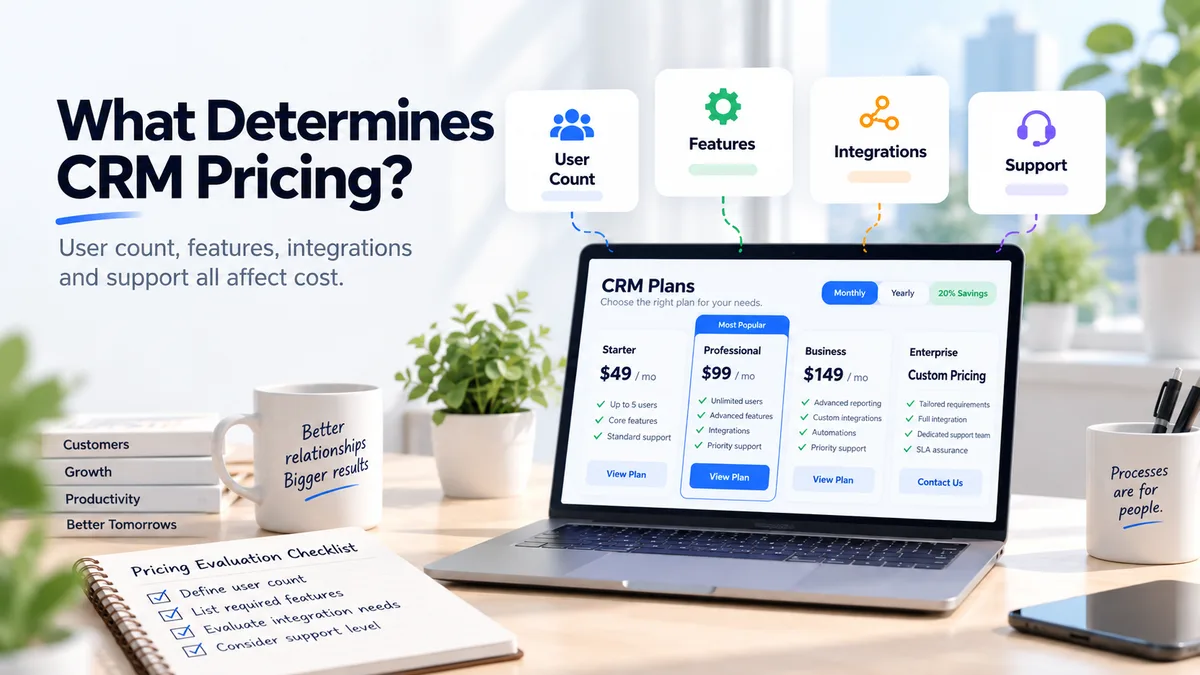
CRM pricing is one of the first topics businesses consider when evaluating CRM software. However, the true cost of a CRM system cannot be measured only by its monthly subscription fee. The number of users, required features, integrations, automation and support can all affect the total cost.
For this reason, businesses should evaluate CRM pricing together with the value and capabilities the platform provides.
What determines CRM pricing?
CRM platforms can use different pricing models. Some charge per user, while others use package-based, usage-based or feature-based pricing.
Number of users
One of the most common CRM pricing factors is the number of users. Sales, customer service, operations and management teams may all require access to the system.
Identifying who actually needs CRM access can therefore help businesses estimate their costs more accurately.
Features and modules
A company that only needs basic customer management will have different requirements from one that needs advanced sales management, automation, reporting and integrations.
Businesses should focus on the capabilities they actually need instead of paying for features that will not be used.
Automation requirements
Automation can help teams save time by assigning tasks, sending notifications and managing customer follow-ups automatically.
More advanced CRM automation requirements may also increase the scope and cost of a CRM implementation.
Integrations
CRM systems may need to connect with ERP, accounting, call center, email, SMS or other business applications. Standard integrations may be included in some plans, while custom integrations can create additional costs.
Implementation, training and support
The subscription fee is only one part of CRM cost. Data migration, configuration, user training and technical support should also be considered.
For organizations using CRM for the first time, proper implementation and training can have a significant impact on adoption.
Is the cheapest CRM always the most affordable option?
A low subscription fee can be attractive, but it should not be the only selection criterion. A CRM that employees do not use effectively may become an expensive investment even when its monthly price is low.
A CRM platform that fits existing business processes can help teams save time, keep customer data organized and improve visibility across the sales process.
What should businesses compare when evaluating CRM cost?
- Monthly or annual subscription fees
- Additional user costs
- Features included in each plan
- Integration costs
- Implementation and data migration
- Training and support
- Future user and feature requirements
How should small businesses approach CRM pricing?
For small and medium-sized businesses, a practical approach is to begin with essential capabilities and expand the system as usage grows.
Customer management, tasks, sales opportunities and basic reporting can meet many initial requirements. Automation, integrations and advanced reporting can then be added as business processes mature.
Compare CRM value, not only CRM price
The true return on CRM investment includes more than software cost. Time saved by sales teams, improved data quality, fewer missed opportunities and better management visibility all contribute to the value of a CRM platform.
Instead of asking only which CRM is cheaper, businesses should also ask which system can provide the greatest operational value.
To estimate the potential economic impact of a CRM investment using your own business assumptions, use the free CRM ROI Calculator to calculate time savings, sales contribution, CRM cost and estimated return on investment.
Conclusion
CRM pricing can vary depending on the number of users, required modules, automation, integrations and support. Choosing the right CRM means finding a solution that provides the required capabilities at a sustainable cost.
DinamikCRM provides a flexible CRM structure that allows businesses to begin with essential customer and sales management capabilities and expand as their processes evolve.
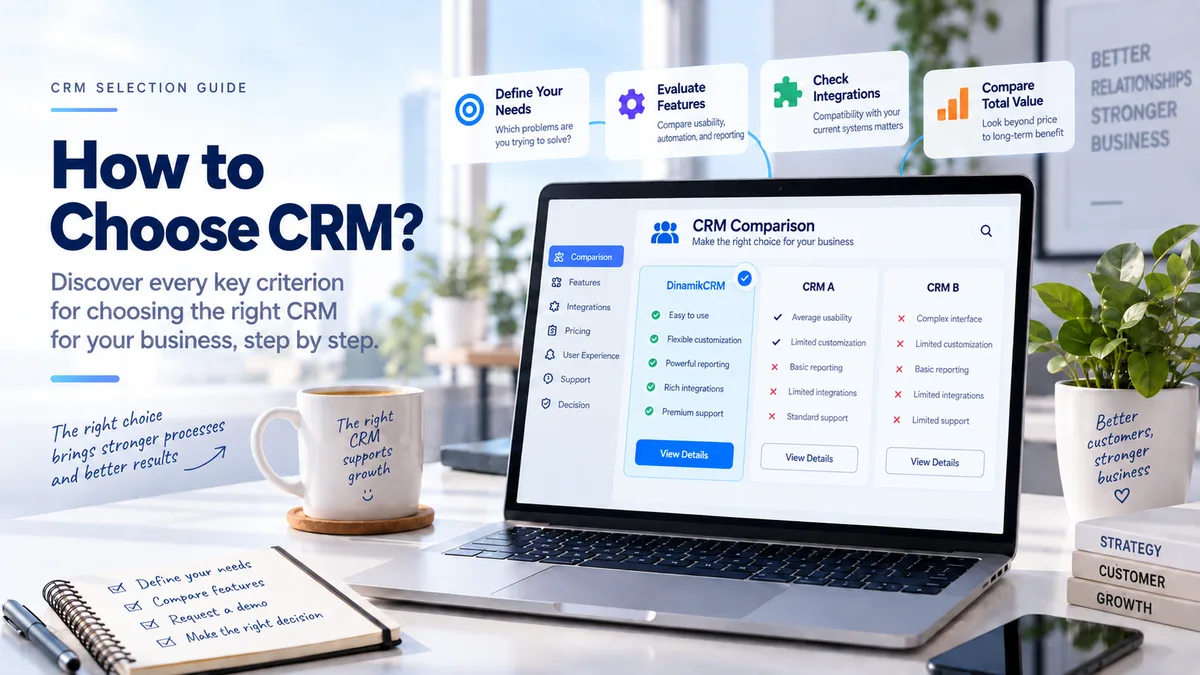
What Should You Consider When Choosing a CRM?
Explore the key criteria to consider when choosing a CRM, from ease of use and integrations to automation and reporting.
Read More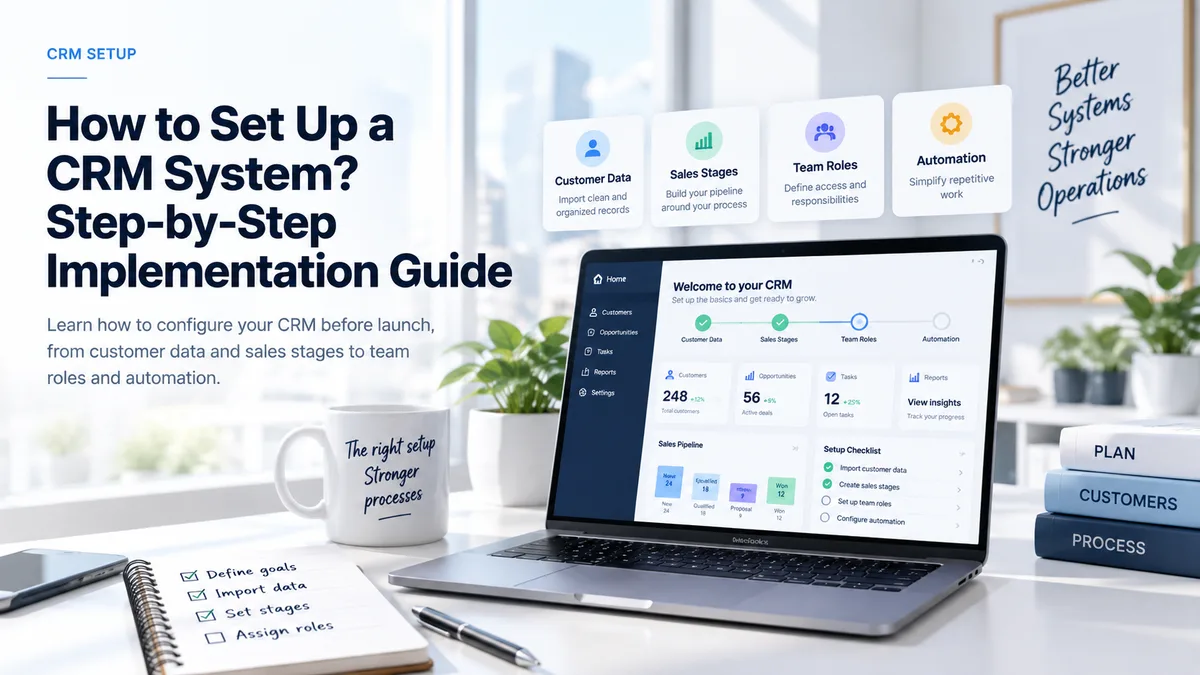
How to Set Up CRM Software: A Step-by-Step Guide
Learn how to configure CRM software, from customer data and sales stages to team roles, follow-ups, automation and reporting.
Read More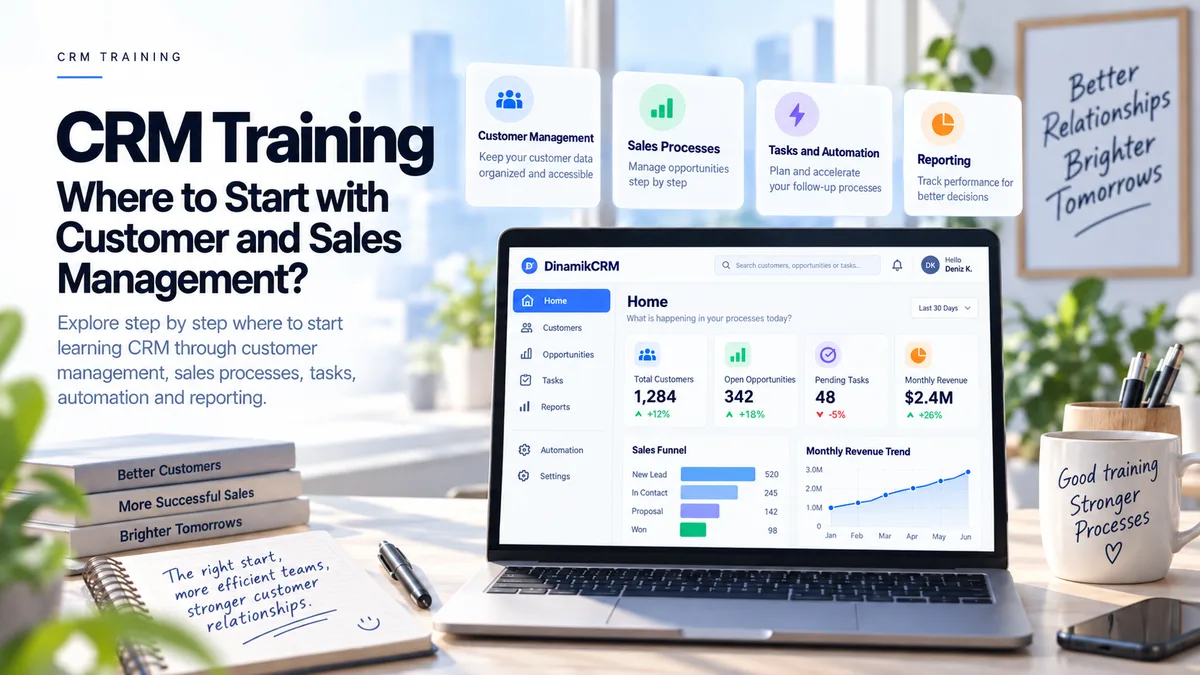
CRM Training: Where to Start with Customer and Sales Management
Learn where to start with CRM training through customer management, sales processes, tasks, automation and reporting.
Read More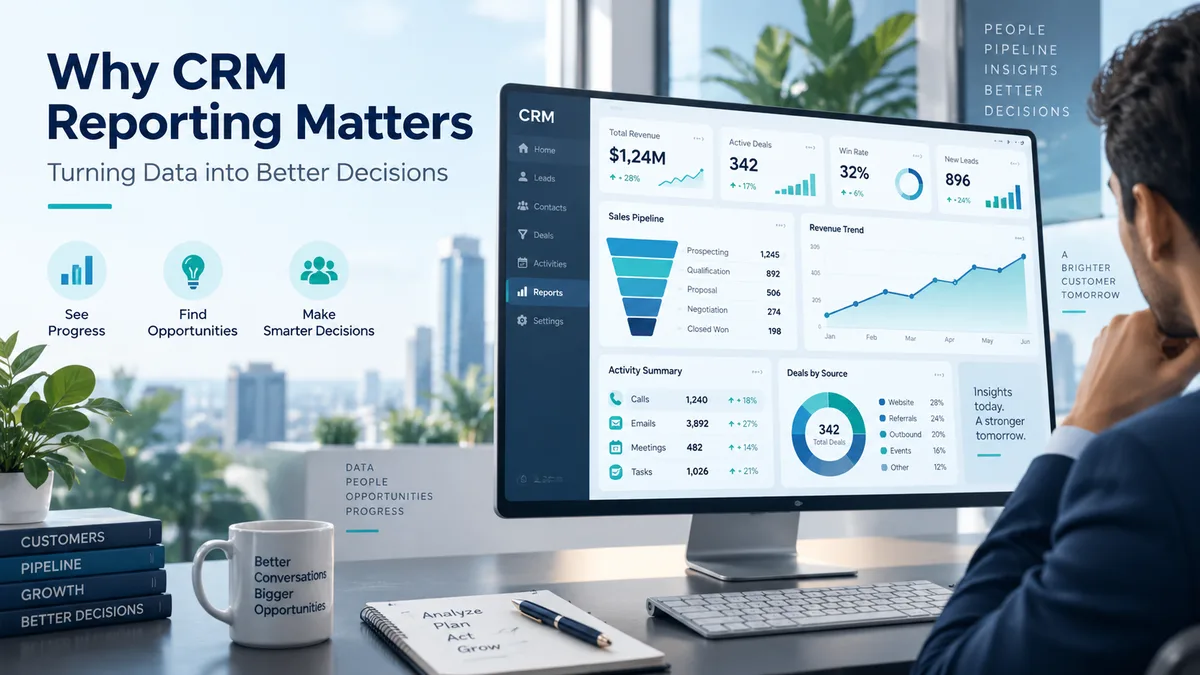
Why CRM Reporting Matters: Turning Data into Better Decisions
Learn how CRM reporting can help businesses understand customer, sales, pipeline, activity and team performance data.
Read More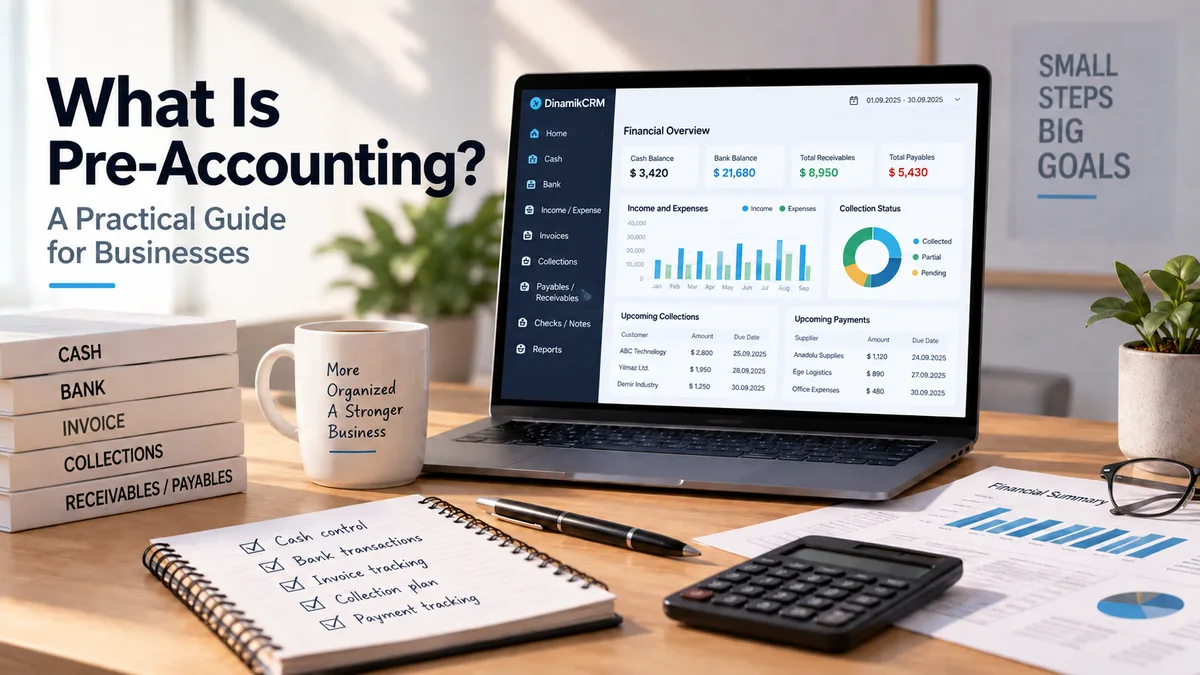
What Is Pre-Accounting? A Practical Guide for Businesses
Learn what pre-accounting is, which day-to-day financial processes it covers, and how businesses can track cash, bank accounts, income, expenses, invoices, collections, receivables and payables more systematically.
Read More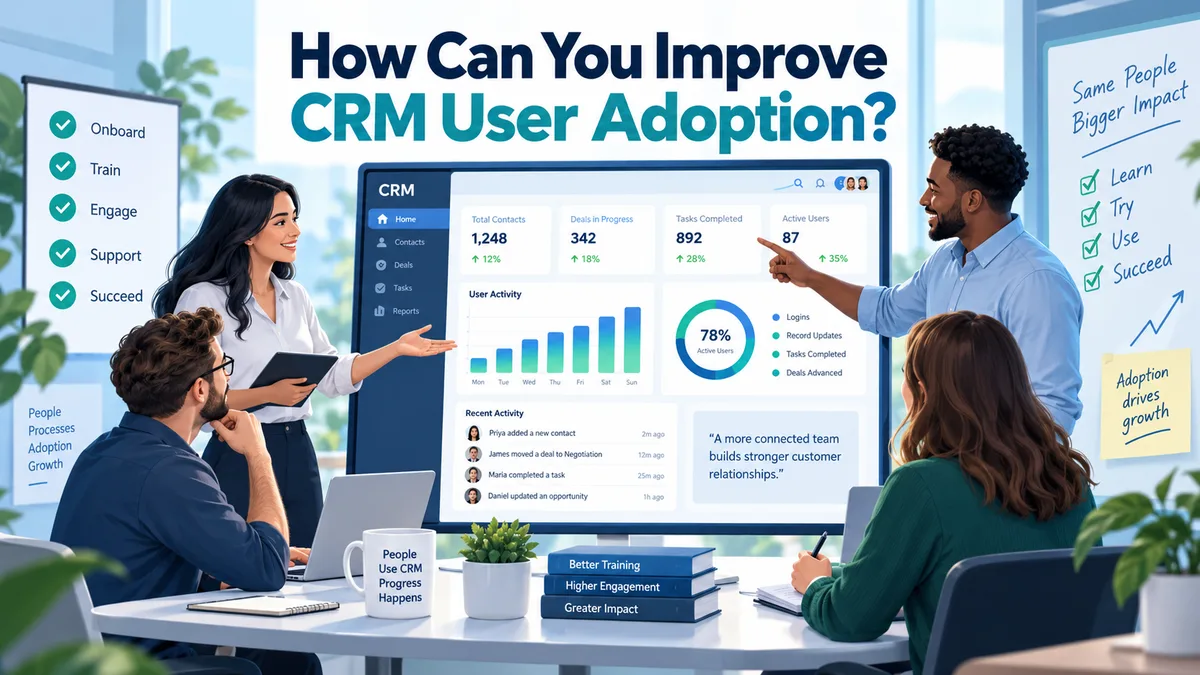
How Can You Improve CRM User Adoption?
Explore the key steps that can help teams adopt CRM more consistently, improve data quality and make CRM part of everyday customer and sales workflows.
Read More