How Digital Marketing and CRM Work Together
Learn how CRM helps businesses manage leads generated through digital marketing and strengthen segmentation, follow-up and sales processes.
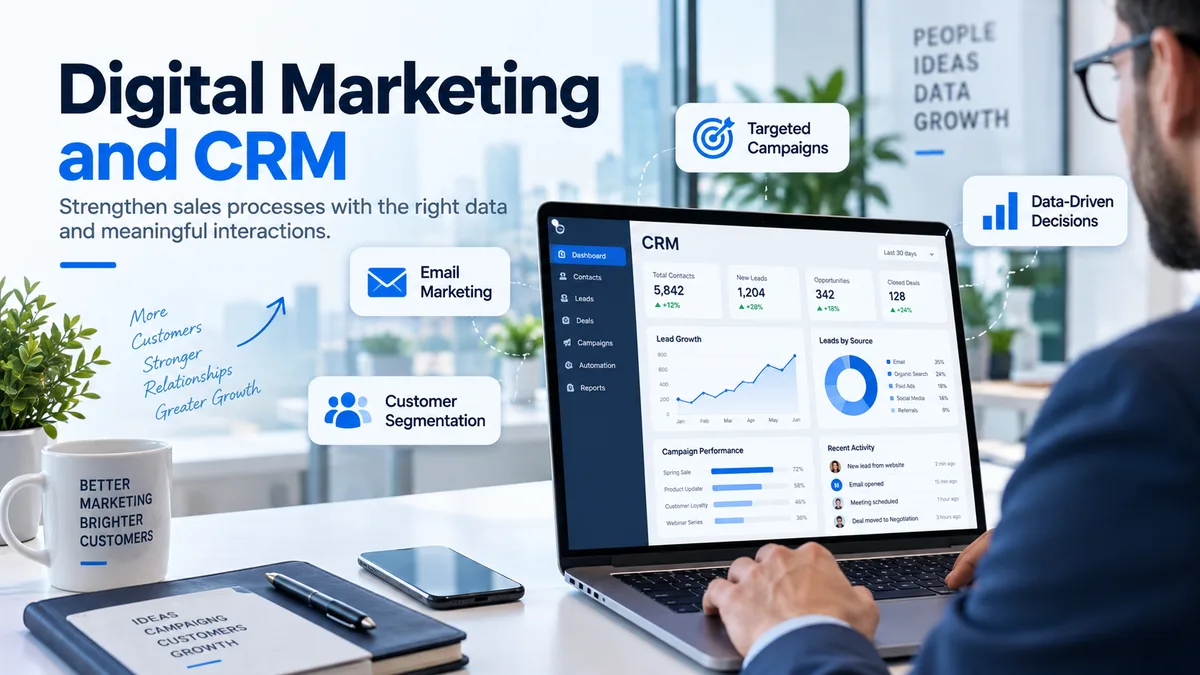
Digital marketing helps businesses reach potential customers and generate interest, while CRM helps turn that interest into a structured sales and customer management process.
Leads generated through advertising, websites, social media, content or email should not only be collected. Their source, communication history and current position in the sales process should also be tracked consistently.
How Do Digital Marketing and CRM Work Together?
Digital marketing generally focuses on generating demand and attracting potential customers. CRM supports the next stages by recording those leads, managing follow-up activities, moving qualified leads into the sales process and managing customer relationships.
A simple process may look like this:
- A potential customer visits the website through an ad or content.
- The visitor submits a form or contacts the business.
- The lead is recorded in the CRM.
- Source, campaign and contact information are stored.
- A follow-up task is assigned to a sales representative.
- A qualified lead is converted into a sales opportunity.
- The sales outcome is tracked in the CRM.
Why Should Digital Marketing Leads Be Stored in a CRM?
Digital marketing activities may generate leads from many different channels. When these records are stored in separate spreadsheets or personal notes, follow-up becomes difficult.
Keeping lead records centrally in a CRM helps businesses track when each lead was contacted and where the lead currently stands in the sales process.
Why Is Lead Source Tracking Important?
Lead source identifies the channel or campaign through which a potential customer reached the business.
Leads may come from sources such as:
- Google Ads
- Organic search
- Social media
- Email campaigns
- Website forms
- Events
- Referrals
- Business partners
Storing this information in a CRM can make it easier to understand which channels generate more leads and which sources contribute to actual sales.
Can CRM Help Measure Marketing Performance?
CRM is not a complete digital marketing analytics platform by itself. However, it can help connect marketing-generated leads with later sales activities and outcomes.
This allows businesses to look beyond clicks and form submissions and evaluate which leads progressed into opportunities or customers.
How Is Lead Follow-Up Managed in a CRM?
Once a lead is recorded in the CRM, businesses can apply a structured follow-up process.
For example:
- The lead source can be recorded.
- A sales representative can be assigned.
- A task can be created for the first contact.
- Conversation notes can be recorded.
- The lead status can be updated.
- A qualified lead can be converted into an opportunity.
How Should Data Flow Between Marketing and Sales Teams?
When marketing and sales teams work in separate systems, leads may be followed up late or some records may be lost entirely.
Transferring digital leads into a CRM can help the sales team see new records faster and apply a consistent follow-up process.
Ideally, the marketing team can see where a lead came from while the sales team records how that lead progresses through the sales process.
How Can CRM Be Used for Segmentation?
Customer and lead data stored in a CRM can be grouped according to selected criteria.
Segments may be based on information such as:
- Industry
- City or region
- Lead source
- Product or service interest
- Sales stage
- Customer type
Segmentation can help businesses better understand different customer groups and plan more relevant communication.
Are CRM and Marketing Automation the Same Thing?
No. CRM focuses on managing customers, leads and sales processes in a centralized structure. Marketing automation focuses more on automating campaigns, email communication or other marketing activities.
However, the two can work together.
For example, a lead submitted through a website form can be recorded in the CRM, followed by an automatically generated task or notification for the relevant team.
How Do Digital Marketing Leads Become Sales Opportunities?
Not every lead is automatically a sales opportunity. A lead can become an opportunity after its need, interest and commercial potential have been evaluated.
CRM follow-up helps teams see where a lead currently stands and whether the lead should move into an active sales process.
Sales opportunity data may include:
- Opportunity stage
- Expected sales value
- Expected close date
- Related customer or company
- Responsible sales representative
- Activities and conversations
Should Marketing and Sales Use Shared Metrics?
Yes. If marketing looks only at lead volume while sales looks only at closed deals, the two teams may evaluate the same process from completely different perspectives.
Shared metrics can make it easier to evaluate marketing activities together with commercial outcomes.
Examples include:
- Lead volume by channel
- Lead-to-opportunity conversion rate
- Opportunity-to-sale conversion rate
- Won sales by source
- Average sales cycle length
- Reasons for lost opportunities
How Can CRM Reporting Support Digital Marketing?
CRM reports can help businesses evaluate lead sources, sales opportunities and sales outcomes together.
This means teams can examine not only which channels generate more traffic or leads, but also which leads actually progress through the sales process.
Should Digital Marketing Data and CRM Data Be Connected?
Where possible, creating a connection between the marketing source and the final CRM sales outcome can be valuable.
The scope of this integration depends on the advertising, analytics, form and CRM systems used by the business.
Businesses should first determine which data is truly needed for decision making and then design integrations around those requirements.
Why Is Data Quality Important for Digital Marketing and CRM?
Missing contact information, incorrect lead sources and duplicate records can reduce the reliability of marketing and sales analysis.
It is therefore useful to define common data standards for website forms, integrations and manually entered records.
What Does Combining Digital Marketing and CRM Provide?
The purpose of combining digital marketing and CRM is not simply to collect more data. It is to create a structured process from the first customer interaction through to the final sales outcome.
This can help businesses understand lead sources more clearly, standardize follow-up activities and create a stronger data flow between marketing and sales teams.
How to Manage Customer Acquisition with CRM
Learn how to build a measurable customer acquisition process, from defining your target market and managing leads to opportunities, sales conversion and customer acquisition cost.
Read More
How to Find Potential Customers: 8 Practical Methods
Explore practical ways to find potential customers through digital channels, referrals, events, direct outreach and structured lead management.
Read More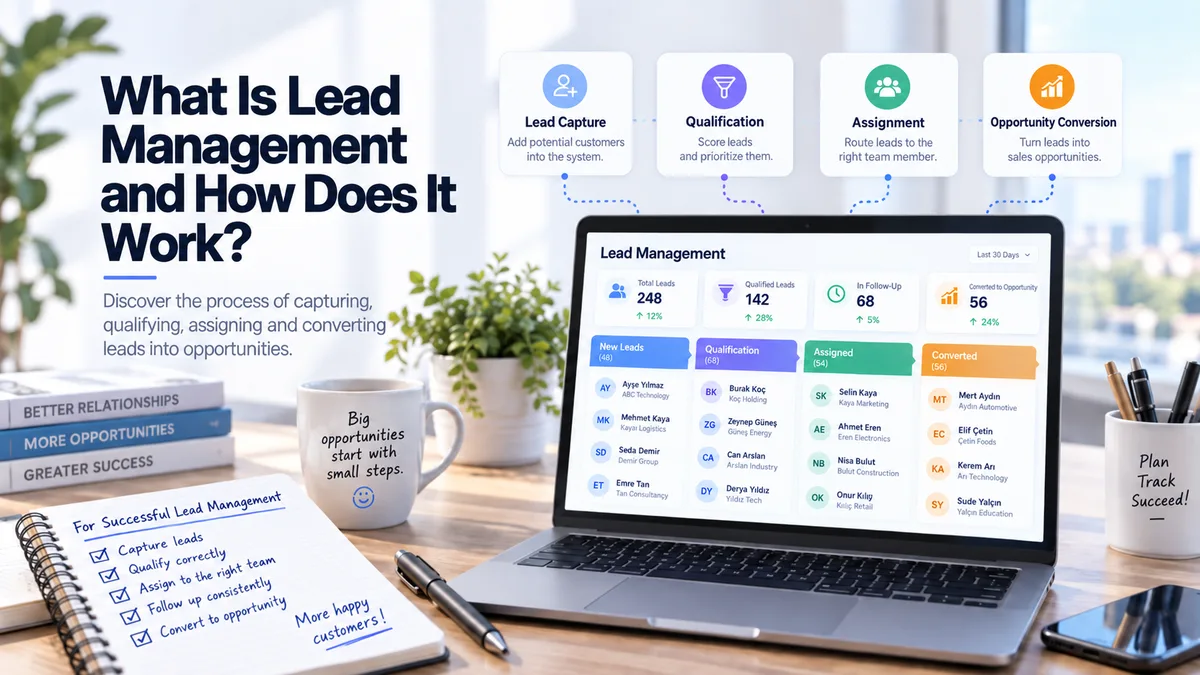
What Is Lead Management and How Does It Work?
Learn how businesses capture, evaluate, assign, follow up and convert potential customers into qualified sales opportunities.
Read More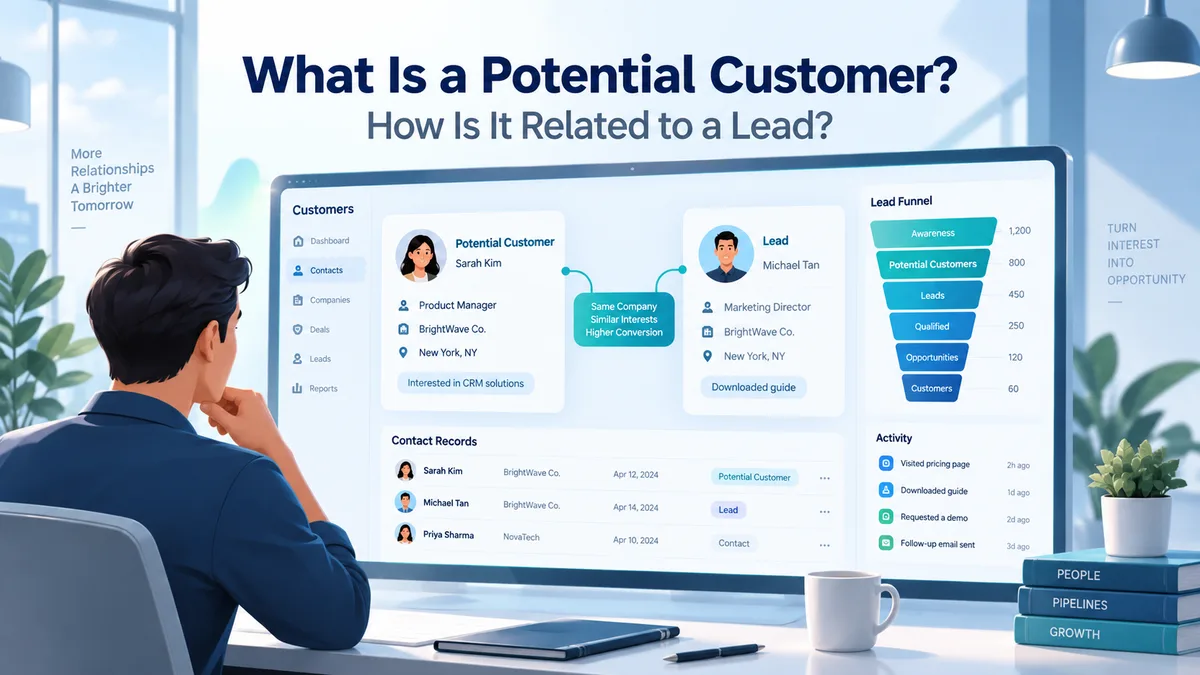
What Is a Potential Customer? How Is It Related to a Lead?
Learn what a potential customer means, how the concept relates to leads and how potential customers can be evaluated throughout the sales process.
Read More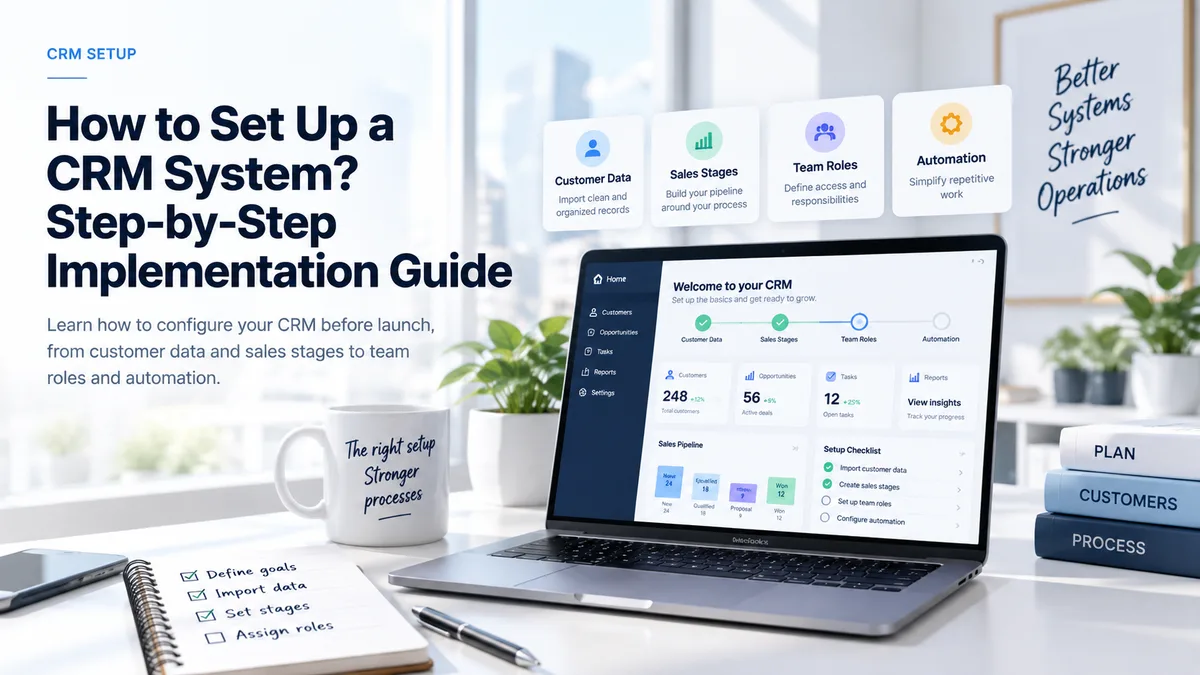
How to Set Up CRM Software: A Step-by-Step Guide
Learn how to configure CRM software, from customer data and sales stages to team roles, follow-ups, automation and reporting.
Read More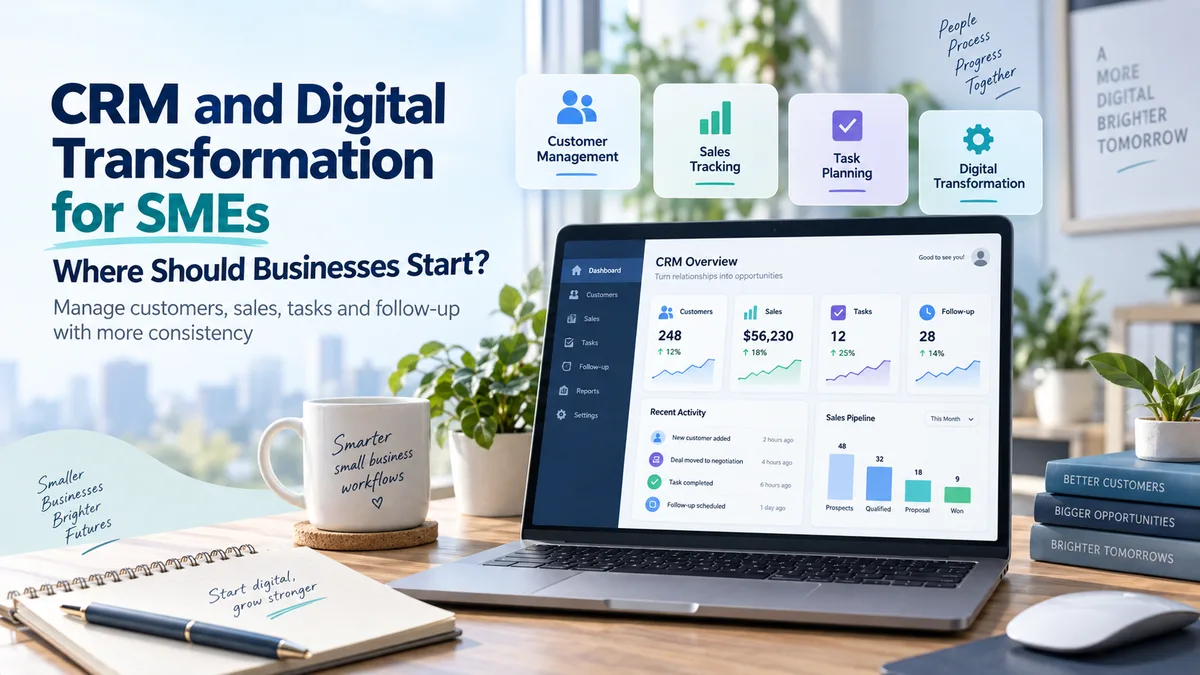
CRM and Digital Transformation for SMEs: Where Should Businesses Start?
Learn how SMEs can use CRM to manage customers, sales, tasks and follow-up more consistently and how CRM can support digital transformation.
Read More