How to Manage Customer Acquisition with CRM
Learn how to build a measurable customer acquisition process, from defining your target market and managing leads to opportunities, sales conversion and customer acquisition cost.
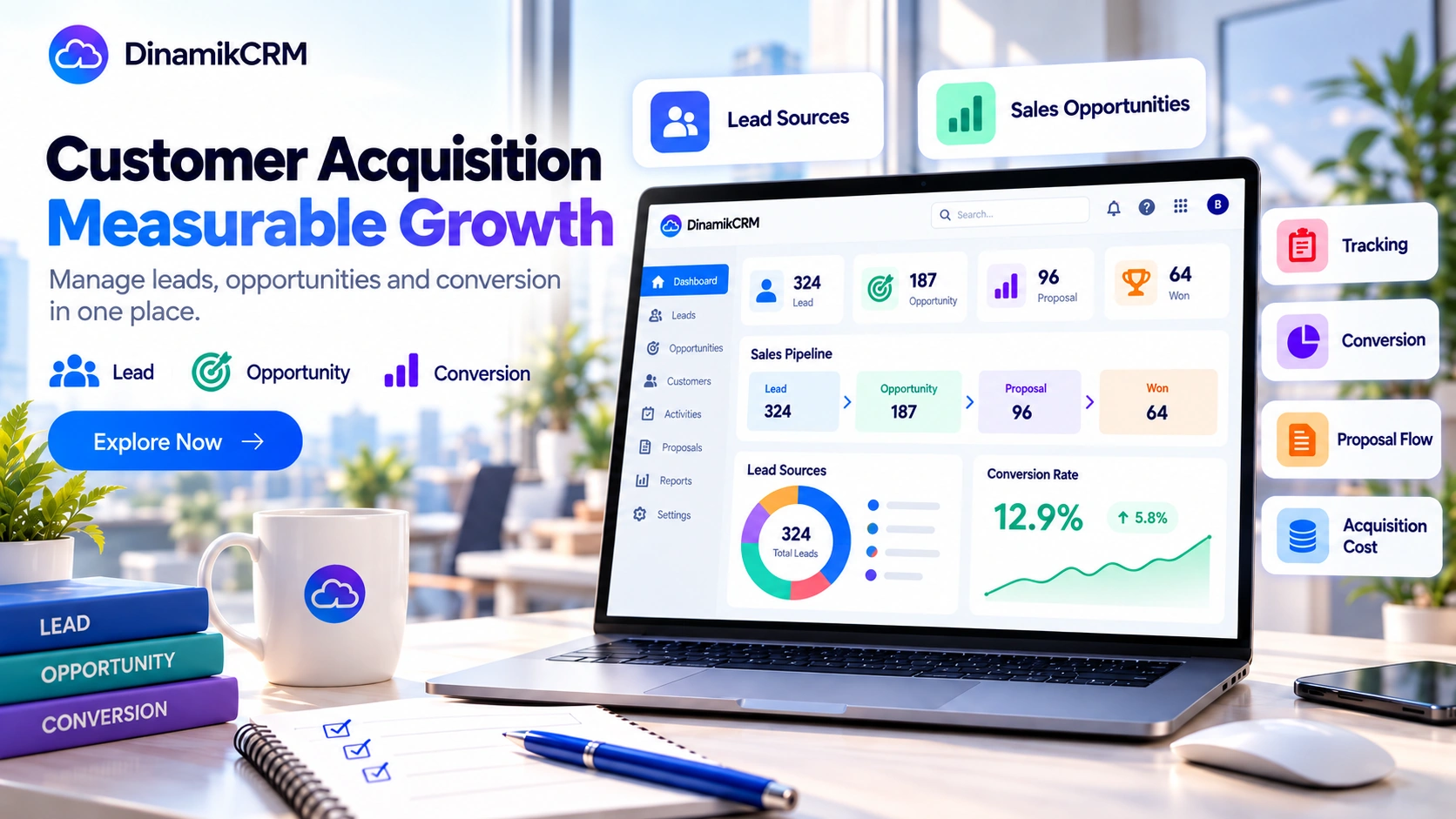
Acquiring new customers is one of the main growth goals for almost every business. However, customer acquisition is not simply about reaching more people or collecting more leads. What matters is turning the right potential customers into paying customers through a structured sales process.
Sustainable customer acquisition therefore requires marketing, sales and customer data to work together rather than operate as separate processes. Businesses need to understand which channels generate potential customers, which of those leads become sales opportunities and which opportunities eventually turn into customers.
CRM software can help make this process more organized and measurable. From potential customers and sales opportunities to activities, proposals and follow-up actions, the entire customer acquisition journey can be managed within a single system.
What is customer acquisition?
Customer acquisition is the combination of marketing and sales activities a business uses to turn a potential customer into an actual customer, starting from the first interaction.
In many businesses, this process includes the following stages:
- Defining the target customer profile
- Reaching potential customers
- Creating a lead or potential customer record
- Evaluating needs and fit
- Creating a sales opportunity
- Managing meetings and follow-up activities
- Managing the proposal process
- Closing the sale
Customer acquisition is therefore not a single marketing activity or a responsibility that belongs only to the sales team. It is an end-to-end process that starts with initial awareness and continues until a sale is closed.
What is the difference between finding customers and acquiring customers?
Finding potential customers is only one of the first steps in the customer acquisition process.
Collecting business cards at an event, receiving a form submission from a website, generating a lead from an ad or contacting a company on LinkedIn does not mean that a new customer has been acquired.
These potential customers first need to be evaluated, their needs should be understood and their fit with the business should be assessed. After that, meetings, proposals and follow-up activities can take place.
If you would like to explore practical ways to reach potential customers, you can also read our how to find potential customers guide.
How should the customer acquisition process be managed?
A healthy customer acquisition system requires the process to be clearly defined from beginning to end. Every business may have a different sales model, but the basic structure is often similar.
1. Define your target customer
Trying to sell to everyone usually causes sales teams to spend time inefficiently. The first step is to identify which customer profiles are most relevant to the business.
For B2B companies, the target customer profile can be evaluated using criteria such as:
- Industry
- Company size
- Number of employees
- Geographic region
- Current systems or software
- Decision-maker roles
- Business needs or pain points
This helps marketing and sales teams understand which customer segments deserve more attention.
2. Define your customer acquisition channels
Potential customers can reach a business through many different channels.
For example:
- Organic Google search
- Digital advertising
- Social media
- Events and trade shows
- Referrals
- Partners and solution providers
- Email campaigns
- Direct outbound sales
- Website forms
The goal is not simply to increase the number of channels. Businesses should also measure which channels generate leads that can actually become customers.
3. Centralize potential customer records
When potential customer records are spread across spreadsheets, email inboxes, personal notes and separate applications, important follow-up actions can easily be missed.
Sales teams may contact the same customer multiple times, some leads may be forgotten and managers may struggle to understand where each potential customer currently stands.
With CRM software, potential customers from different sources can be stored in one place. This gives sales teams easier access to customer history, ownership and the current status of each lead.
To learn more about the fundamentals of lead management, see our what is lead management? article.
4. Qualify potential customers
Not every lead has the same sales potential.
Some potential customers may not have an immediate need. Others may not match the target customer profile. Some may already be actively looking for a solution and be close to making a purchase decision.
Sales teams therefore need a consistent way to evaluate potential customers.
Criteria may include:
- Level of need
- Budget
- Decision timeline
- Company profile
- Product or service of interest
- Previous interactions
- Purchase intent
This allows teams to spend more time on leads that are more likely to become qualified sales opportunities.
5. Convert qualified leads into sales opportunities
Once a potential customer has a clear business need, the record can move from a lead into a structured sales opportunity.
Information tracked for a sales opportunity may include:
- Expected deal value
- Sales stage
- Probability of winning
- Expected close date
- Responsible sales representative
- Related customer or company
- Meetings and activities
This makes the sales pipeline more visible and easier to manage.
You can explore this topic in more detail in our sales opportunity management article.
6. Standardize follow-up activities
Many sales do not close after the first meeting.
Potential customers may need additional time, internal approval or further information before they can make a decision. This makes consistent follow-up an important part of customer acquisition.
CRM systems can be used to track:
- Call tasks
- Meetings
- Email follow-ups
- Reminders
- Next-action dates
This helps sales teams maintain a more consistent and structured follow-up process.
7. Manage proposals together with sales opportunities
In B2B sales, proposals are often one of the most important stages of the customer acquisition journey.
After a proposal is sent, the process should remain connected to the relevant customer and sales opportunity. Teams should be able to see when the proposal was sent, which deal it belongs to and what the next action should be.
This prevents proposals from becoming disconnected documents and keeps them within the broader sales process.
Why is generating more leads not enough?
One common mistake in customer acquisition is measuring success only by the number of leads generated.
A campaign may generate 500 leads, but if only a very small percentage of those leads become real sales opportunities, the total lead count may not tell the full story.
Businesses should also ask:
- How many leads match the target customer profile?
- How many leads were actually evaluated by sales?
- How many became sales opportunities?
- How many reached the proposal stage?
- How many became customers?
- How long did the process take?
These questions help evaluate not only the volume of customer acquisition, but also the quality of the process.
How does CRM support customer acquisition?
CRM software can help businesses manage the different stages of customer acquisition in one system.
For example, businesses using DinamikCRM can:
- Store potential customer records
- Track lead sources
- Create sales opportunities
- Manage pipeline stages
- Record activities
- Create follow-up tasks
- Connect proposals with sales processes
- Analyze sales results
This helps make customer acquisition less dependent on individual memory, personal notes or separate spreadsheets.
To explore DinamikCRM's approach to structured sales processes, visit our lead management and sales opportunity management pages.
How can customer acquisition be measured?
If customer acquisition is not measured, it becomes difficult to understand which parts of the process are working well and where potential customers are being lost.
Businesses should therefore track metrics that reflect their own sales model and customer journey.
Number of leads
This shows the total number of potential customers generated during a specific period.
However, lead volume alone is not enough. Lead quality and conversion into later stages should also be measured.
Number of qualified leads
Qualified leads are potential customers that match the target profile and are considered relevant for the sales process.
This metric can often provide more useful insight than the total number of leads.
Lead-to-opportunity conversion rate
This measures how many leads turn into actual sales opportunities.
A simple calculation is:
Number of sales opportunities / total number of leads × 100
Opportunity-to-customer conversion rate
This measures how many sales opportunities are eventually won.
It can provide useful insight into the effectiveness of the sales process.
Average sales cycle length
The average sales cycle measures the time between the initial interaction with a potential customer and the final closing of the deal.
If the sales cycle is unusually long, there may be bottlenecks in follow-up, proposal or decision-making stages.
Customer acquisition cost
Customer acquisition cost helps businesses understand how much they spend to acquire each new customer.
A common calculation is:
Customer Acquisition Cost = Sales and Marketing Costs / Number of New Customers Acquired
Depending on the business model, this may include advertising expenses, sales team costs, software costs, agency fees and other expenses directly related to acquiring customers.
Conversion rates by channel
Not every acquisition channel generates the same type of lead.
Businesses can compare channels such as:
- Organic Google search
- Google Ads
- Referrals
- Partners
- Trade shows
By comparing opportunity and customer conversion rates for each channel, businesses can identify which channels generate real customers rather than simply the largest number of leads.
What are common customer acquisition mistakes?
Technology alone cannot create a healthy customer acquisition process. The underlying sales process also needs to be clearly defined.
Treating every lead the same way
Giving the same priority to every lead regardless of need, budget, timeline or customer fit can reduce sales efficiency.
Not tracking lead sources
If the source of a potential customer is unknown, it becomes difficult to measure which marketing and sales channels are actually creating revenue.
Not recording follow-up activities
When meetings and conversations are kept in personal notes, the wider team cannot see the customer history. Important context may also be lost when ownership changes.
Not defining sales stages
If every opportunity is tracked only as "open" or "closed", managers cannot clearly understand the real status of the sales pipeline.
Defining sales stages that reflect the actual buying process makes the pipeline more meaningful.
Focusing only on lead volume
Generating a large number of low-quality leads does not automatically improve sales performance.
Businesses should focus on the entire conversion chain from lead to opportunity and from opportunity to customer.
How can you build a scalable customer acquisition system?
When customer acquisition depends entirely on the personal methods of individual sales representatives, the process can become difficult to manage as the business grows.
A more scalable approach requires customer acquisition activities to be standardized as much as possible.
A practical structure may look like this:
- Define the target customer profile.
- Identify customer acquisition channels.
- Collect leads in a shared CRM system.
- Define lead qualification criteria.
- Create clear sales opportunity stages.
- Standardize activities and follow-up actions.
- Connect proposals with sales opportunities.
- Measure conversion rates regularly.
- Identify the most effective channels and sales stages.
- Continuously improve the process based on data.
With this structure in place, sales teams can move beyond simply saying "we need more customers" and start understanding exactly which actions and stages contribute to customer growth.
Should businesses focus on new customer acquisition or customer retention?
New customer acquisition is important, but sustainable growth does not depend only on new sales. Customer satisfaction, repeat sales and long-term customer relationships also contribute to business growth.
Customer acquisition and customer retention should therefore not be treated as completely separate processes.
To explore this relationship in more detail, you can read our customer loyalty and new customer acquisition article.
Conclusion
Customer acquisition is not simply about running more ads, making more calls or generating more leads.
Sustainable acquisition requires businesses to identify the right customer profiles, centralize lead data, qualify potential customers, manage sales opportunities and measure conversion across the entire sales process.
CRM software can make this journey more visible. When leads, opportunities, activities, proposals and won customers are tracked within the same system, businesses can better understand which channels and which sales activities are actually producing results.
With DinamikCRM, you can manage potential customers, sales opportunities, activities and customer processes from a single platform and build a more structured and measurable customer acquisition process.
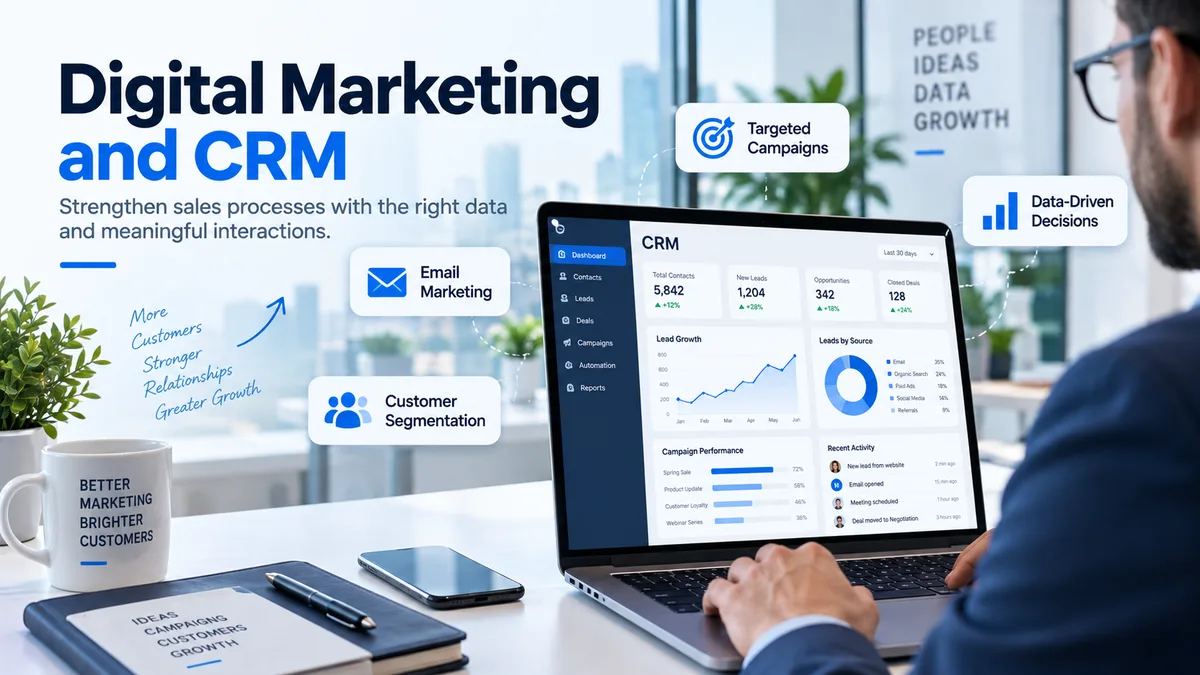
How Digital Marketing and CRM Work Together
Learn how CRM helps businesses manage leads generated through digital marketing and strengthen segmentation, follow-up and sales processes.
Read More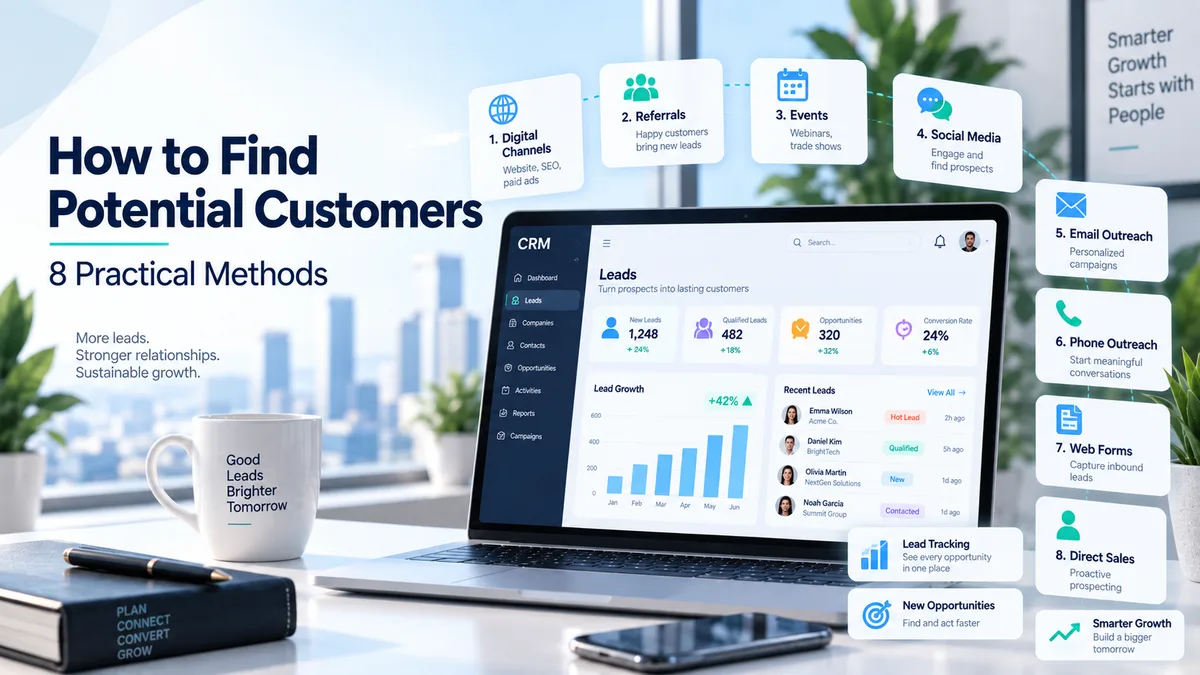
How to Find Potential Customers: 8 Practical Methods
Explore practical ways to find potential customers through digital channels, referrals, events, direct outreach and structured lead management.
Read More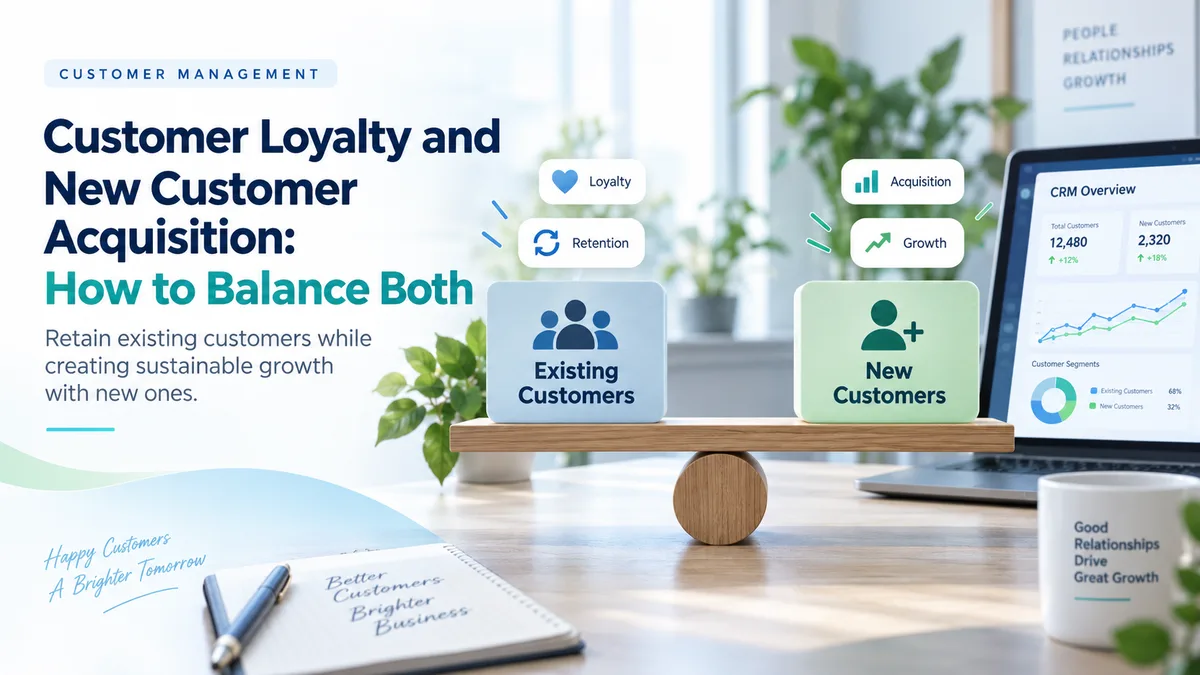
Customer Loyalty and New Customer Acquisition: How to Balance Both
Learn how businesses can balance new customer acquisition with retention and how CRM can support both sides of the customer lifecycle.
Read More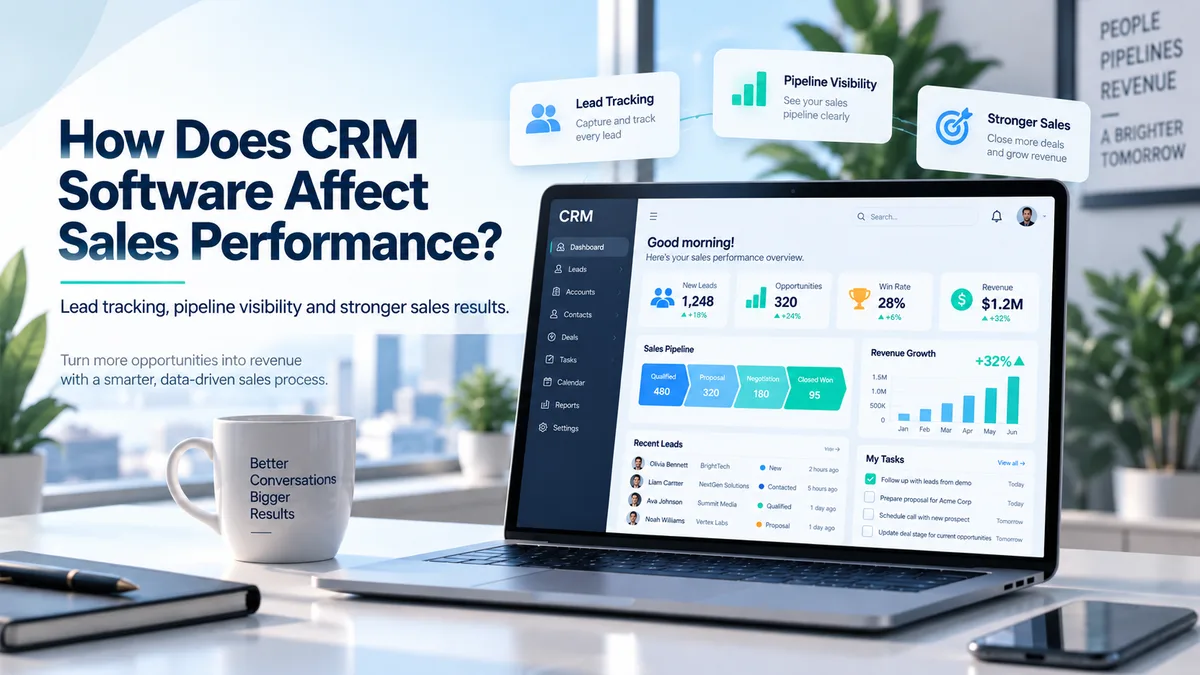
How Does CRM Software Affect Sales Performance?
Learn how CRM software can support sales processes through lead tracking, opportunity management, pipeline visibility, follow-up tasks and reporting.
Read More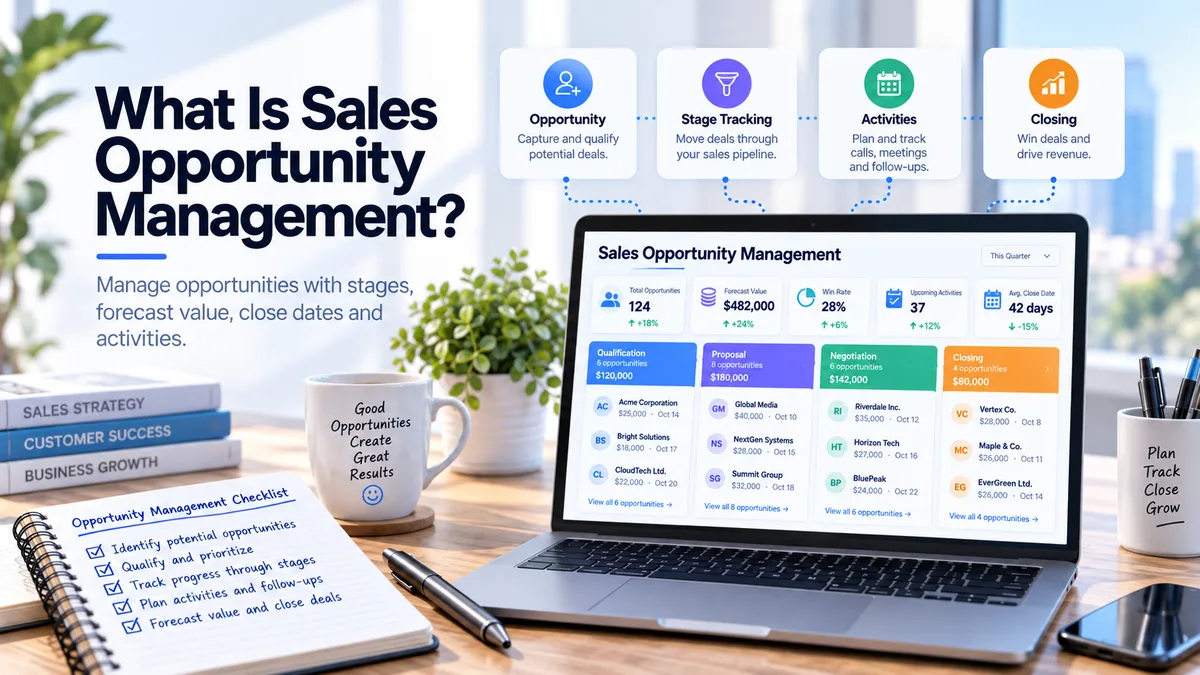
What Is Sales Opportunity Management?
Learn how sales opportunities can be managed through stages, expected values, close dates, activities and performance metrics.
Read More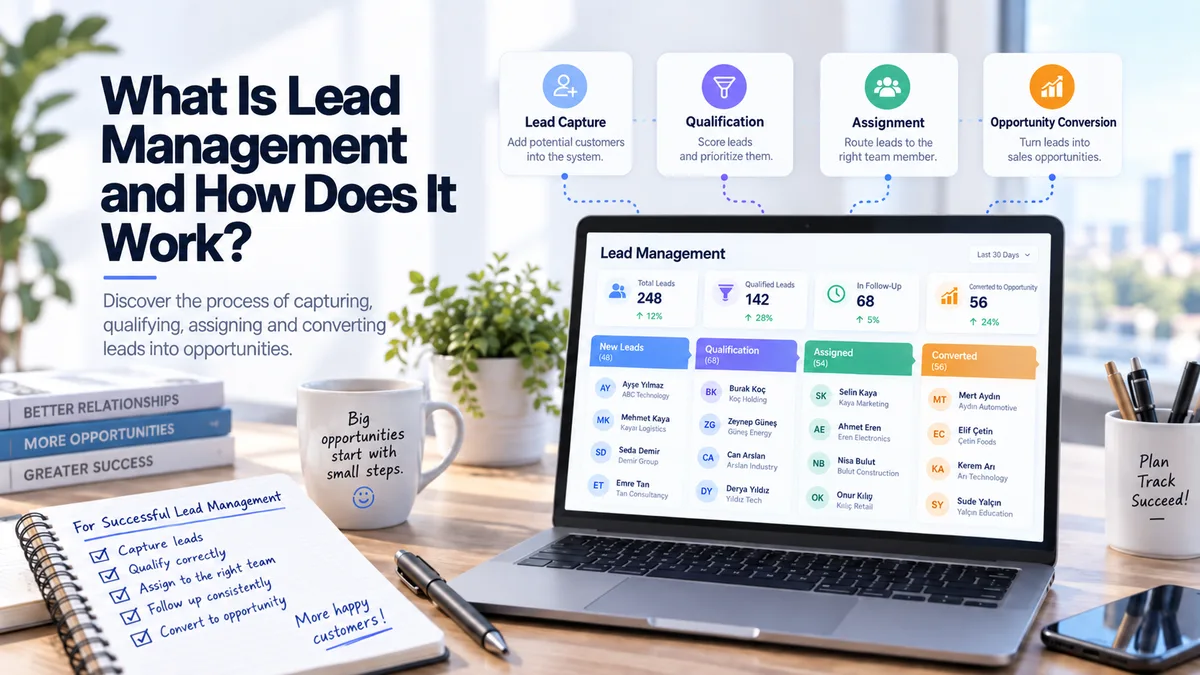
What Is Lead Management and How Does It Work?
Learn how businesses capture, evaluate, assign, follow up and convert potential customers into qualified sales opportunities.
Read More