Customer Loyalty and New Customer Acquisition: How to Balance Both
Learn how businesses can balance new customer acquisition with retention and how CRM can support both sides of the customer lifecycle.
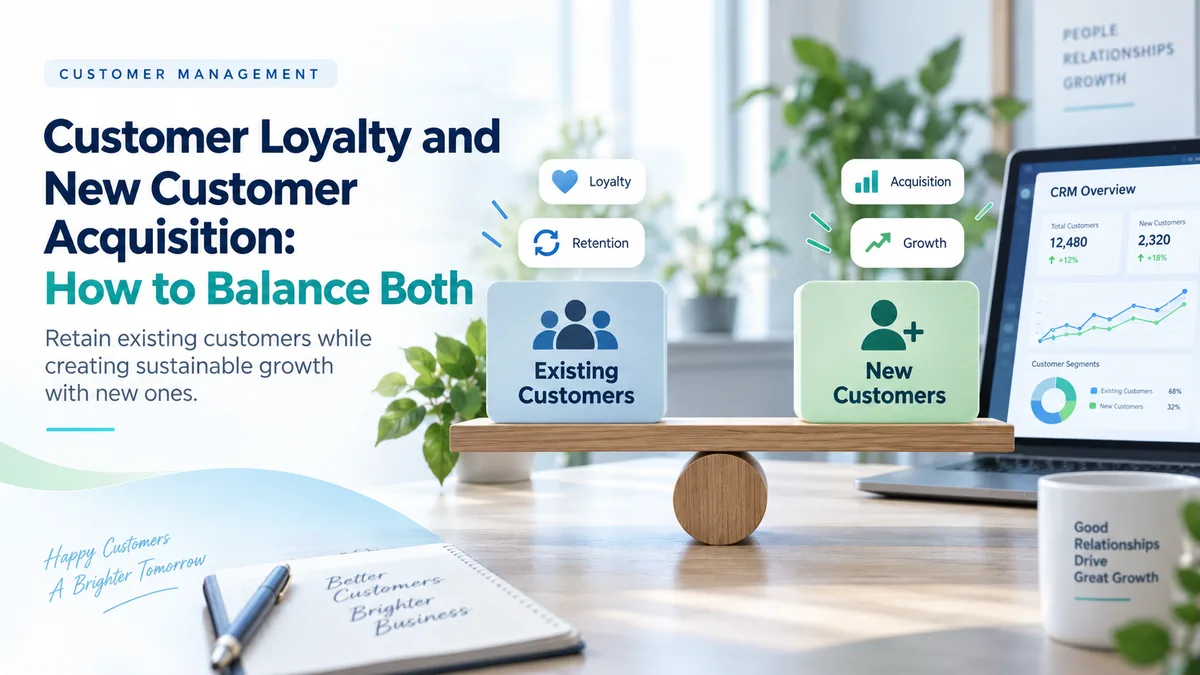
Businesses need new customers in order to grow, but focusing only on acquisition can cause existing customer relationships to receive less attention.
A balanced customer strategy considers both new customer acquisition and customer retention.
What Is New Customer Acquisition?
Customer acquisition is the process of turning people or companies that have not previously been customers into new customers.
This can include lead generation, opportunity management, proposals, follow-up and sales activities.
Read How to Find Potential Customers .
What Is Customer Loyalty?
Customer loyalty describes the tendency of customers to continue their relationship with a business over time.
Loyalty is influenced by more than repeat purchases. Customer experience, trust, support and the wider relationship also matter.
Which Is More Important: New or Existing Customers?
These are not mutually exclusive priorities.
New customer acquisition supports growth, while retaining existing customers supports the continuity of the customer base.
1. Make Customer Acquisition Visible
Businesses should understand where potential customers come from and how they move through the sales process.
Lead source, ownership, conversations and next actions can be managed in CRM.
Explore Lead Management .
2. Track Sales Opportunities
Once a lead becomes a realistic sales opportunity, stage, value, expected close date and interaction history become important.
Explore Sales Opportunity Management .
3. Continue the Relationship After the Sale
Winning a new customer is not the end of the process.
Product use, support, requests, complaints and future needs remain part of the relationship.
Read How to Manage Post-Sales Support and Customer Relationships .
4. Monitor Customer Satisfaction
Customer experience can influence the strength of the ongoing relationship.
Support quality, communication and problem resolution are all relevant.
Read What Is Customer Satisfaction? .
5. Preserve Customer History
Long-term customer relationships benefit from accessible interaction history.
Previous sales, requests, conversations and complaints provide useful context for future interactions.
6. Track Changing Customer Expectations
Customer requirements can change over time.
What mattered during the first purchase may later be replaced by support, usage or new product requirements.
Read What Do Customers Expect? .
7. Use Customer Segmentation
Customers do not all have the same needs or behavior.
Industry, status, purchase history and other criteria can be used to create useful customer segments.
Read What Is Customer Segmentation? .
8. Identify New Needs in Existing Customers
New requirements may appear as the customer relationship develops.
The objective is not to push unnecessary products, but to recognize relevant needs when they genuinely arise.
9. Analyze Lost Customers
Customer loss can provide useful information about product, service or process problems.
Recording reasons for customer loss can help identify recurring patterns.
10. Manage the Entire Customer Lifecycle
Acquisition and loyalty are different stages of the same customer lifecycle.
The lifecycle may include:
- Potential customer
- Lead
- Sales opportunity
- New customer
- Active customer
- Post-sales relationship
- Renewal or new requirements
Read What Is Customer Lifecycle Management? .
How Can CRM Support New Customer Acquisition?
CRM does not generate prospects by itself, but it can help teams manage leads that have already been identified.
CRM can track:
- Lead source
- Owner
- Interaction history
- Sales opportunities
- Tasks
- Pipeline
How Can CRM Support Customer Loyalty?
CRM does not automatically create loyalty.
It can support customer relationships by preserving history, keeping requests visible and enabling teams to work from shared information.
Read How Can CRM Strengthen Customer Relationships? .
How Can Acquisition and Retention Be Measured?
New customer metrics may include:
- New leads
- Lead-to-opportunity conversion
- New customers
- Sales results by source
Existing customer indicators may include:
- Repeat purchases
- Active customer status
- Complaints and requests
- Renewals
- Reasons for customer loss
Read Why CRM Reporting Matters .
Do Not Look Only at New Customer Numbers
Growth in new customers can be positive, but losing a significant number of existing customers at the same time may indicate problems elsewhere in the customer lifecycle.
Create a Balanced Customer Strategy
Sustainable customer management is not only about finding new customers or only about retaining existing ones.
Managing the complete lifecycle from lead to post-sales relationship creates a more complete view of customer performance.
Explore Customer Management and Sales Management .
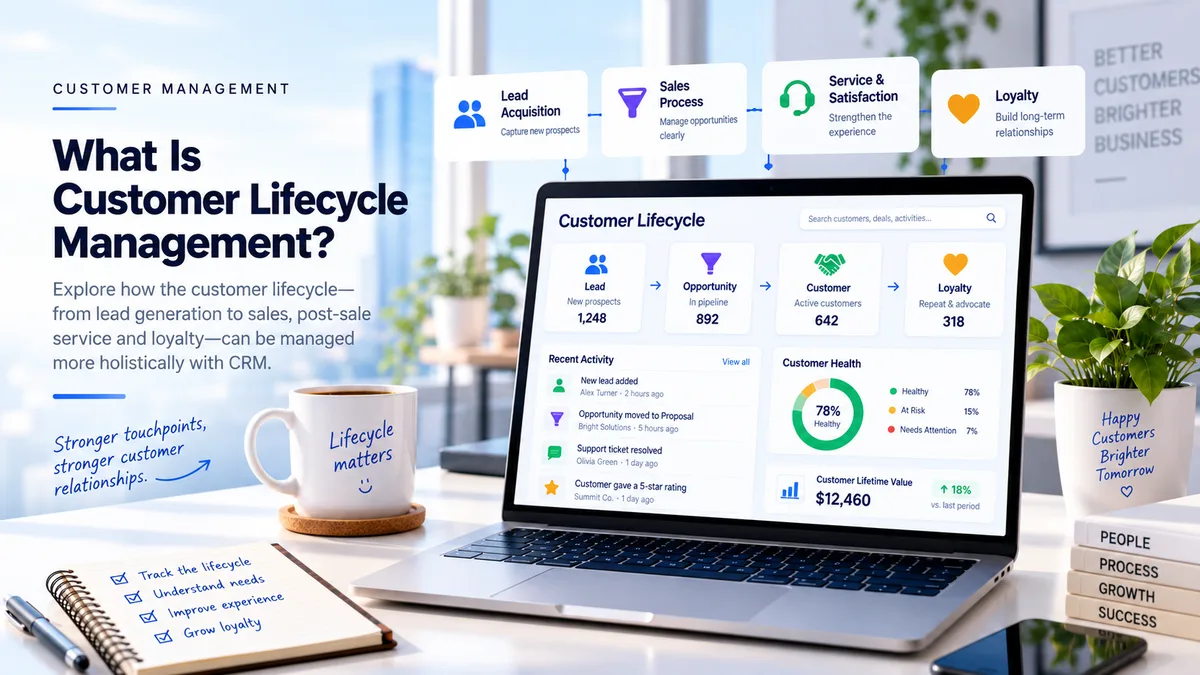
What Is Customer Lifecycle Management?
Discover how CRM can help manage the customer lifecycle more holistically, from the first opportunity and sale to post-sale service and long-term loyalty.
Read More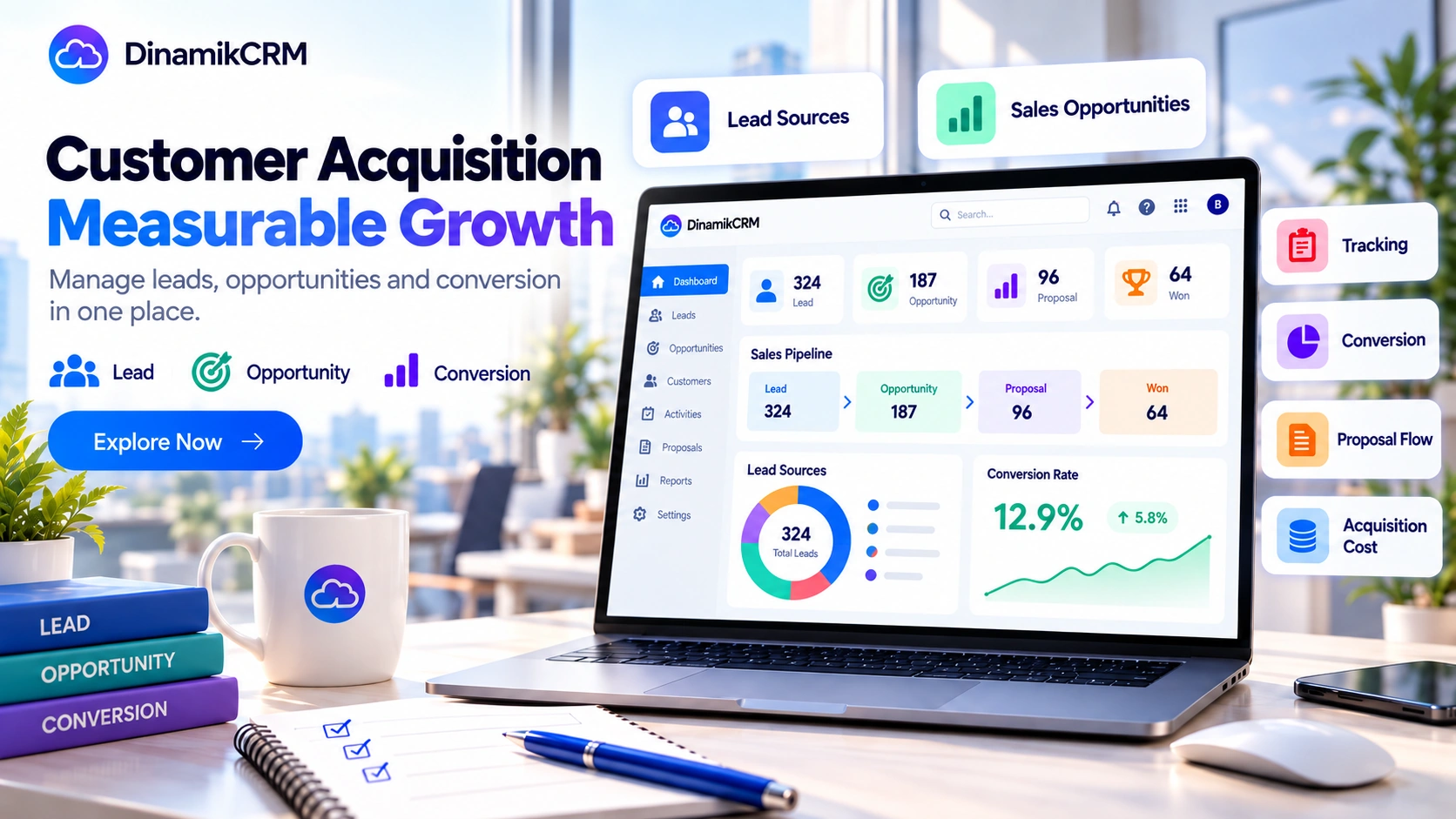
How to Manage Customer Acquisition with CRM
Learn how to build a measurable customer acquisition process, from defining your target market and managing leads to opportunities, sales conversion and customer acquisition cost.
Read More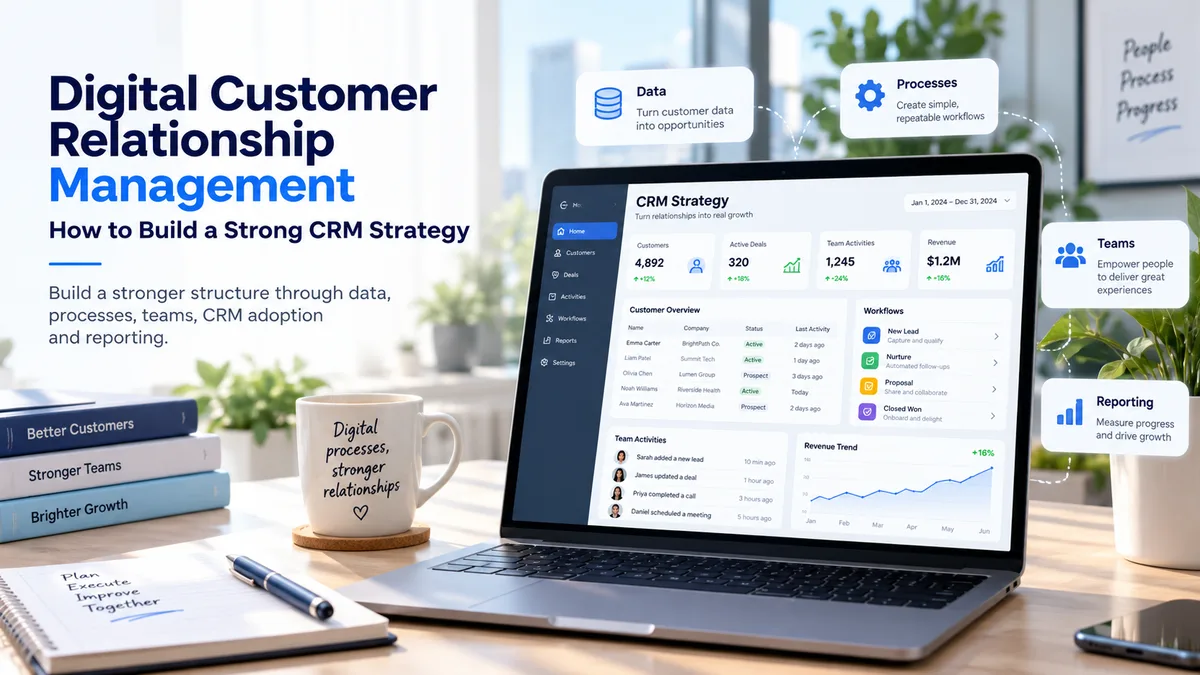
Digital Customer Relationship Management: How to Build a Strong CRM Strategy
Explore the key elements of digital customer relationship management, including data, processes, teams, CRM adoption and reporting.
Read More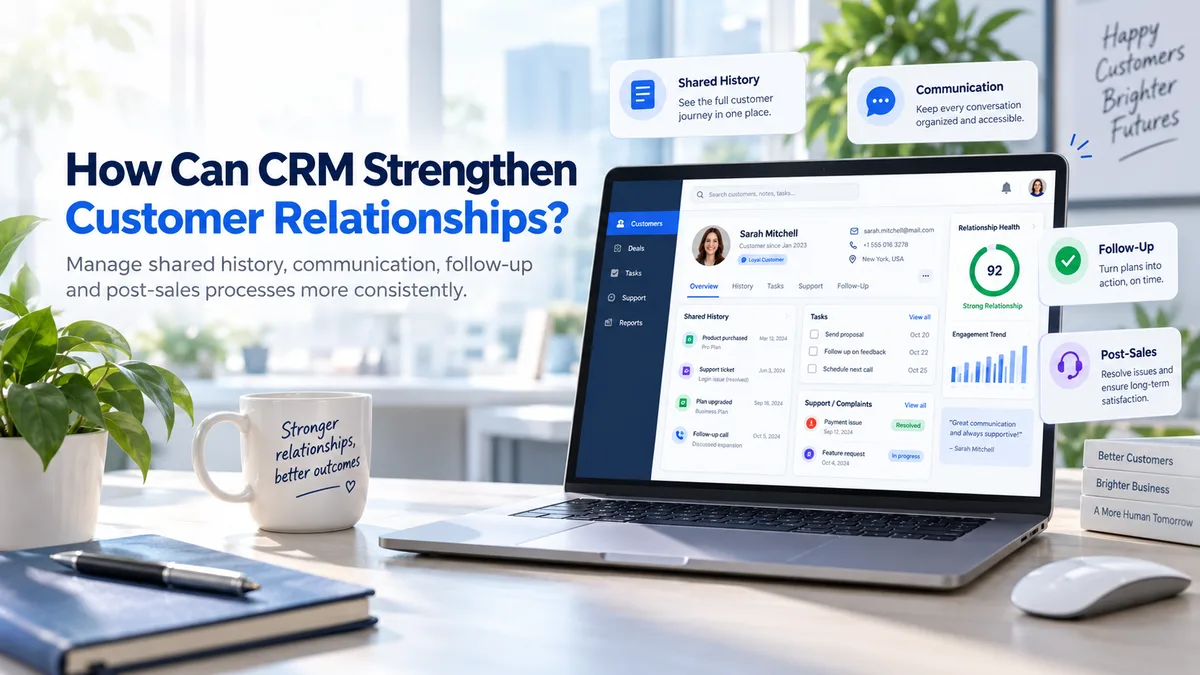
How Can CRM Strengthen Customer Relationships?
Learn how CRM can support customer relationships through shared history, communication tracking, follow-up, complaint management and post-sales processes.
Read More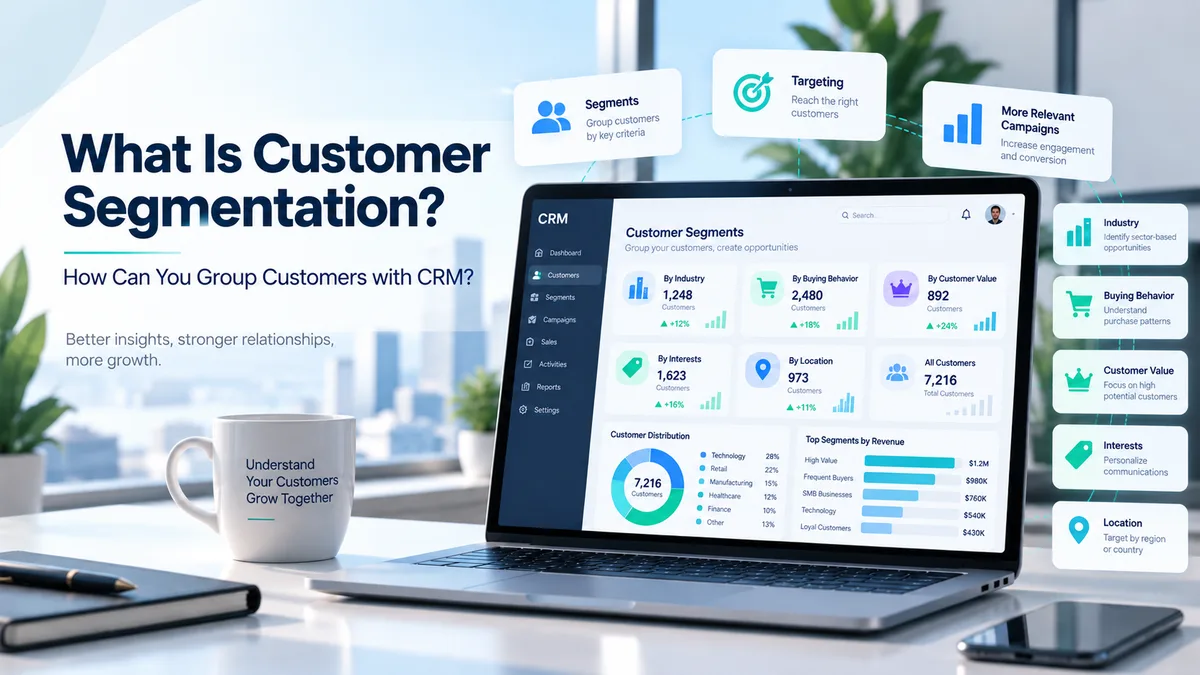
What Is Customer Segmentation? How Can You Group Customers with CRM?
Learn what customer segmentation means, which criteria can be used to group customers and how CRM data can support a more structured segmentation process.
Read More
Why the Human Touch Matters in Digital Customer Experience
Discover why human interaction, trust and personalized communication remain important in customer experience in the age of digitalization and AI.
Read More