What Is Customer Lifetime Value (CLV)? How to Calculate and Improve It
Learn how to calculate customer lifetime value (CLV), understand its relationship with CAC, and use CRM data to improve long-term customer value.
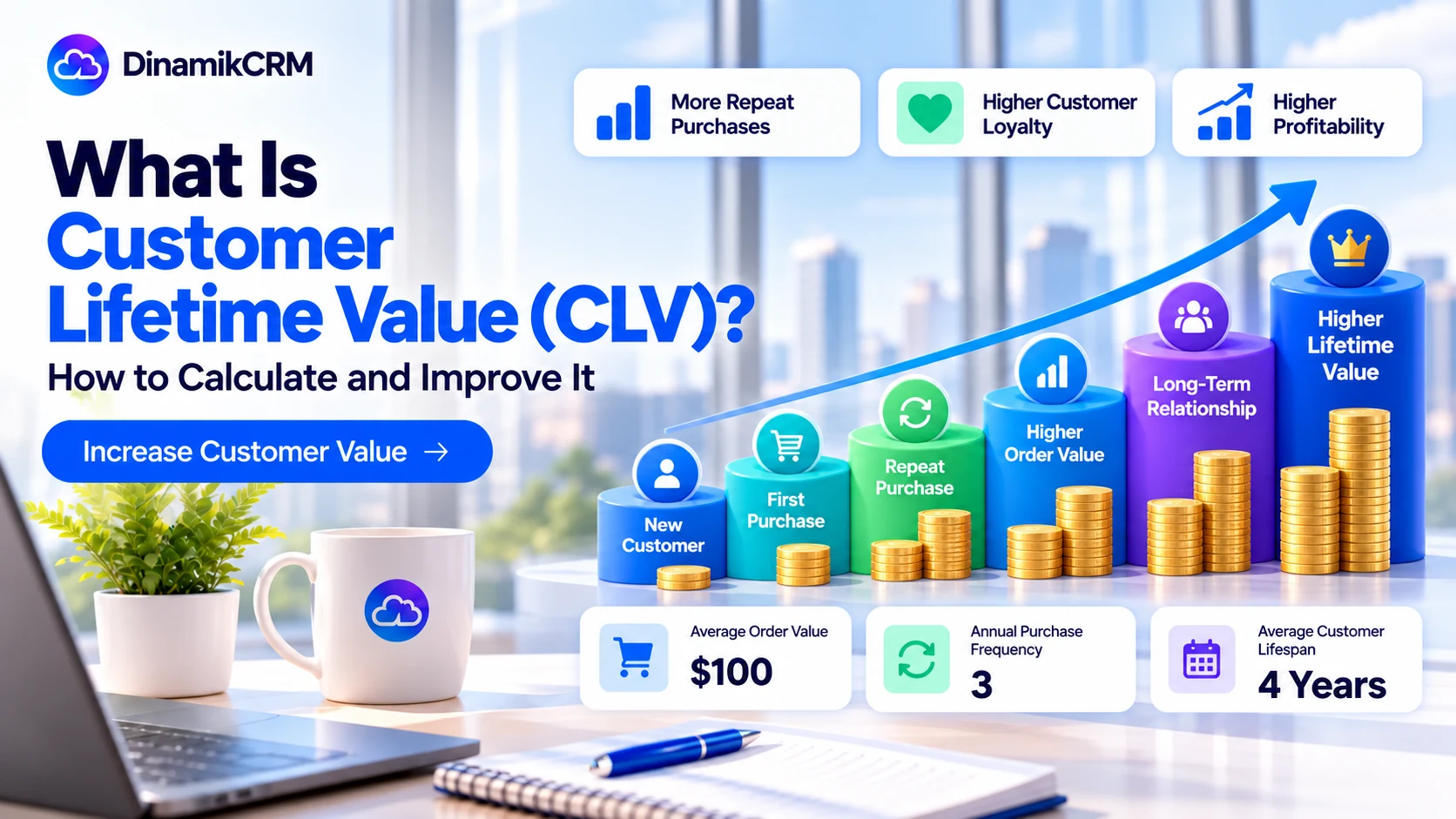
Winning a customer matters, but understanding the value of that relationship over time is just as important. Customer lifetime value (CLV) provides a practical way to measure this, taking repeat purchases and relationship duration into account rather than focusing only on the first sale.
What is customer lifetime value (CLV)?
CLV estimates the revenue or, depending on the method, gross profit a customer generates throughout their relationship with a business. Revenue-based and profit-based CLV are not interchangeable, so every report should state which definition it uses.
How do you calculate CLV?
For a business with repeat transactions, a useful starting point is:
Revenue-based CLV = Average order value × Annual purchase frequency × Average customer lifespan in years
Average order value is total order revenue divided by order count. Annual purchase frequency can be estimated by dividing annual orders by unique purchasing customers. Average lifespan is estimated from historical customer relationships. Keep measurement periods consistent.
A practical CLV example
Assume an average order of $100, three purchases per year, and an average relationship lasting four years.
$100 × 3 × 4 = $1,200
Estimated revenue-based CLV is $1,200. It is not the same as profit. At an illustrative 40% gross margin, estimated gross-profit-based CLV is $480 before acquisition and other operating expenses.
How does CLV work in subscription businesses?
A simplified subscription model, assuming stable monthly revenue and churn, is:
Gross-profit-based CLV ≈ Monthly revenue per customer × Gross margin ÷ Monthly customer churn rate
At $100 in monthly customer revenue, a 70% gross margin, and 5% monthly customer churn, estimated CLV is $1,400. This simple model excludes discounting, growth, onboarding costs, and variations between customer groups. Validate projections with real cohort data.
What is the relationship between CLV and customer acquisition cost (CAC)?
CAC generally divides relevant sales and marketing acquisition costs by the number of new customers acquired in the period. Comparing it with CLV can help assess the long-term economics of winning customers.
However, comparing revenue-based CLV directly with acquisition cost may exaggerate profitability. Use gross-profit-based CLV, payback period, and operating costs together. There is no universal ratio suitable for every business.
How can you track CLV with CRM data?
CLV analysis relies on connecting customer identities with order histories, transaction dates, repeat purchases, segments, and churn events. CRM can help organize the underlying customer and sales records.
- Customer history: Track first and latest transactions.
- Sales records: Review purchase amounts, frequency, and product categories.
- Segmentation: Compare CLV by industry, customer size, or acquisition channel.
- Churn insights: Explore patterns among customers who stop buying.
- Reporting: Go beyond overall averages by analyzing cohorts and segments.
Five ways to improve customer lifetime value
- Improve onboarding: Help customers experience value sooner.
- Build consistent follow-up: Address renewals, repeat purchases, and support needs on time.
- Make relevant offers: Base additional product and service suggestions on actual customer needs.
- Investigate churn: Look for behavioral patterns behind customer losses.
- Measure by segment: Identify where long-term value is strongest and most sustainable.
Monitor gross margins, satisfaction, repeat purchases, and retention alongside revenue to understand whether improvements are sustainable.
Frequently asked questions
Are CLV and LTV the same?
CLV, CLTV, and LTV commonly describe the same customer lifetime value concept. Clearly distinguish revenue-based and profit-based versions in your reporting.
How often should CLV be calculated?
Monthly or quarterly review can work for many businesses, while longer sales cycles may call for broader cohort analysis.
Can CLV be estimated for new customers?
Yes. Historical results from comparable customer groups can support estimates, but those estimates are forecasts, not realized revenue.
Conclusion
CLV helps businesses understand not only how many customers they acquire, but also the value those relationships may create over time. Accurate measurement depends on consistent definitions, reliable customer records, and segment-level analysis. Organizing customer and sales workflows with DinamikCRM can support the data discipline needed for that work.
Related reading: What is customer churn rate? and How to manage customer acquisition.
Customer Loyalty and New Customer Acquisition: How to Balance Both
Learn how businesses can balance new customer acquisition with retention and how CRM can support both sides of the customer lifecycle.
Read More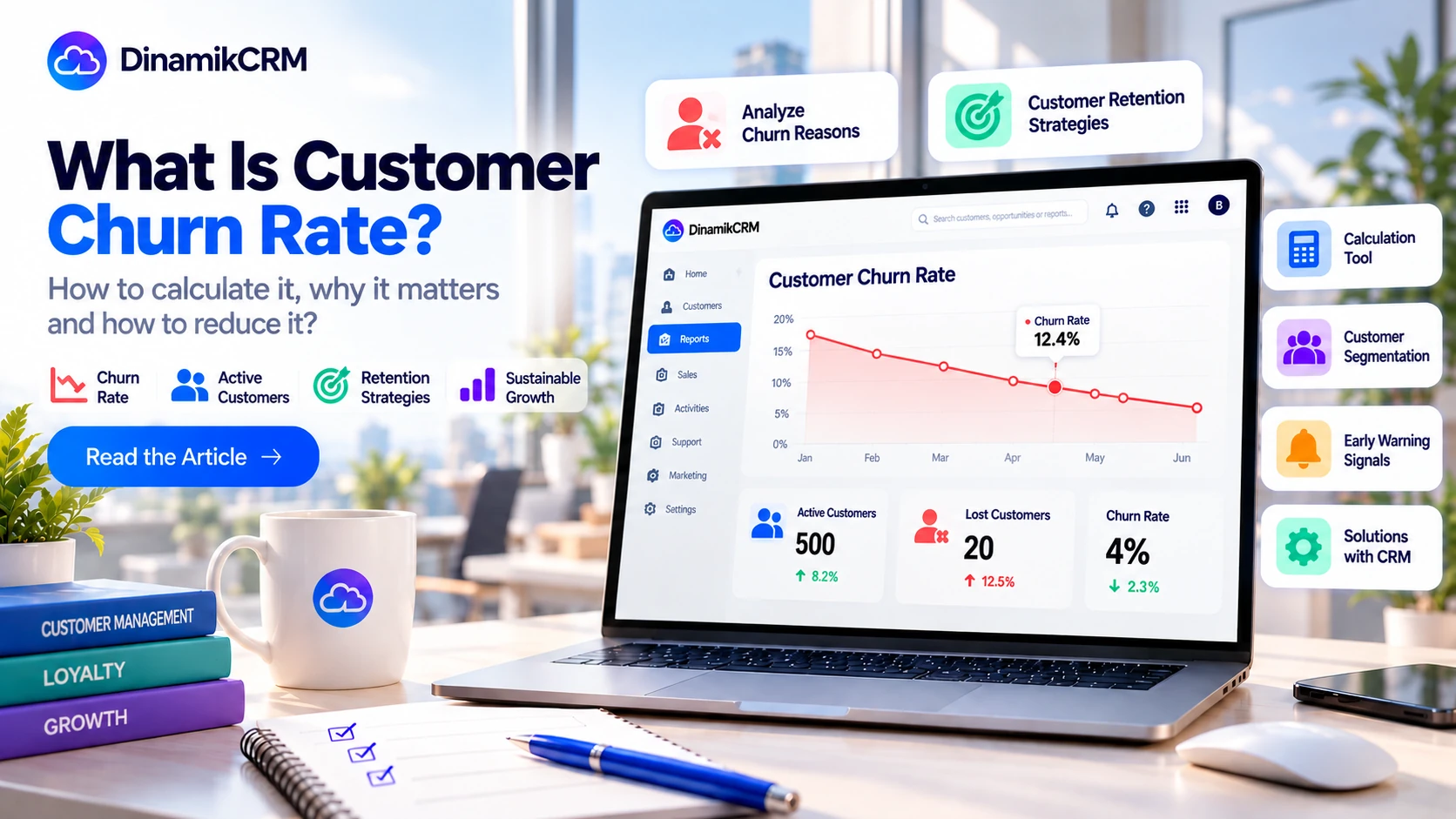
What Is Customer Churn Rate? How to Calculate and Reduce Churn
Learn what customer churn rate means, how to calculate it, identify early warning signs of customer loss, and reduce churn using CRM and customer retention strategies.
Read More
Why the Human Touch Matters in Digital Customer Experience
Discover why human interaction, trust and personalized communication remain important in customer experience in the age of digitalization and AI.
Read More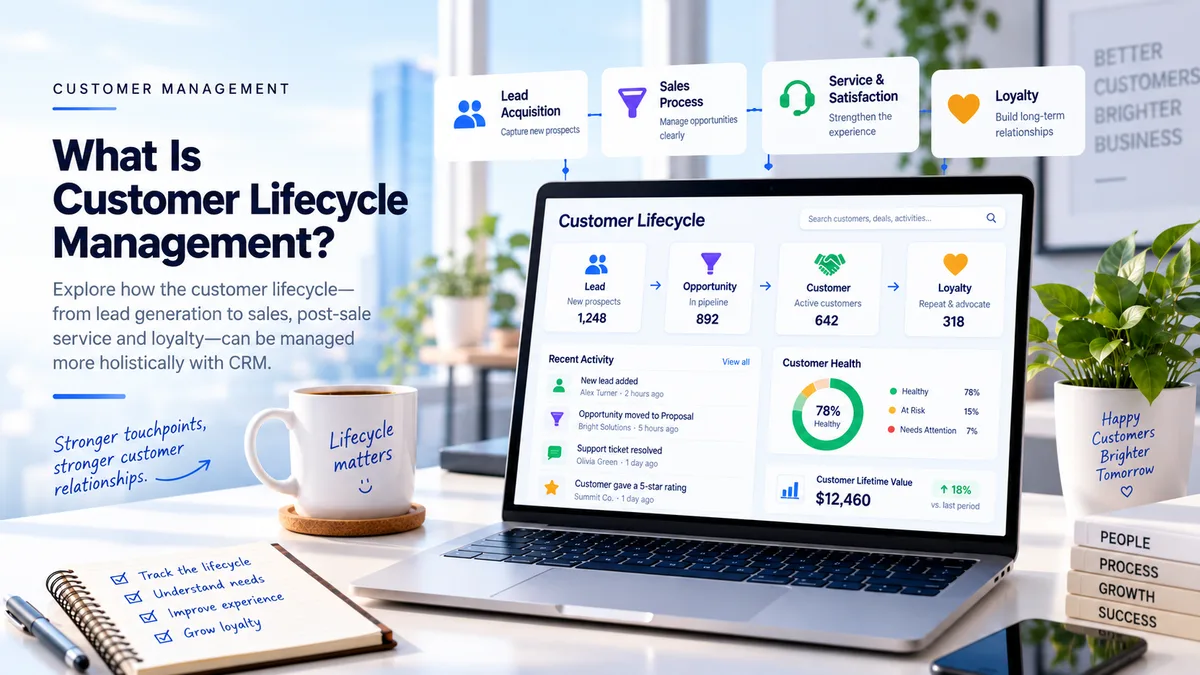
What Is Customer Lifecycle Management?
Discover how CRM can help manage the customer lifecycle more holistically, from the first opportunity and sale to post-sale service and long-term loyalty.
Read More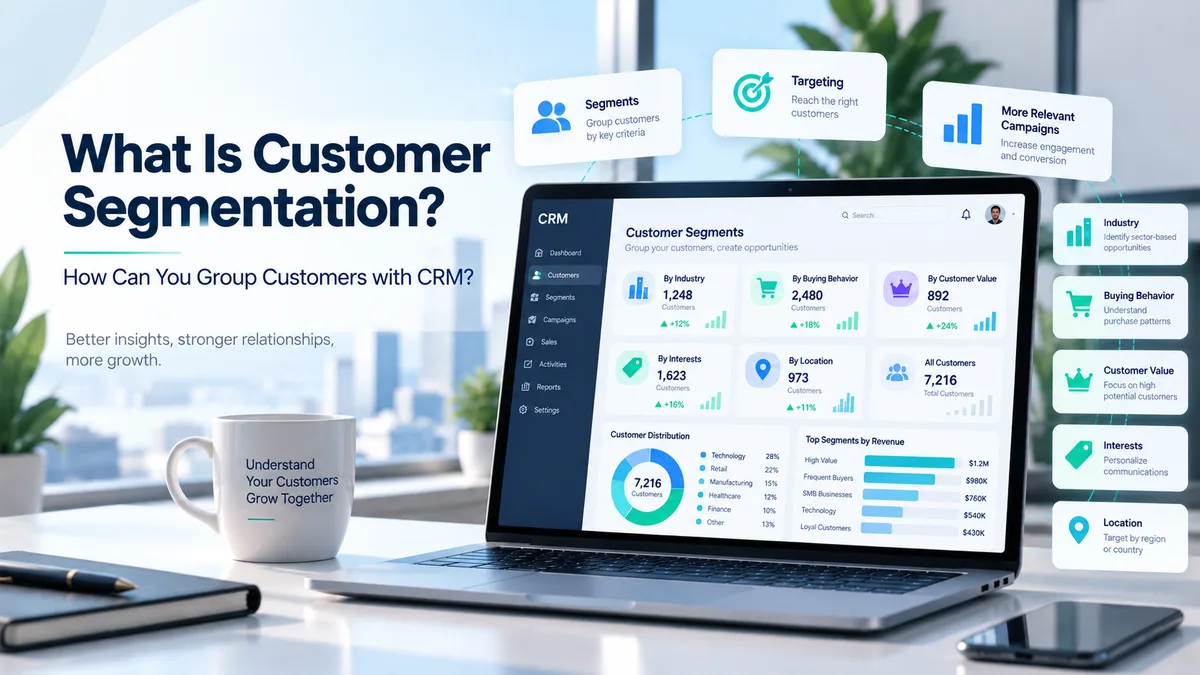
What Is Customer Segmentation? How Can You Group Customers with CRM?
Learn what customer segmentation means, which criteria can be used to group customers and how CRM data can support a more structured segmentation process.
Read More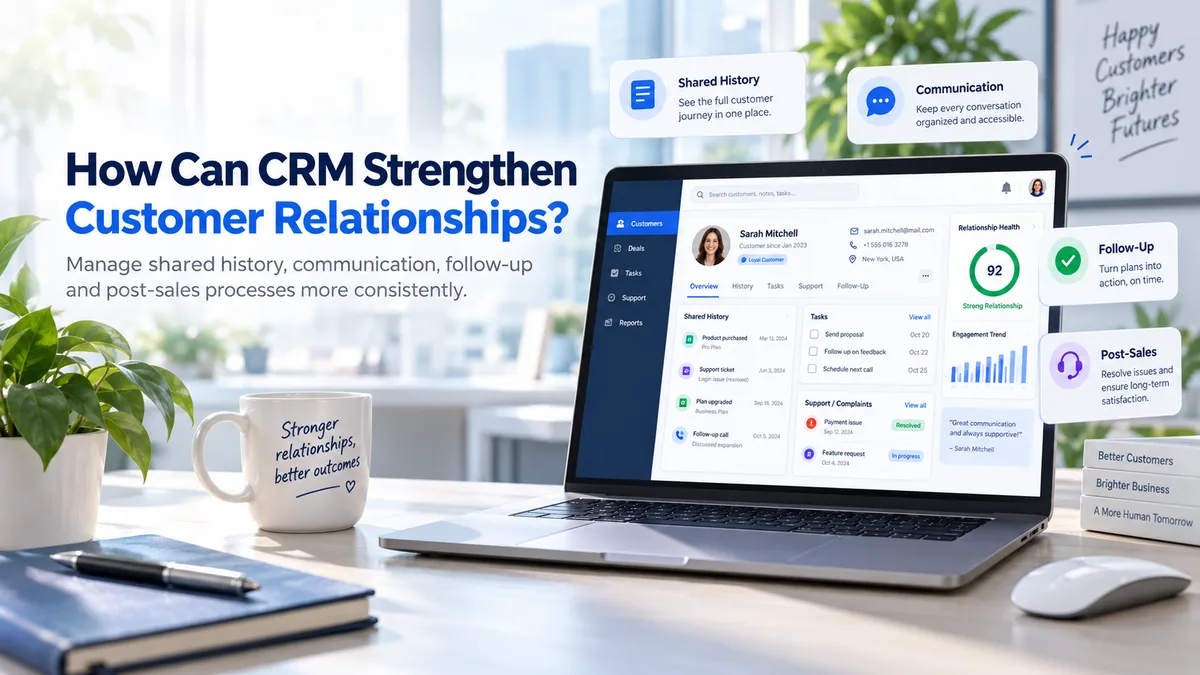
How Can CRM Strengthen Customer Relationships?
Learn how CRM can support customer relationships through shared history, communication tracking, follow-up, complaint management and post-sales processes.
Read More