What Is AI-Powered CRM? How Is AI Used in CRM?
Learn what AI-powered CRM is and how artificial intelligence can support sales analysis, reporting, pipeline evaluation, voice input, business card conversion and CRM assistance.
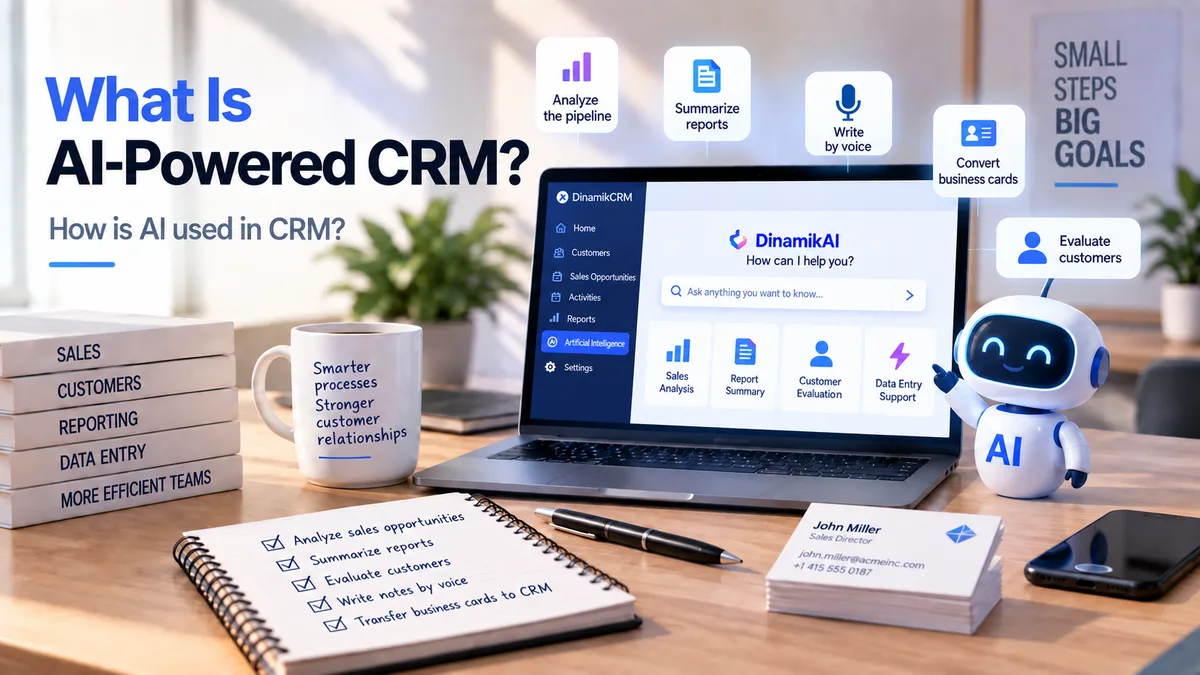
Artificial intelligence can be used in CRM not only as a conversational assistant, but also to interpret sales data, analyze reports, simplify data entry and support users in their everyday work.
AI-powered CRM aims to make existing customer and sales data easier to understand while helping users complete certain daily CRM activities more efficiently.
What Is AI-Powered CRM?
AI-powered CRM refers to customer relationship management software that combines traditional CRM processes with artificial intelligence features.
Traditional CRM systems help businesses organize customer records, sales opportunities, activities and tasks. Artificial intelligence can add another layer by helping users interpret, summarize or work with that information.
The purpose of AI in CRM is therefore not to replace the user. It is to help users understand existing information faster and make certain everyday CRM workflows easier to manage.
How Can AI Be Used in CRM?
The way artificial intelligence is used in CRM depends on the features available in each product. Common areas include sales analysis, reporting, data entry and user assistance.
In DinamikCRM, AI features can support different scenarios including the DinamikAI Assistant, sales and pipeline analysis, contextual record evaluation, report analysis, voice input and business card conversion.
1. AI-Powered Sales Pipeline Analysis
A sales pipeline shows where opportunities are located across different stages. However, simply viewing opportunity counts may not always explain whether the pipeline is progressing effectively.
AI-supported pipeline analysis can evaluate stage distribution and conversion patterns to make notable points easier to identify.
For example, a large concentration of opportunities at one stage or a noticeable decline between stages may indicate that the sales team should review follow-up activity in that part of the process.
Learn more about the underlying process on the Sales Pipeline page.
2. Evaluating Sales Opportunities with AI
Sales opportunities can contain multiple pieces of information including value, stage, probability, activity history and recent updates.
Contextual AI analysis can help turn the information available on a record into a more readable evaluation.
Instead of manually reviewing every field, users may be able to identify points that require attention more quickly and then decide the next action themselves.
Explore Sales Opportunity Management to learn more about opportunity tracking.
3. Interpreting CRM Reports with Artificial Intelligence
CRM reports can provide a large amount of information about sales, customers, activities and performance. However, creating a chart and interpreting what that chart means are two different tasks.
AI-supported report analysis can summarize notable changes and the overall picture, helping users evaluate report data more quickly.
This can be particularly useful in reports containing many metrics, where an AI-supported summary may help the user understand which areas deserve closer attention.
Read What Is CRM Reporting? for more information about CRM reporting.
4. Making CRM Easier to Use with DinamikAI Assistant
CRM users may need to move between different screens when completing daily work. AI assistants can help by understanding requests written in natural language and guiding the user through supported workflows.
DinamikAI Assistant allows users to describe what they want to do in CRM using natural language. Depending on the action, the assistant may request additional information or confirmation.
This approach can make CRM easier to understand for new users and may help reduce the time required to begin certain workflows.
5. Speeding Up CRM Data Entry with Voice Input
One common CRM adoption challenge is entering notes and descriptions after customer conversations.
Voice input can allow users to speak instead of typing long notes manually, converting speech into text in supported fields.
This can make data entry more practical for field teams or users who handle many customer conversations during the day.
Features that simplify data entry can also support user adoption. Learn more in How Can You Improve CRM User Adoption?
6. Converting Business Cards into CRM Records with AI
Entering contact details manually from business cards collected during meetings, trade shows or events can take time.
An AI-supported business card converter can read details such as a person's name, company and contact information and help transfer them into CRM fields.
This can reduce manual data entry and make it easier to create new contact or customer records.
Does AI Make Decisions Instead of CRM Users?
The goal of AI-powered CRM is not to remove users from the decision-making process.
AI features can analyze available information and provide summaries or suggestions, but the final evaluation and action should remain with the user and the business.
This is especially important in sales, where customer relationships, commercial conditions and company strategy may all influence the correct next step.
Why Does Data Privacy Matter in AI-Powered CRM?
CRM systems may contain customer names, phone numbers, email addresses, commercial information and other sensitive data. It is therefore important to understand which information is used during AI analysis.
In DinamikCRM pipeline analysis, customer names, contact information and other sensitive customer data are not sent for analysis. Required summary information such as stage labels and counts is used instead.
This approach is designed to avoid including customer information that is not necessary for the analysis.
Which Businesses Can Benefit from AI-Powered CRM?
AI-powered CRM is not only relevant for very large organizations. Businesses of different sizes that regularly create customer and sales data may benefit from these capabilities.
It may be particularly useful for:
- Sales teams managing a large number of opportunities
- Sales managers reviewing pipeline performance regularly
- Businesses that want to interpret CRM reports more quickly
- Teams that handle a high volume of customer conversations
- Field users who need a faster way to enter notes
- Teams collecting many business cards at events and trade shows
How Does Artificial Intelligence Change CRM Usage?
CRM systems have traditionally focused on keeping customer and sales information organized in one place. Artificial intelligence adds another layer to how that information can be used.
Instead of only entering data, users can also analyze existing information, review AI-supported summaries and simplify some data-entry activities.
The main value of AI in CRM is therefore not simply creating more data, but helping users make existing data easier to understand and use.
What Should Businesses Consider When Using AI in CRM?
When evaluating AI features, businesses should look beyond whether a CRM simply claims to include artificial intelligence.
Important areas to evaluate may include:
- Where AI is used in real CRM workflows
- Which data is included in AI analysis
- How user control is maintained
- Whether AI outputs are clear and actionable
- The product's approach to data privacy
- Whether AI features actually make daily CRM usage easier
Where Should Businesses Start with AI-Powered CRM?
AI features are more useful when the underlying CRM data is maintained consistently.
Missing or outdated information can reduce the value of both traditional reports and AI-supported analysis.
Businesses should therefore first establish consistent customer records, opportunity management, activity tracking and pipeline usage, then add AI features on top of these processes.
Read Why Data Quality Matters in CRM to understand why reliable CRM data is important.
Artificial Intelligence in DinamikCRM
DinamikCRM AI features are designed to make existing CRM information easier to interpret and everyday CRM usage more practical.
DinamikAI Assistant, sales and pipeline analysis, contextual AI evaluations, report analysis, voice input and business card conversion can be used within the same CRM environment.
Explore all available features on the DinamikCRM AI-Powered CRM page.
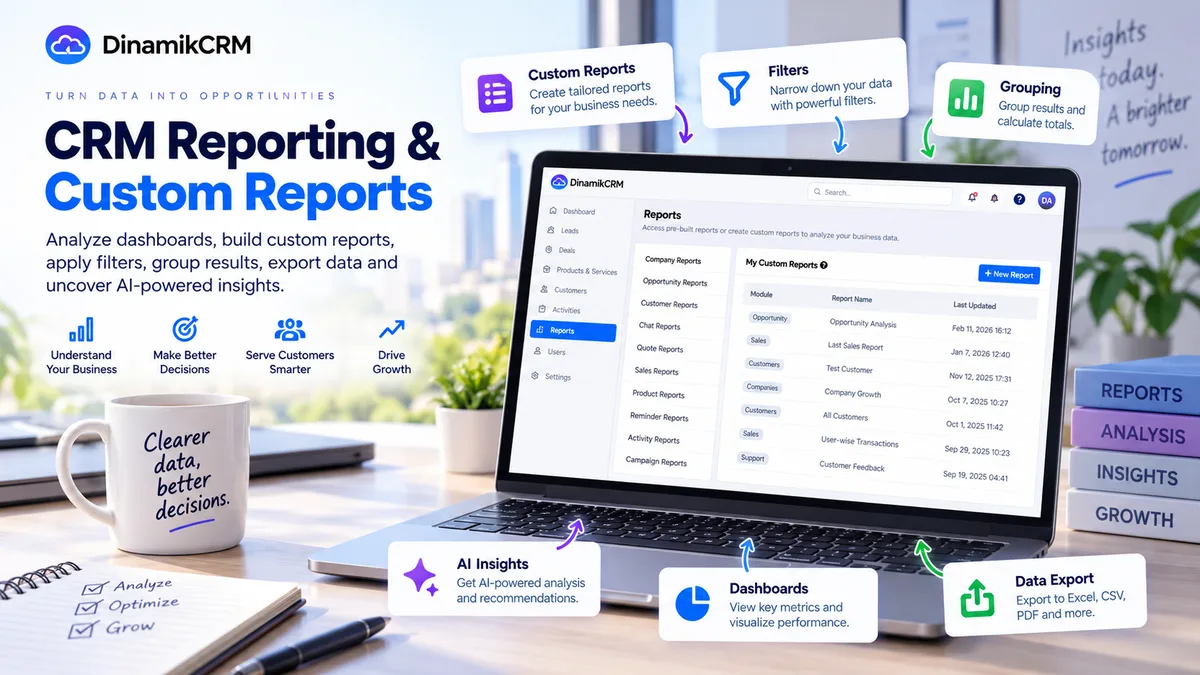
What Is CRM Reporting? How to Analyze CRM Data
Learn what CRM reporting is, how to create custom reports, and how filtering, grouping, calculations, charts and AI-assisted analysis can help businesses understand CRM data.
Read More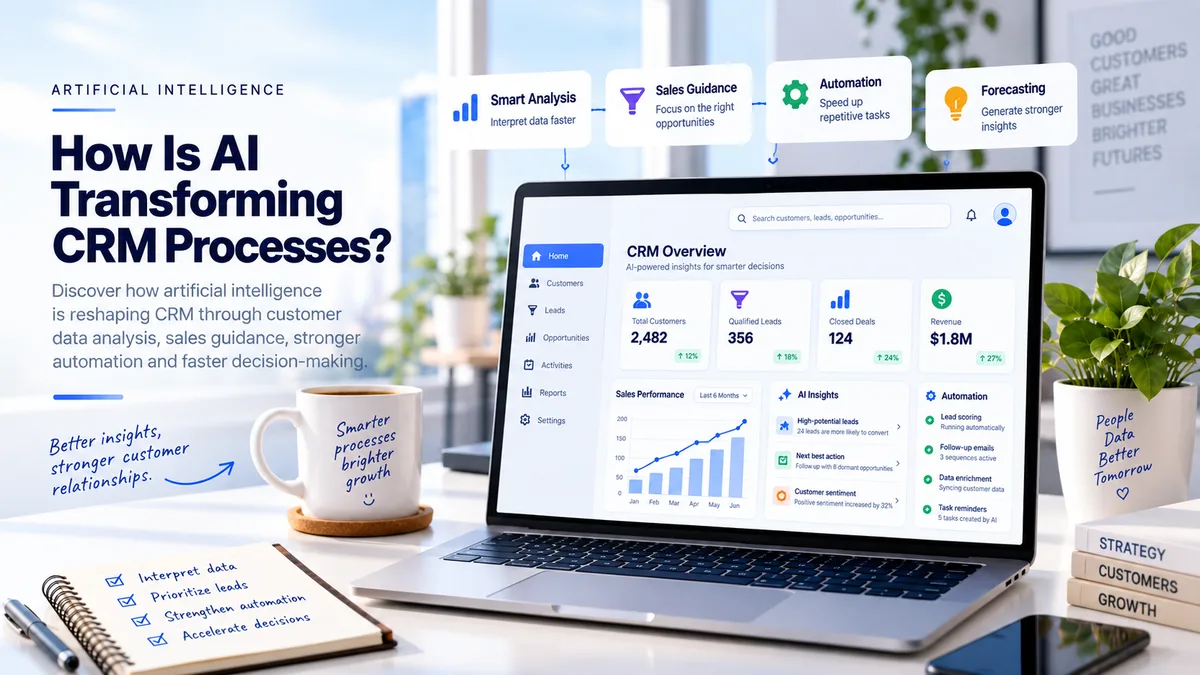
How Is AI Changing CRM?
Explore how AI is transforming CRM by interpreting customer data, guiding sales teams, strengthening automation and helping businesses make faster decisions.
Read More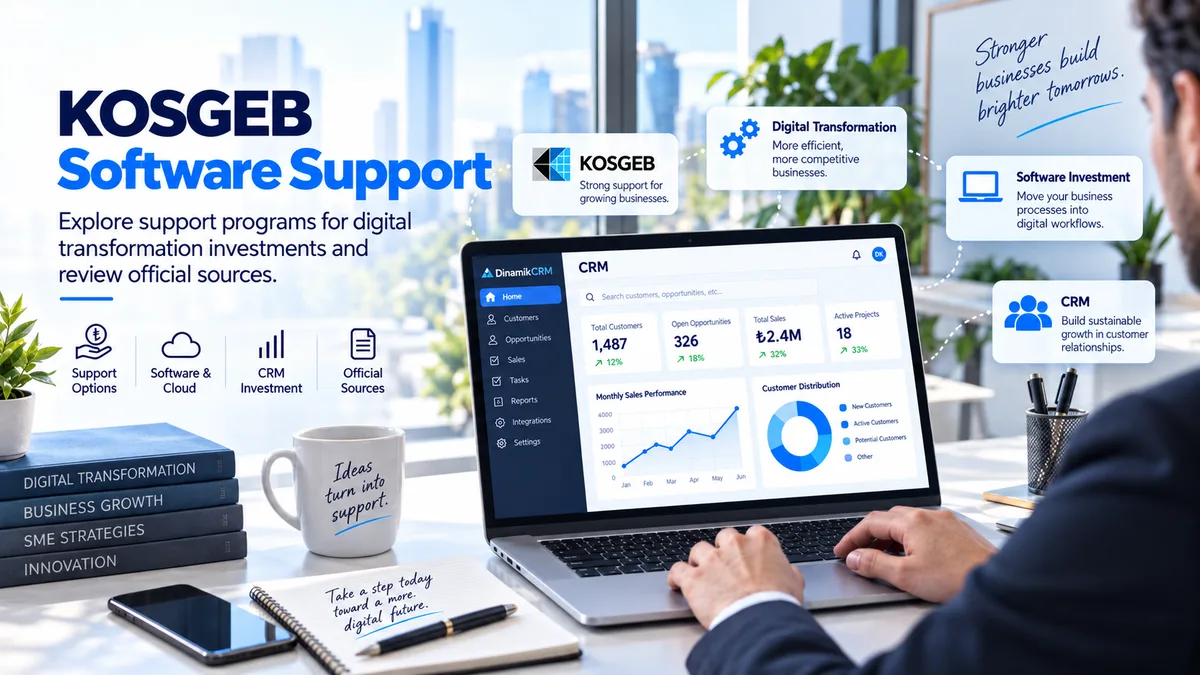
Does KOSGEB Support Software Investments? What Businesses Should Review
Learn how KOSGEB support programs may relate to software, cloud software and digital transformation investments, and what businesses should verify before planning a CRM investment.
Read More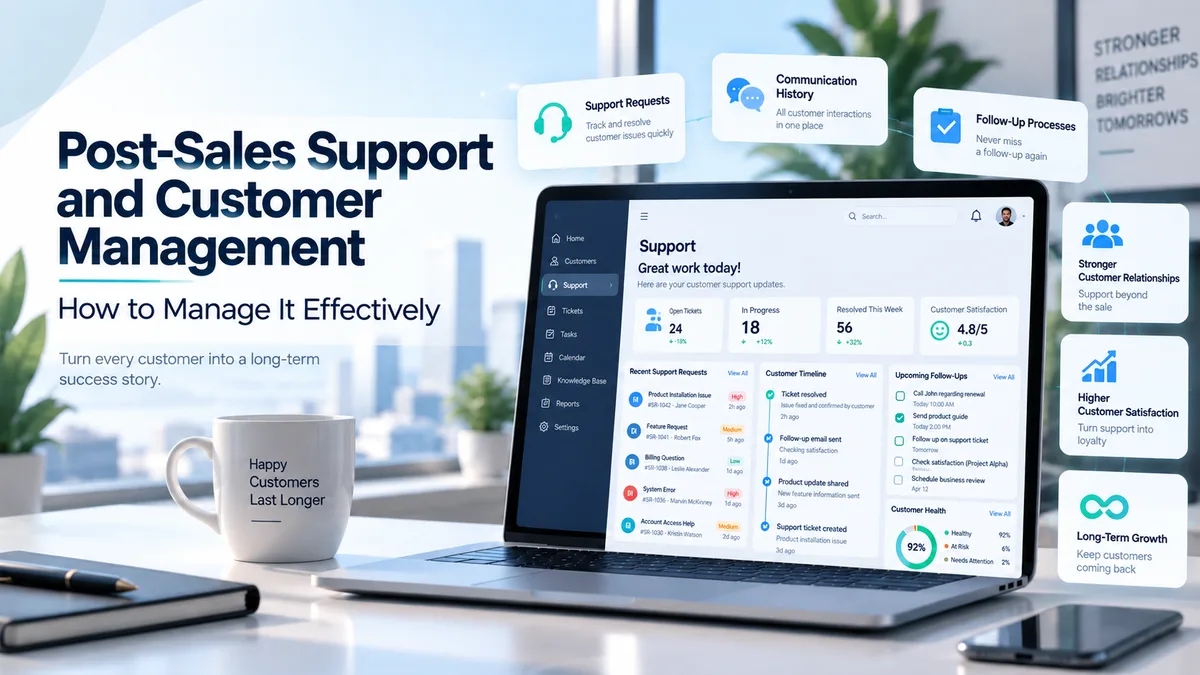
How to Manage Post-Sales Support and Customer Relationships
Learn how CRM can help businesses manage post-sales requests, communication history, follow-up tasks and customer service processes more consistently.
Read More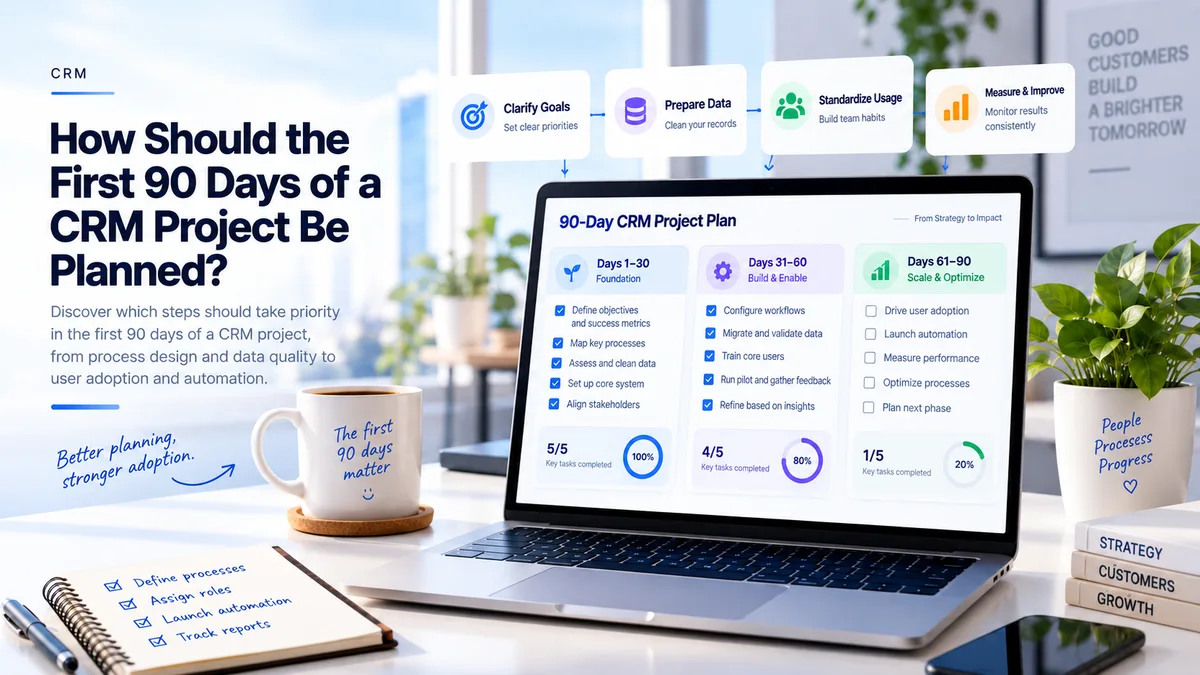
How Should You Plan the First 90 Days of a CRM Project?
Explore what to prioritize during the first 90 days of a CRM project, from process design and data quality to user adoption and automation.
Read More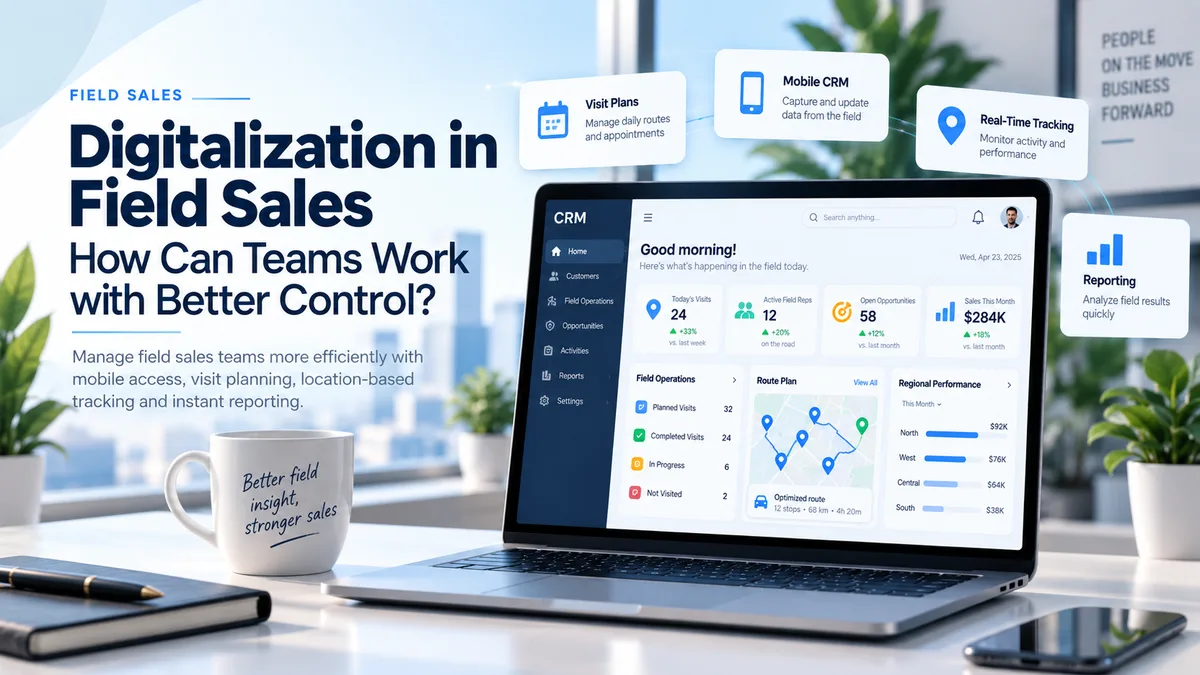
Digital Transformation in Field Sales: How Can Teams Work More Effectively?
Learn how field sales teams can use CRM to manage customer visits, tasks, opportunities, meeting notes and follow-up activities more consistently.
Read More