How to Improve Internal Communication in a Company
Discover practical ways to improve information flow, increase task visibility and create stronger collaboration across teams and customer processes.

Internal communication is one of the core business processes that helps teams access the right information at the right time, share responsibilities clearly and work toward common goals.
When communication relies only on email or messaging, information can become fragmented, especially across customer, sales and operational processes. Strong internal communication therefore requires not only more messages but also a more structured flow of information.
What Is Internal Communication?
Internal communication is the process of sharing information, tasks, decisions and feedback between employees, teams and managers.
This communication may take place through meetings, email, messaging tools, task management systems and business applications such as CRM.
Why Is Internal Communication Important?
When information does not flow effectively between teams, the same work may be repeated, customer requests may be missed and responsibilities may become unclear.
Structured communication can support:
- Clearer roles and responsibilities
- Faster access to relevant information
- More consistent customer processes
- Less duplicated work
- Greater visibility into decisions
- Stronger coordination between departments
Why Do Internal Communication Problems Occur?
Many communication problems are not caused by a lack of information but by information being stored in different places.
Customer data may be kept in spreadsheets, conversation notes in email, tasks in personal notes and proposals in another system. In this environment, it becomes difficult for teams to maintain a shared view.
This can create information silos across the organization. It can also make day-to-day work less visible, especially when teams cannot clearly see who owns a work item, when it is due or whether it is already overdue.
To bring work, owners and deadlines into a shared structure, explore Work Tracking Software .
How Can Internal Communication Be Improved?
Improving internal communication requires more than introducing new communication tools. Businesses should also define where information is stored, how tasks are assigned and how processes are tracked.
Practical approaches include:
- Defining responsibilities clearly
- Keeping customer and process data in centralized systems
- Recording decisions made during meetings
- Making task status visible to the relevant team
- Creating common standards across departments
- Making information part of the process rather than dependent on individuals
When teams manage many activities at the same time, knowing only who received a task is not always enough. Current status, deadline and completion information should also remain visible to the people involved.
How Can CRM Support Internal Communication?
CRM systems are not only databases for customer information. Keeping customer, sales, activity, task and communication records in a shared structure can also support information flow between teams.
For example, when a sales representative records a conversation in the CRM, another team member working with the same customer can review that history later.
This reduces the risk that important information remains only with the person who originally handled the interaction.
How Does Task Management Affect Team Communication?
Tasks that are shared only verbally or inside messaging conversations can easily be forgotten.
Recording tasks together with an owner, due date, status and related customer or process gives teams clearer visibility into what needs to be done.
In day-to-day operations, teams may also need to see more than individual tasks. Open, ongoing and overdue work across the wider team should remain visible so managers and employees can understand what requires attention.
A work tracking solution can help organize this process by keeping owners, deadlines and current status together in one shared structure.
This is particularly important for sales, customer service and operations teams.
Are Meetings Enough for Internal Communication?
No. Meetings are useful for making decisions and aligning teams, but they do not create a sustainable communication system on their own.
Decisions made during meetings should be translated into recorded tasks, activities or follow-up actions.
Otherwise, important topics may disappear after the meeting without being implemented.
How Can Communication Between Departments Be Improved?
Sales, customer service, finance and operations teams often need different information about the same customer or process.
Shared records and standardized workflows allow teams to access the same information without repeatedly requesting manual updates from one another.
For example, a customer record created by the sales team can later provide the customer service team with access to the same interaction history.
The same principle applies when work moves from one department to another. Preserving the work history, current owner and status can make cross-department coordination more consistent.
Are Email and Messaging Tools Enough?
Email and messaging tools are useful for fast communication, but they are not always sufficient for managing complete business processes.
Messages may become difficult to find, tasks may be forgotten and important customer information may remain inside private conversations.
Work shared in a message can also become difficult to track later if the owner, deadline or completion status is not recorded in a structured way.
Communication tools and work tracking systems therefore work best when they complement each other.
How Should Communication Be Managed in Remote and Hybrid Teams?
Shared systems become even more important for remote and hybrid teams, where employees cannot rely on being in the same physical location.
Giving team members access to tasks, customer history and recent activity regardless of location can make coordination easier.
Keeping open work, owners and deadlines accessible to the team can also reduce the need for repeated status questions and manual updates.
At the same time, using too many separate tools may create new information silos, so businesses should prefer integrated and shared systems where possible.
Why Is Internal Communication Important in Customer Processes?
Customers may interact with several departments during their relationship with a business. A process may begin with sales and later move to customer service, operations or finance.
If customer history does not move with that process, customers may need to repeat the same information to different employees.
Centralized customer data can help reduce this friction.
Can Automation Improve Internal Communication?
Yes. Automation can reduce the amount of manual follow-up required in selected business processes.
For example:
- A sales representative can be notified when a new lead arrives.
- A reminder can be created before a task becomes due.
- A follow-up task can be generated when an opportunity changes stage.
- Customer requests can be routed to the appropriate team.
How Can Strong Internal Communication Be Measured?
Internal communication should not be measured only by how frequently employees talk to one another.
More meaningful indicators may include:
- Percentage of tasks completed on time
- Number of missed customer follow-ups
- Duplicated information requests between departments
- Problems caused by incomplete or incorrect information
- Response times for customer requests
- Number of overdue or long-running work items
Tracking these indicators can provide insight not only into communication quality but also into how effectively work moves through the organization.
Creating a Shared Structure for Better Communication
Improving internal communication does not simply mean holding more meetings or sending more messages.
The real goal is to create a shared and up-to-date structure where teams can access information, tasks and customer processes consistently.
When owners, deadlines and work status remain visible, communication does not depend entirely on one person manually updating another. Teams can follow ongoing work through a shared system.
CRM, task management, work tracking and automation tools can support this structure by helping businesses create a more organized flow of information across teams.

What Is Order Management? How to Track the Order Process
Learn what order management is, how orders move from sales to delivery and how businesses can track customer orders more effectively.
Read More
Why the Human Touch Matters in Digital Customer Experience
Discover why human interaction, trust and personalized communication remain important in customer experience in the age of digitalization and AI.
Read More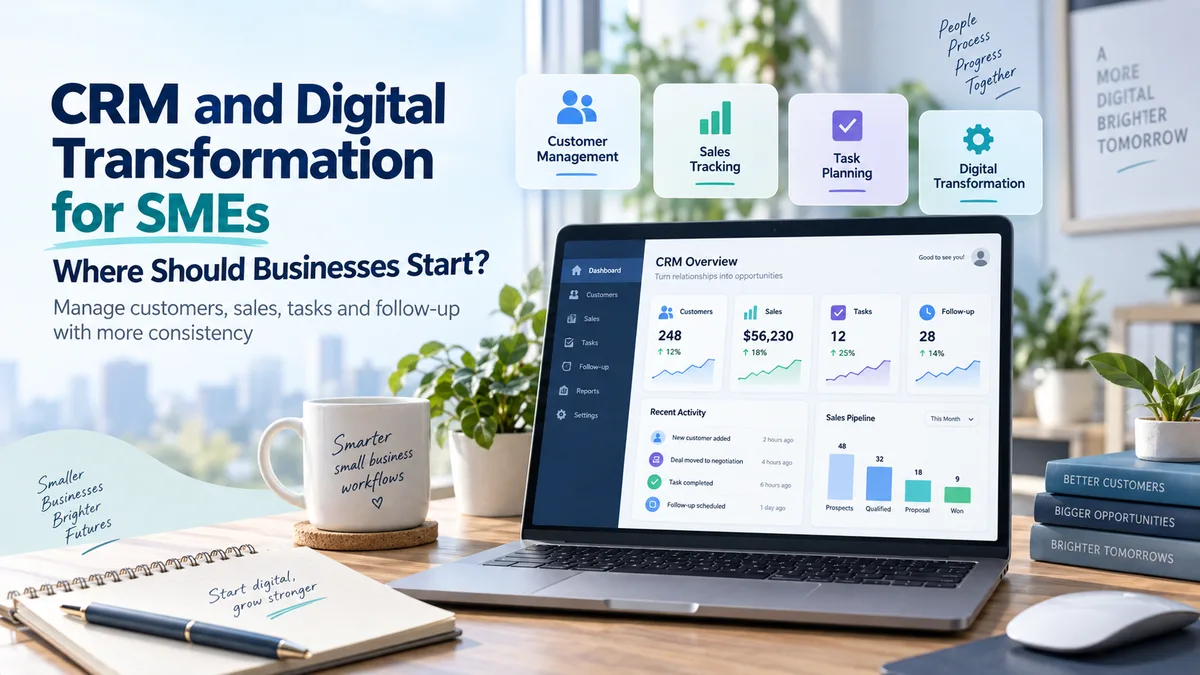
CRM and Digital Transformation for SMEs: Where Should Businesses Start?
Learn how SMEs can use CRM to manage customers, sales, tasks and follow-up more consistently and how CRM can support digital transformation.
Read More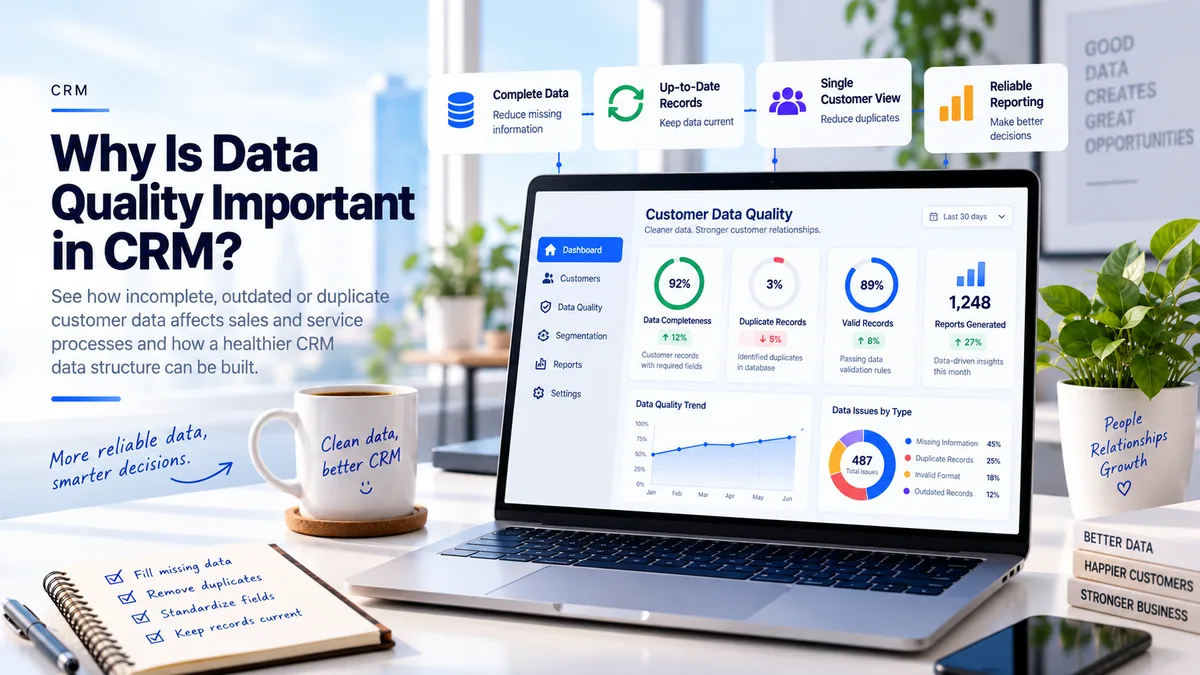
Why Data Quality Matters in CRM
Learn how incomplete, outdated or duplicate customer data can affect sales and service processes, and how to build a healthier CRM data structure.
Read More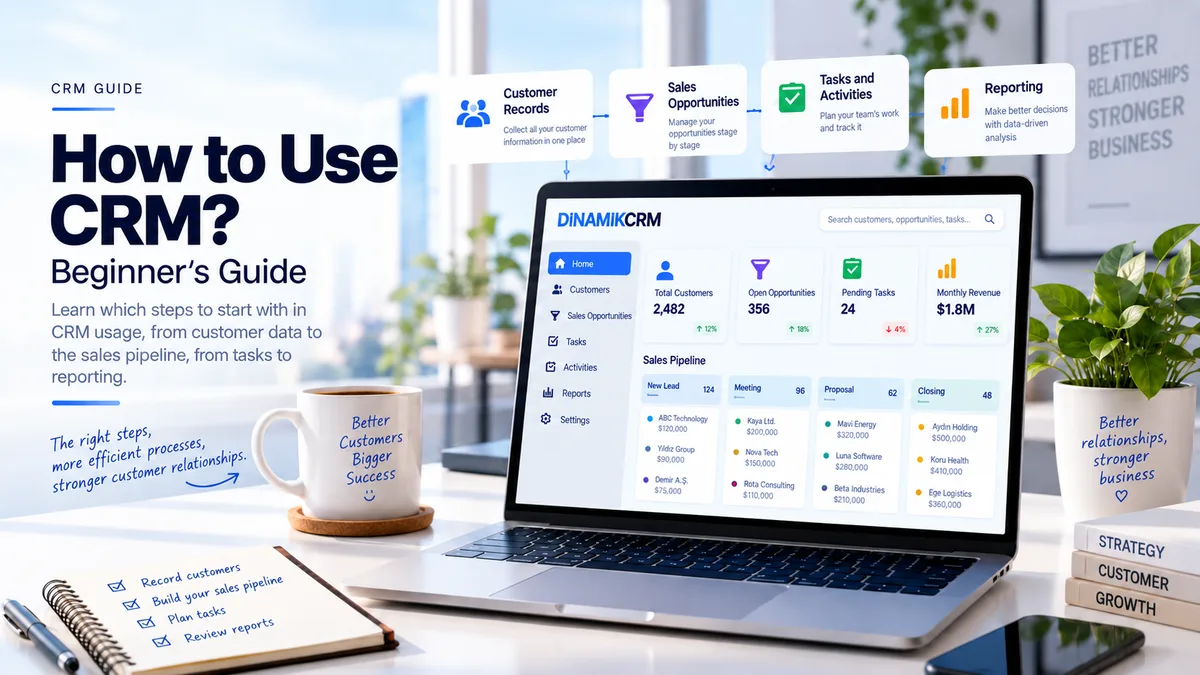
How to Use CRM: A Beginner's Guide
Learn how to start using CRM, from organizing customer data and sales pipelines to tasks, follow-ups and reporting.
Read More
How to Make Sales Forecasting More Reliable
Discover how current pipeline data, opportunity probabilities, close dates and activity history can help improve the reliability of sales forecasts.
Read More