How to Analyze a Sales Funnel: Conversion Rates and Bottlenecks
Learn how to analyze your sales funnel, calculate conversion rates between leads, opportunities, proposals and sales, identify bottlenecks, and improve sales performance.
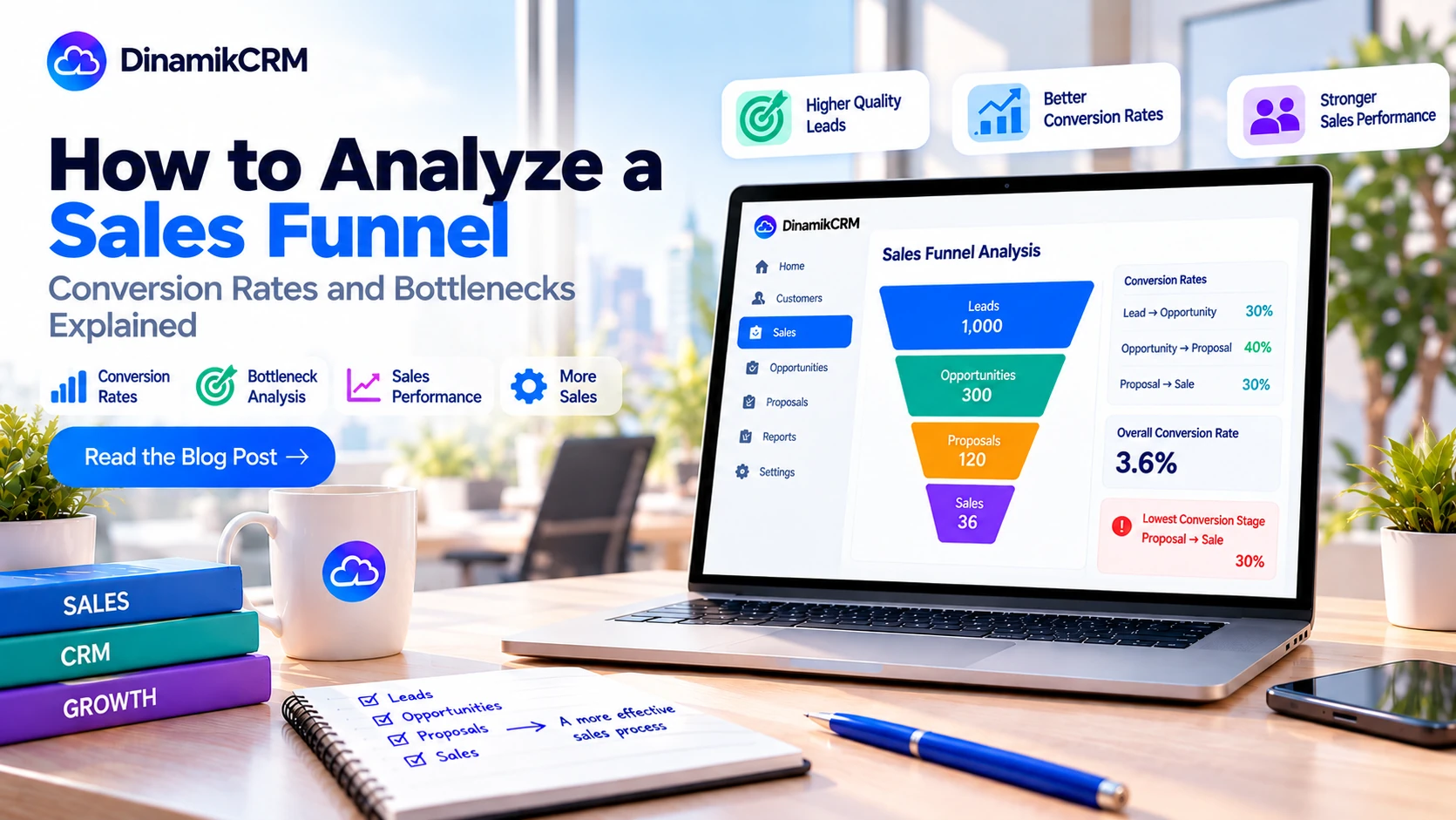
Your sales team may be generating plenty of leads, creating opportunities, and sending proposals. But how many of those activities actually turn into sales? Where are prospects dropping out of the process? Sales funnel analysis helps answer these questions using measurable data.
By examining conversion rates at each stage, businesses can better understand what is working, identify potential bottlenecks, and make more informed decisions about improving sales performance.
What Is Sales Funnel Analysis?
Sales funnel analysis is the process of evaluating how potential customers move from initial interest to a completed sale. It involves measuring the number of prospects at each stage, calculating conversion rates, and identifying where opportunities are lost or delayed.
The objective is not simply to generate more leads. It is to understand how effectively existing leads progress through the sales process and where improvements could make the greatest difference.
The 4 Main Stages of a Sales Funnel
The structure of a sales funnel varies depending on the industry, sales model, and customer journey. For illustration, a B2B sales process can be divided into four stages.
1. Leads
Leads are individuals or organizations that have shown interest in your products or services. They may come from website forms, marketing campaigns, referrals, events, or direct outreach.
2. Sales Opportunities
A lead becomes a sales opportunity when there is sufficient information about its needs, purchase potential, and relevance to the business. This stage often involves qualification, discovery, and communication with decision-makers.
3. Proposals
At this stage, the sales team presents a quotation or proposal outlining the product, service, scope, pricing, and commercial conditions. Proposal quality, timing, and follow-up can influence conversion performance.
4. Sales
This is the stage where a prospect successfully converts into a customer according to the company's defined sales completion criteria.
These stages are an example rather than a universal framework. A useful funnel should reflect your actual sales process and use consistent stage definitions.
How to Analyze a Sales Funnel
Start by identifying the number of leads or opportunities reaching each stage. For meaningful conversion analysis, the records should belong to a comparable group, with consistent stage definitions and an appropriate observation period.
Sales Funnel Analysis Example
- Leads: 1,000
- Sales opportunities: 300
- Proposals: 120
- Completed sales: 36
Using these figures, we can calculate the conversion rate between each stage.
Lead-to-Opportunity Conversion Rate
Formula: (Sales Opportunities / Leads) × 100
In our example: (300 / 1,000) × 100 = 30%.
Opportunity-to-Proposal Conversion Rate
Formula: (Proposals / Sales Opportunities) × 100
In our example: (120 / 300) × 100 = 40%.
Proposal-to-Sale Conversion Rate
Formula: (Completed Sales / Proposals) × 100
In our example: (36 / 120) × 100 = 30%.
Overall Sales Funnel Conversion Rate
Formula: (Completed Sales / Leads) × 100
In our example: (36 / 1,000) × 100 = 3.6%.
This means that 36 out of every 1,000 leads in our example resulted in a completed sale.
It is important to note that conversion rates should be calculated using comparable records. Simply counting all leads, opportunities, proposals, and sales created during the same calendar month can produce misleading results when those records belong to different groups or sales cycles.
Free Sales Funnel Analyzer
Instead of calculating every conversion rate manually, you can use our free Sales Funnel Analyzer. Enter your lead, opportunity, proposal, and sales figures to explore stage-by-stage conversion rates, overall funnel performance, and potential bottlenecks.
Try the Free Sales Funnel Analyzer →
How to Identify Sales Funnel Bottlenecks
A sales funnel bottleneck is a stage where prospects struggle to progress, remain inactive for too long, or drop out at an unexpectedly high rate.
In our example, lead-to-opportunity conversion is 30%, opportunity-to-proposal conversion is 40%, and proposal-to-sale conversion is 30%.
The first and last transitions have the same conversion rate. However, the lowest conversion percentage does not automatically identify the most damaging business problem.
To evaluate a bottleneck properly, consider the volume of opportunities, expected stage conversion, potential revenue impact, time spent in the stage, and historical performance.
Low Lead-to-Opportunity Conversion
If too few leads become qualified sales opportunities, consider the following actions:
- Review your ideal customer profile and lead qualification criteria.
- Compare the quality of different lead sources.
- Measure initial response times.
- Improve lead assignment and follow-up procedures.
Low Opportunity-to-Proposal Conversion
If qualified opportunities rarely reach the proposal stage, investigate potential issues in the discovery and quotation processes.
- Review the quality of customer needs assessments.
- Measure proposal preparation time.
- Verify that sales teams communicate with relevant decision-makers.
- Keep opportunity stages accurate and up to date.
Low Proposal-to-Sale Conversion
If many proposals fail to become completed sales, pay closer attention to commercial fit and closing activities.
- Record and categorize reasons for lost deals.
- Review pricing, scope, and customer expectations.
- Standardize proposal follow-up procedures.
- Analyze budget constraints, competitors, and decision timelines.
Which Sales Funnel Metrics Should You Track?
Conversion rates are important, but they do not tell the whole story. A useful sales funnel analysis should include several complementary performance indicators.
- Stage conversion rate: The percentage of eligible records progressing from one stage to the next.
- Overall funnel conversion rate: The percentage of initial leads that eventually become customers.
- Time in stage: How long an opportunity remains in a particular sales stage.
- Sales cycle length: The amount of time required to complete a sale.
- Win rate: The percentage of closed opportunities that are won rather than lost.
- Lost deal reasons: The main factors preventing opportunities from becoming sales.
- Pipeline value: The total potential monetary value of open sales opportunities.
Tracking these metrics together provides a more complete view of sales performance than relying on lead volume or completed sales alone.
How Can CRM Improve Sales Funnel Performance?
CRM software helps businesses organize customer information, opportunities, proposals, and activities in one place. This supports more consistent data collection and makes it easier to evaluate sales processes over time.
Standardize Your Sales Stages
Clearly defined stages help sales representatives use consistent criteria when updating opportunities. This improves the quality and comparability of funnel reporting.
Identify Opportunities That Need Attention
Review opportunities without recent updates, scheduled next steps, or meaningful customer interaction. This can help teams prioritize follow-up activities.
Organize Proposal Management
Connecting quotations and proposals to customer and opportunity records makes it easier to understand delays, follow-up history, and commercial outcomes.
Make Decisions Based on Sales Data
Compare funnel performance across time periods, teams, representatives, customer segments, and lead sources to identify areas for improvement.
For further reading, explore our Sales Pipeline Management guide and Sales Management solutions.
Common Sales Funnel Analysis Mistakes
- Comparing records from unrelated sales periods or cohorts.
- Assuming every opportunity should progress at the same speed.
- Looking at conversion rates without considering revenue and sales cycle length.
- Failing to record why opportunities are lost.
- Using inconsistent sales stage definitions across teams.
- Drawing conclusions from a single reporting period.
Frequently Asked Questions
What is the purpose of sales funnel analysis?
Sales funnel analysis helps businesses understand how prospects move through the sales process, measure conversion rates, identify bottlenecks, and discover opportunities to improve sales performance.
How do you calculate a sales funnel conversion rate?
Divide the number of eligible prospects progressing to the next stage by the number of prospects in the previous stage, then multiply by 100.
What is a good sales funnel conversion rate?
There is no universal conversion rate that works for every business. Industry, sales model, lead quality, deal size, and customer profile all influence performance. Historical results and comparable sales processes usually provide more useful reference points.
What is the difference between a sales funnel and a sales pipeline?
A sales funnel usually emphasizes how prospects move between stages and how conversion rates change throughout the buying journey. A sales pipeline focuses more on managing open opportunities and their progress through sales activities. The two approaches are related but serve different analytical purposes.
How often should you analyze your sales funnel?
The appropriate frequency depends on sales volume and cycle length. Businesses with short sales cycles may benefit from frequent reviews, while organizations with longer B2B sales cycles may find monthly or quarterly analysis more meaningful.
Can a CRM help identify sales bottlenecks?
Yes. When sales data is recorded consistently, CRM reporting can help teams examine opportunity stages, conversion rates, inactive deals, follow-up activities, and reasons for lost sales.
Conclusion
Sales funnel analysis helps businesses look beyond completed sales and understand the processes that lead to those results. By measuring conversion rates between leads, opportunities, proposals, and sales, teams can identify potential weaknesses and make better-informed decisions.
Start by entering your sales figures into our free Sales Funnel Analyzer. If you want to manage customer relationships, sales opportunities, and related activities in a centralized platform, explore DinamikCRM CRM software.
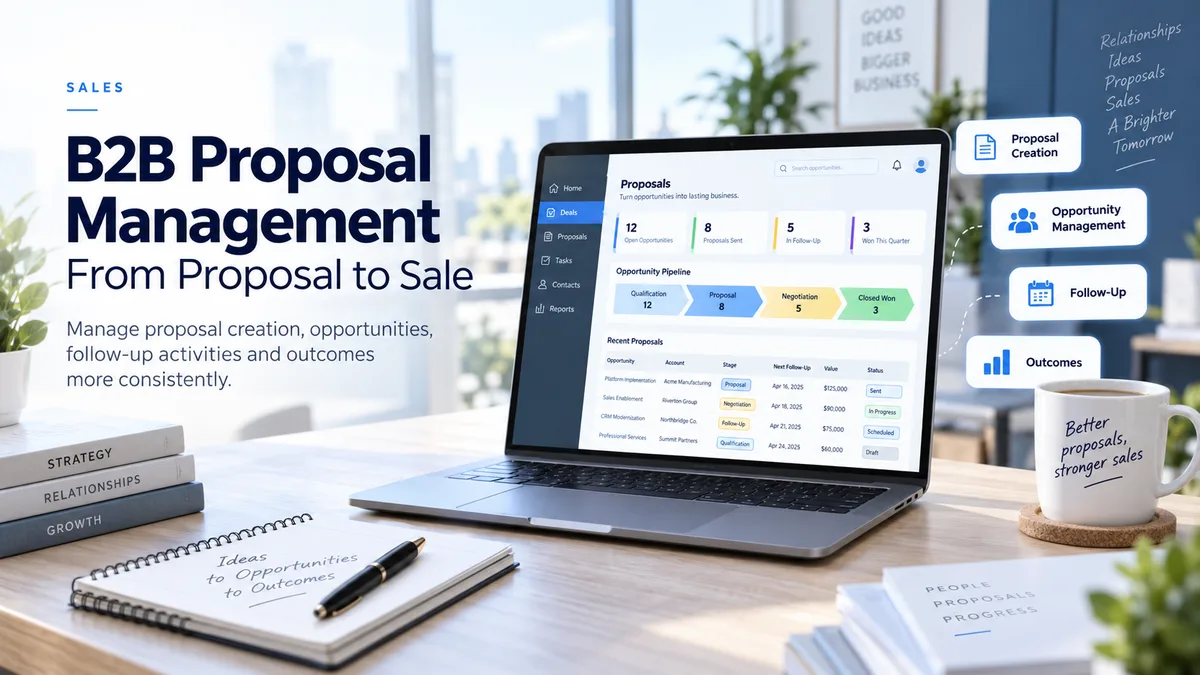
B2B Proposal Management: How to Manage the Process from Proposal to Sale
Learn how CRM can help B2B sales teams manage proposals, opportunities, follow-up activities and proposal outcomes more consistently.
Read More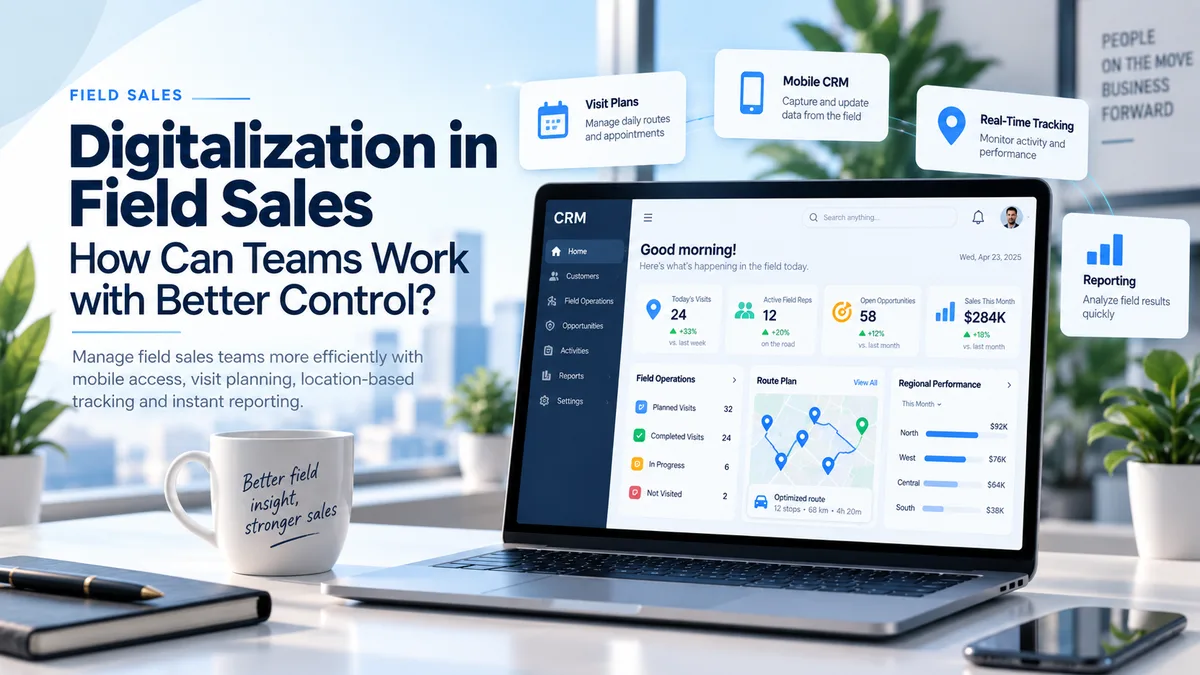
Digital Transformation in Field Sales: How Can Teams Work More Effectively?
Learn how field sales teams can use CRM to manage customer visits, tasks, opportunities, meeting notes and follow-up activities more consistently.
Read More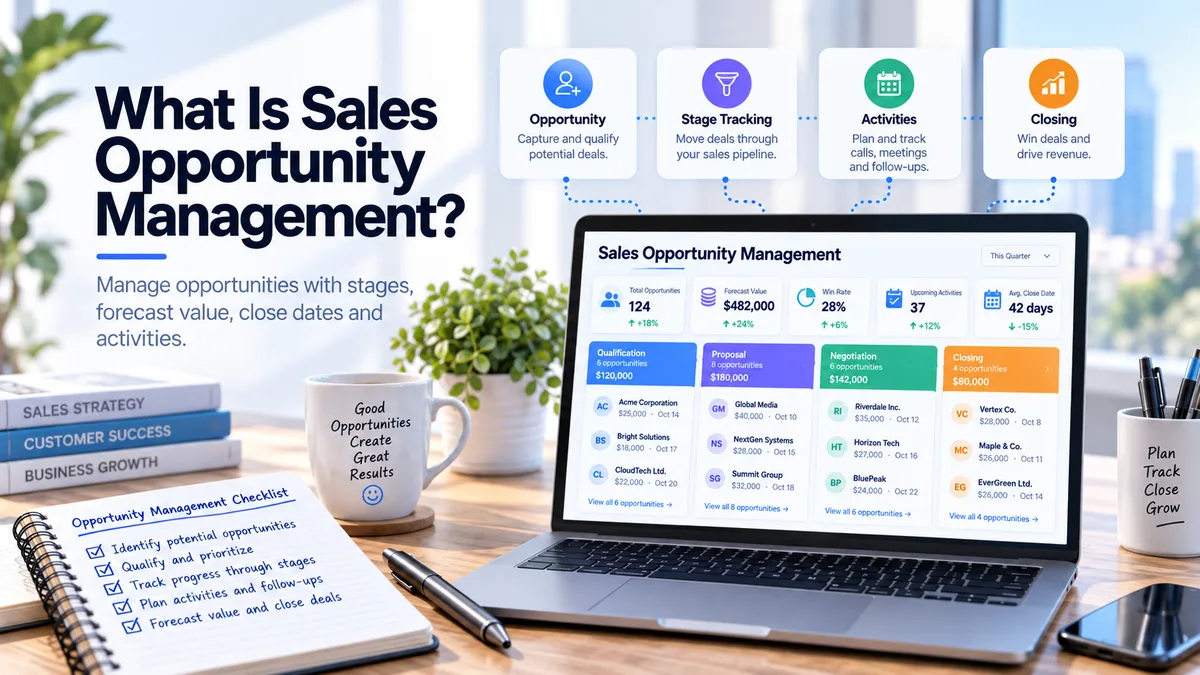
What Is Sales Opportunity Management?
Learn how sales opportunities can be managed through stages, expected values, close dates, activities and performance metrics.
Read More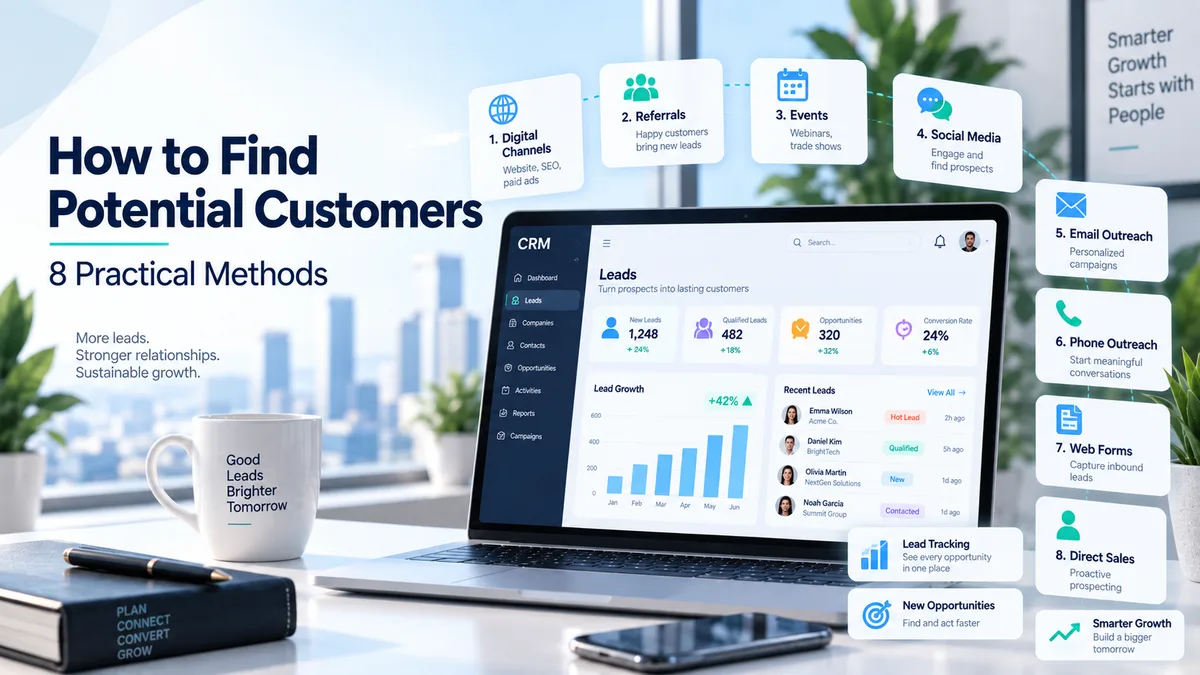
How to Find Potential Customers: 8 Practical Methods
Explore practical ways to find potential customers through digital channels, referrals, events, direct outreach and structured lead management.
Read More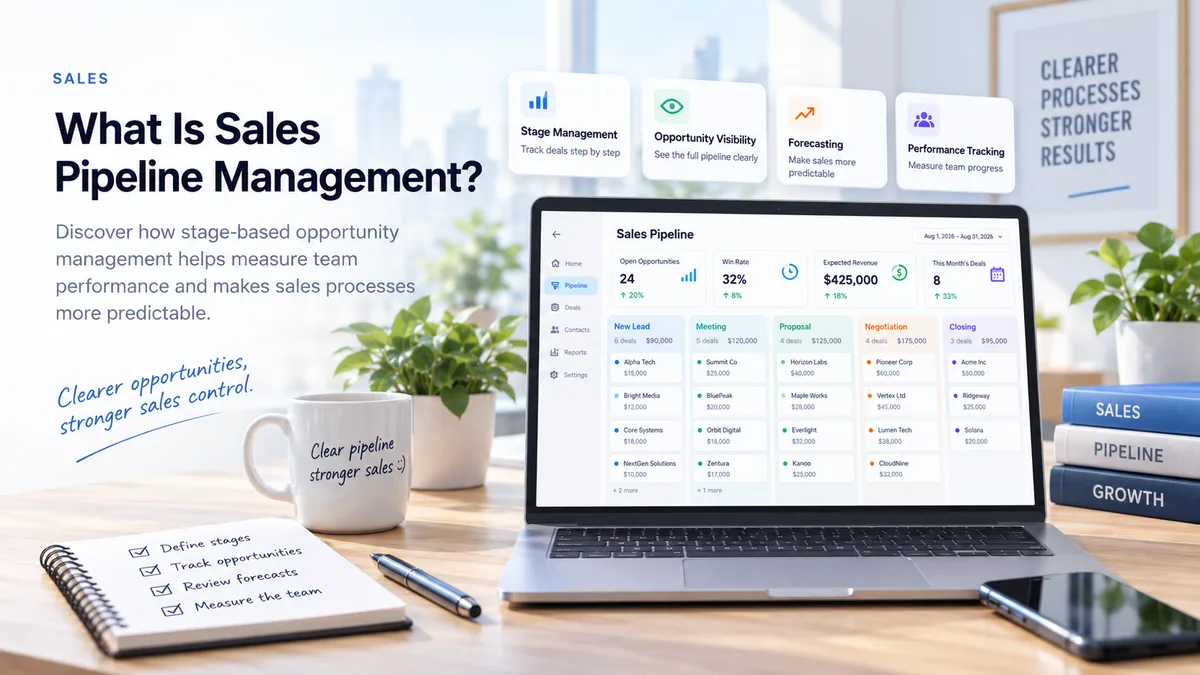
What Is Sales Pipeline Management?
Discover how managing opportunities by sales stage helps teams measure performance and build a more predictable sales process.
Read More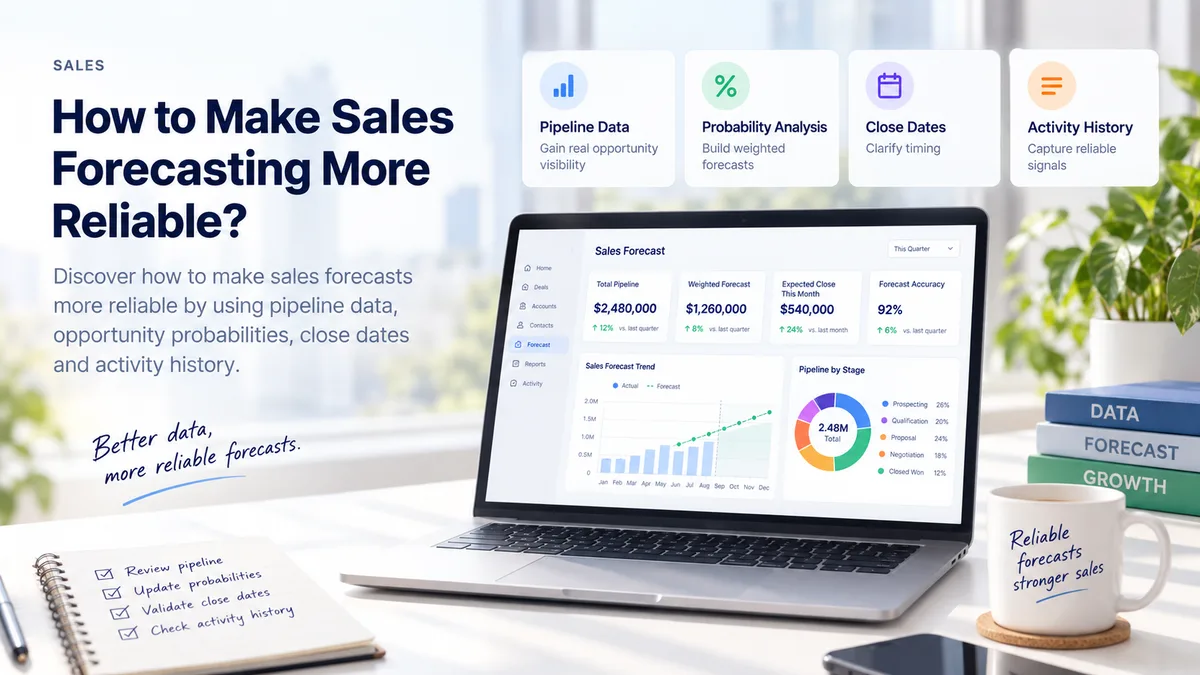
How to Make Sales Forecasting More Reliable
Discover how current pipeline data, opportunity probabilities, close dates and activity history can help improve the reliability of sales forecasts.
Read More