What is sales tracking software?
Sales tracking software is a CRM solution that helps businesses centrally manage sales opportunities, customer interactions, proposals, tasks and sales stages.
View contentDiscover CRM guides, training videos, frequently asked questions and product resources in one place.
Sales tracking software is a CRM solution that helps businesses centrally manage sales opportunities, customer interactions, proposals, tasks and sales stages.
View contentA sales pipeline is a visual representation of how a potential sale moves through stages such as opportunity, meeting, proposal and closing.
View contentYes. In DinamikCRM, sales opportunities can be associated with responsible team members so the sales process can be tracked by owner.
View contentYes. Customer activities, sales opportunities and proposals can be tracked together, helping your team maintain a visible history of the sales process.
View contentYes. You can try DinamikCRM free for 14 days without providing a credit card.
View contentLead management is the process of recording prospects, identifying their source, assigning them to sales representatives, tracking interactions and activities, and converting qualified leads into sales opportunities.
View contentIn CRM, a lead is a person or company that has shown interest in a product or service but has not yet been qualified as an active sales opportunity or established customer.
View contentA lead is a prospect that is still being evaluated and followed up. A customer is a person or company with an established customer record or commercial relationship.
View contentA lead represents an initial prospect. A sales opportunity is a more qualified record with clearer need, interest or commercial potential that is actively managed in the sales process.
View contentThe process can be managed centrally by tracking lead source, sales owner, interaction history, activities, next action and current lead status together.
View contentYes. A responsible sales representative can be assigned to each lead so the team can clearly see who is following each prospect.
View contentWith the appropriate integration, customer requests from website forms and other digital sources can be transferred into the CRM process and tracked centrally.
View contentTracking lead sources helps teams understand which channel or campaign generated a prospect and evaluate those sources together with the sales process.
View contentA sales opportunity is an active commercial prospect where a customer's need, interest or potential value has become clear enough to be managed through the sales process.
View contentSales opportunity management is the process of centrally tracking active opportunities together with their value, stage, owner, activities, proposals, next actions and final outcome.
View contentA lead is a prospect that is still being qualified. A sales opportunity has clearer commercial potential and is actively managed through the sales process.
View contentSales opportunities can be tracked by combining current stage, estimated value, sales owner, meetings, activities, proposals and next actions in one shared record.
View contentA sales opportunity represents one potential sale. A sales pipeline provides a collective view of multiple opportunities across defined sales stages.
View contentUseful information includes company or customer, opportunity name, expected value, owner, current stage, interaction history, activities, proposals and next action.
View contentCRM connects opportunities with customer information, activities, sales owners, proposals and pipeline stages so the sales team can manage the process through one shared and up-to-date system.
View contentA sales pipeline is a visual structure for tracking prospects through different stages of the sales process, such as new opportunity, meeting, proposal and closed sale.
View contentYes. You can connect sales opportunities with customer records and manage sales stages and activities from the same system.
View contentYes. Opportunity and sales activity data can make your team's sales process more visible and measurable.
View contentYes. You can manage meetings, tasks and follow-up activities together with customers and sales opportunities.
View contentYes. You can try DinamikCRM free for 14 days. No credit card is required to start the trial.
View contentProposal software helps businesses create, share and track product or service proposals provided to customers in a structured way.
View contentYes. Proposals can be created and prepared as PDF documents that can be shared with customers.
View contentYes. Proposals can be tracked together with customer records and the relevant sales processes.
View contentYes. Meetings, tasks and other activities after a proposal can be managed from the CRM.
View contentYes. You can try DinamikCRM free for 14 days. No credit card is required to start the trial.
View contentB2B Sales CRM is an approach for centrally managing companies, contacts, sales opportunities, meetings, activities and proposal processes.
View contentB2B sales typically involves companies, multiple contacts, longer sales cycles and several sales stages. CRM keeps these relationships within a shared structure.
View contentA sales pipeline is a structured view of active opportunities across stages such as new opportunity, meeting, proposal and outcome.
View contentIt is suitable for businesses that sell to companies, work with multiple decision makers, follow multi-step sales cycles and operate with sales teams.
View contentCRM keeps customers, contacts, opportunities and activities connected. Instead of maintaining only a list of data, teams can follow the full sales process.
View contentYes. Activities related to customers and sales opportunities can be tracked so sales history and next actions remain centrally visible.
View contentField sales CRM software helps teams that visit customers manage customer records, visits, meeting notes, opportunities, tasks and sales follow-ups from one central system.
View contentYes. Customer visits can be planned as tasks or activities together with dates, responsible users and related customer information.
View contentYes. Meeting notes and customer activities can be stored on customer records and made available to the wider sales team.
View contentYes. Sales opportunities created through customer visits can be tracked through different sales stages and assigned to responsible sales representatives.
View contentYes. Tasks and notifications can be created based on sales events to standardize recurring post-visit follow-up processes.
View content
Discover how managing opportunities by sales stage helps teams measure performance and build a more predictable sales process.
View content
Discover how centralizing customer data can support sales, customer service, reporting, automation and stronger collaboration across your business.
View content
Explore common CRM mistakes sales teams make, from using CRM only as a contact list to working with outdated pipeline data, and learn how to improve adoption.
View content
Discover how current pipeline data, opportunity probabilities, close dates and activity history can help improve the reliability of sales forecasts.
View content
Explore how AI is transforming CRM by interpreting customer data, guiding sales teams, strengthening automation and helping businesses make faster decisions.
View content
Learn how incomplete, outdated or duplicate customer data can affect sales and service processes, and how to build a healthier CRM data structure.
View content
Discover how CRM can help manage the customer lifecycle more holistically, from the first opportunity and sale to post-sale service and long-term loyalty.
View content
Learn how to start using CRM, from organizing customer data and sales pipelines to tasks, follow-ups and reporting.
View content
Learn where to start with CRM training through customer management, sales processes, tasks, automation and reporting.
View content
Learn how to configure CRM software, from customer data and sales stages to team roles, follow-ups, automation and reporting.
View content
Learn how businesses capture, evaluate, assign, follow up and convert potential customers into qualified sales opportunities.
View content
Learn how sales opportunities can be managed through stages, expected values, close dates, activities and performance metrics.
View content
Explore the core modules of a CRM system, including customer management, sales, planning, customer service, reporting and integrations.
View content
Learn what a potential customer means, how the concept relates to leads and how potential customers can be evaluated throughout the sales process.
View content
Learn what analytical CRM means, how customer and sales data can be analyzed and how this approach supports better business decisions.
View content
Explore the key steps that can help teams adopt CRM more consistently, improve data quality and make CRM part of everyday customer and sales workflows.
View content
Learn how CRM reporting can help businesses understand customer, sales, pipeline, activity and team performance data.
View content
Explore practical ways to find potential customers through digital channels, referrals, events, direct outreach and structured lead management.
View content
Learn what customer satisfaction means, which factors influence it, how it can be measured and how CRM processes can support more consistent customer experiences.
View content
Learn how CRM can help businesses manage post-sales requests, communication history, follow-up tasks and customer service processes more consistently.
View content
Learn how CRM software can support sales processes through lead tracking, opportunity management, pipeline visibility, follow-up tasks and reporting.
View content
Learn how field sales teams can use CRM to manage customer visits, tasks, opportunities, meeting notes and follow-up activities more consistently.
View content
Explore common customer expectations such as speed, clear communication, convenience, personalization and trust, and how CRM can help teams manage them more consistently.
View content
Learn how CRM can support customer relationships through shared history, communication tracking, follow-up, complaint management and post-sales processes.
View content
Learn how CRM can help B2B sales teams manage proposals, opportunities, follow-up activities and proposal outcomes more consistently.
View content
Learn how SMEs can use CRM to manage customers, sales, tasks and follow-up more consistently and how CRM can support digital transformation.
View content
Learn how CRM helps businesses manage leads generated through digital marketing and strengthen segmentation, follow-up and sales processes.
View content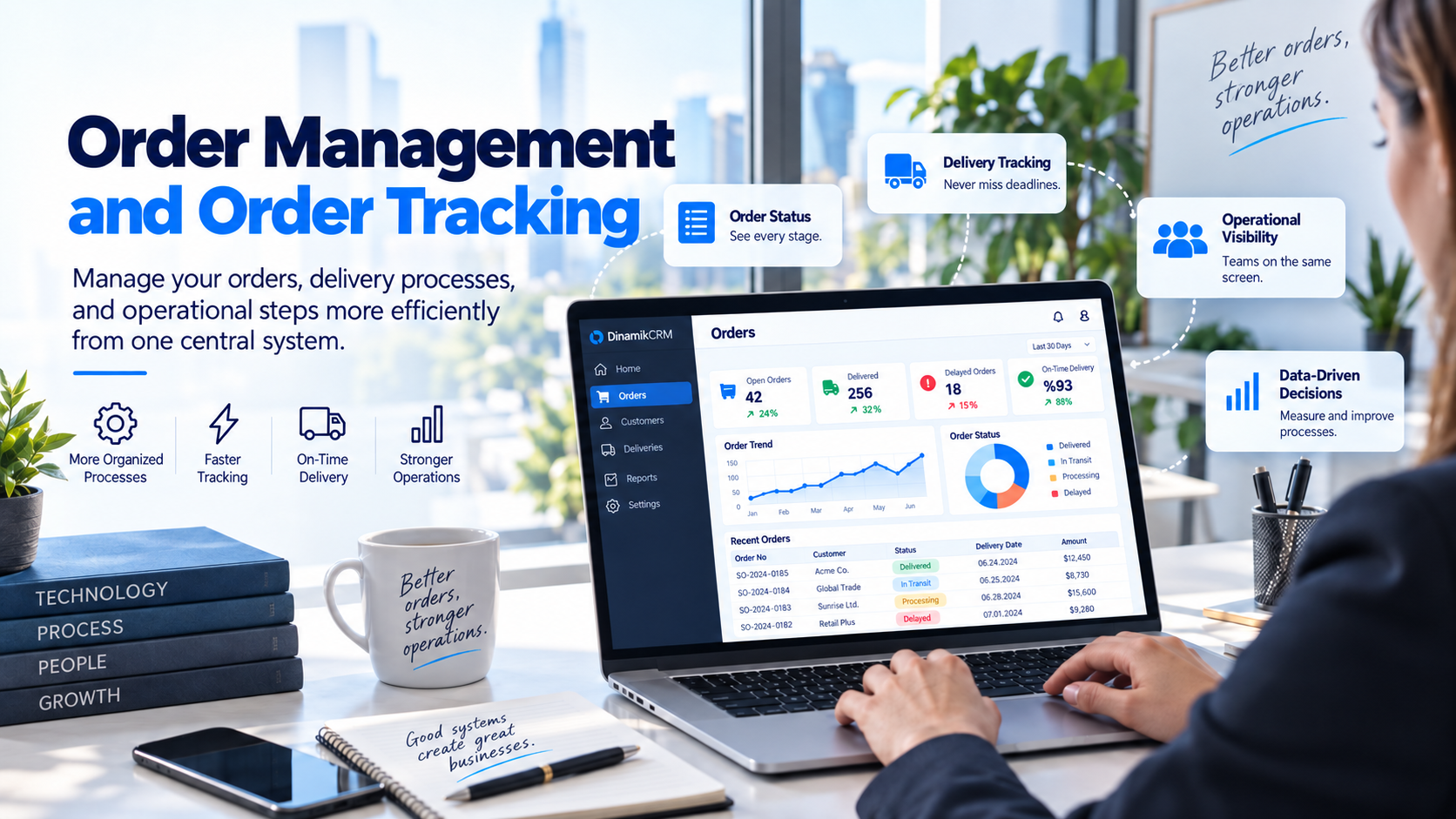
Learn what order management is, how orders move from sales to delivery and how businesses can track customer orders more effectively.
View content
Learn what dealer management is and how businesses can manage dealer records, sales, customers, orders, targets and performance across a dealer network.
View content
Learn what AI-powered CRM is and how artificial intelligence can support sales analysis, reporting, pipeline evaluation, voice input, business card conversion and CRM assistance.
View content
Learn what CRM reporting is, how to create custom reports, and how filtering, grouping, calculations, charts and AI-assisted analysis can help businesses understand CRM data.
View contentTry DinamikCRM free for 14 days. Get started without installation and test it with your team using your real business processes.