
What Is CRM?
Discover what CRM systems mean for businesses and how they support business processes.
View contentDiscover CRM guides, training videos, frequently asked questions and product resources in one place.
Discover what CRM systems mean for businesses and how they support business processes.
View content
Explore the key criteria to consider when choosing a CRM, from ease of use and integrations to automation and reporting.
View content
Discover how managing opportunities by sales stage helps teams measure performance and build a more predictable sales process.
View content
Learn how managing email, calls, SMS and customer history from one place can improve service quality and team productivity.
View content
Learn how automating repetitive work can save time, improve consistency and help teams manage customer processes more efficiently.
View content
Explore how digital tools can transform collection operations, from receivables portfolios and payment promises to work queues and automation.
View content
Discover how centralizing customer data can support sales, customer service, reporting, automation and stronger collaboration across your business.
View content
Explore common CRM mistakes sales teams make, from using CRM only as a contact list to working with outdated pipeline data, and learn how to improve adoption.
View content
Explore how AI can support file prioritization, risk analysis, payment promise evaluation and operational decision-making in receivables and collection processes.
View content
Explore what to prioritize during the first 90 days of a CRM project, from process design and data quality to user adoption and automation.
View content
Learn how connecting CRM with ERP, accounting and communication systems can improve data quality, team efficiency and the overall customer experience.
View content
Discover how current pipeline data, opportunity probabilities, close dates and activity history can help improve the reliability of sales forecasts.
View content
Explore how AI is transforming CRM by interpreting customer data, guiding sales teams, strengthening automation and helping businesses make faster decisions.
View content
Learn how incomplete, outdated or duplicate customer data can affect sales and service processes, and how to build a healthier CRM data structure.
View content
Discover how CRM can help manage the customer lifecycle more holistically, from the first opportunity and sale to post-sale service and long-term loyalty.
View content
Learn how to start using CRM, from organizing customer data and sales pipelines to tasks, follow-ups and reporting.
View content
Learn where to start with CRM training through customer management, sales processes, tasks, automation and reporting.
View content
Learn how to configure CRM software, from customer data and sales stages to team roles, follow-ups, automation and reporting.
View content
Explore the key factors that influence CRM pricing, including users, features, integrations, automation, implementation and support.
View content
Learn how businesses capture, evaluate, assign, follow up and convert potential customers into qualified sales opportunities.
View content
Learn how sales opportunities can be managed through stages, expected values, close dates, activities and performance metrics.
View content
Explore the core modules of a CRM system, including customer management, sales, planning, customer service, reporting and integrations.
View content
Learn what a potential customer means, how the concept relates to leads and how potential customers can be evaluated throughout the sales process.
View content
Learn what analytical CRM means, how customer and sales data can be analyzed and how this approach supports better business decisions.
View content
Explore the key steps that can help teams adopt CRM more consistently, improve data quality and make CRM part of everyday customer and sales workflows.
View content
Learn how CRM reporting can help businesses understand customer, sales, pipeline, activity and team performance data.
View content
Explore practical ways to find potential customers through digital channels, referrals, events, direct outreach and structured lead management.
View content
Learn what customer segmentation means, which criteria can be used to group customers and how CRM data can support a more structured segmentation process.
View content
Learn what customer satisfaction means, which factors influence it, how it can be measured and how CRM processes can support more consistent customer experiences.
View content
Learn how CRM can help businesses manage post-sales requests, communication history, follow-up tasks and customer service processes more consistently.
View content
Learn how CRM software can support sales processes through lead tracking, opportunity management, pipeline visibility, follow-up tasks and reporting.
View content
Learn how field sales teams can use CRM to manage customer visits, tasks, opportunities, meeting notes and follow-up activities more consistently.
View content
Explore common customer expectations such as speed, clear communication, convenience, personalization and trust, and how CRM can help teams manage them more consistently.
View content
Learn the key principles of clear, consistent and trustworthy customer communication and how CRM can help teams maintain better customer context.
View content
Learn how CRM can support customer relationships through shared history, communication tracking, follow-up, complaint management and post-sales processes.
View content
Explore the key elements of digital customer relationship management, including data, processes, teams, CRM adoption and reporting.
View content
Learn how CRM can help B2B sales teams manage proposals, opportunities, follow-up activities and proposal outcomes more consistently.
View content
Learn how businesses can balance new customer acquisition with retention and how CRM can support both sides of the customer lifecycle.
View content
Learn how SMEs can use CRM to manage customers, sales, tasks and follow-up more consistently and how CRM can support digital transformation.
View content
Discover why human interaction, trust and personalized communication remain important in customer experience in the age of digitalization and AI.
View content
Learn how CRM helps businesses manage leads generated through digital marketing and strengthen segmentation, follow-up and sales processes.
View content
Discover practical ways to improve information flow, increase task visibility and create stronger collaboration across teams and customer processes.
View content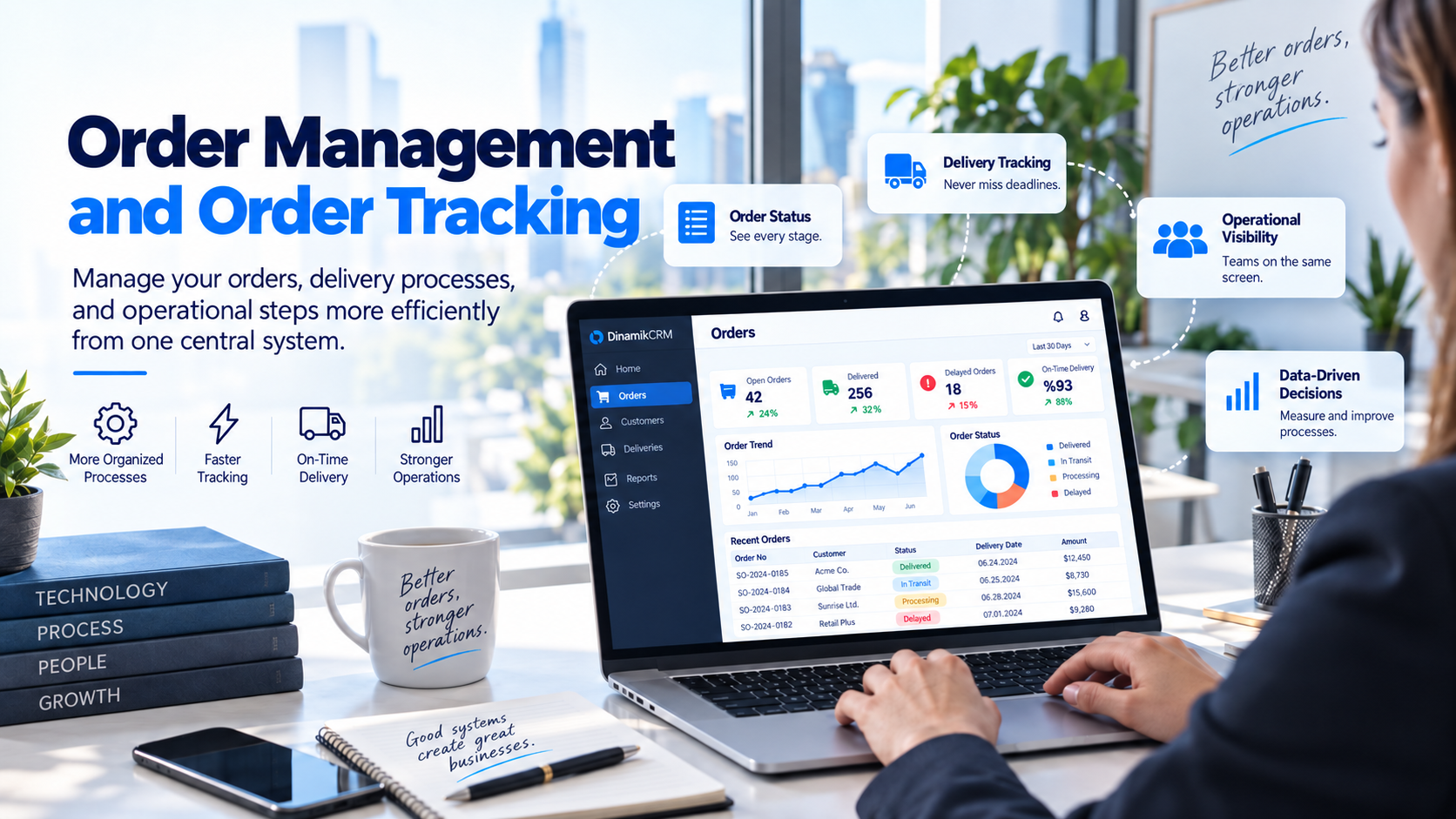
Learn what order management is, how orders move from sales to delivery and how businesses can track customer orders more effectively.
View content
Learn what dealer management is and how businesses can manage dealer records, sales, customers, orders, targets and performance across a dealer network.
View content
Learn how KOSGEB support programs may relate to software, cloud software and digital transformation investments, and what businesses should verify before planning a CRM investment.
View content
Learn what pre-accounting is, which day-to-day financial processes it covers, and how businesses can track cash, bank accounts, income, expenses, invoices, collections, receivables and payables more systematically.
View content
Learn what AI-powered CRM is and how artificial intelligence can support sales analysis, reporting, pipeline evaluation, voice input, business card conversion and CRM assistance.
View content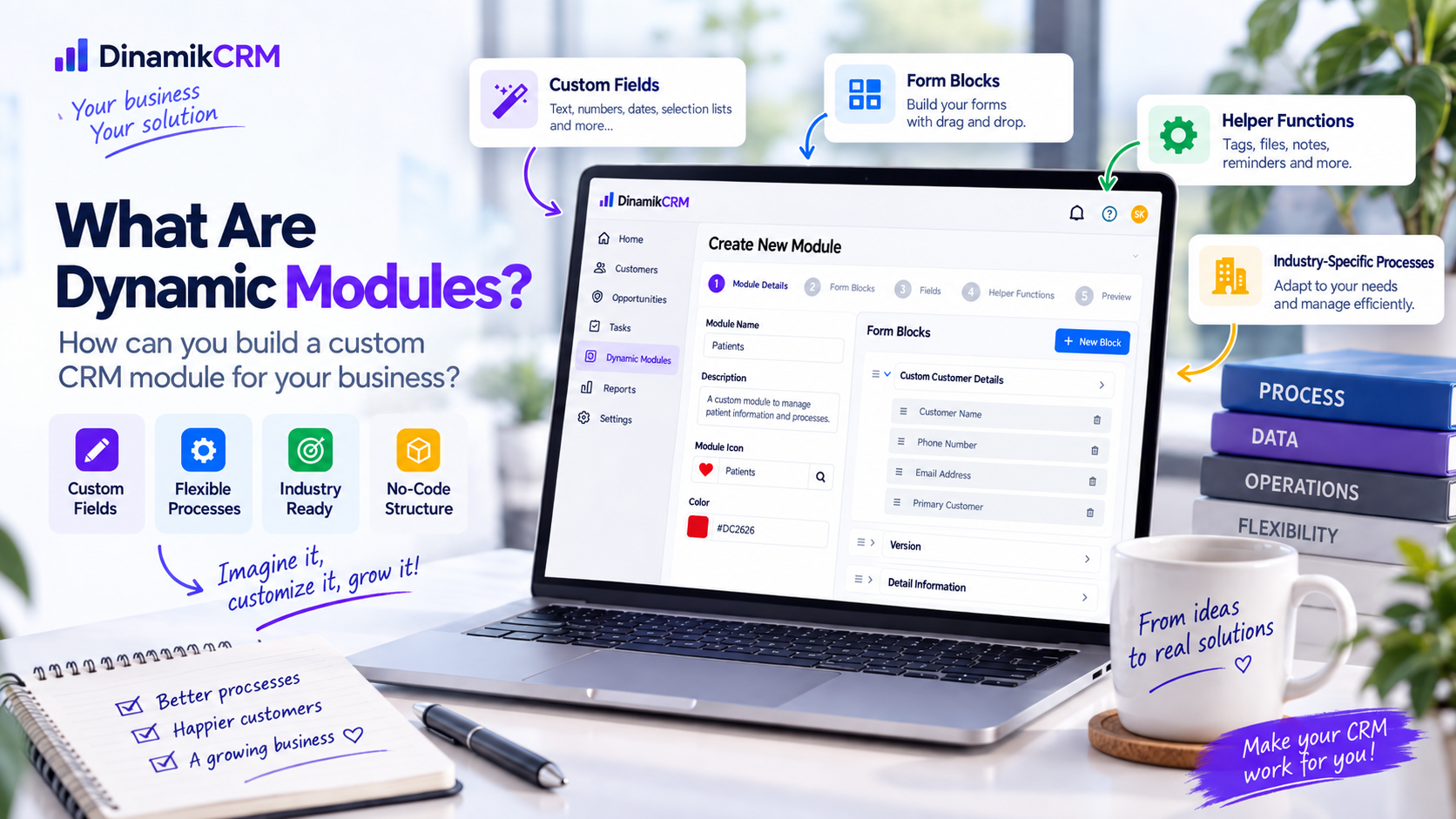
Learn what Dynamic Modules are, how to build custom CRM modules and fields, and how businesses in different industries can bring their own workflows into CRM.
View content
Learn what CRM reporting is, how to create custom reports, and how filtering, grouping, calculations, charts and AI-assisted analysis can help businesses understand CRM data.
View contentTry DinamikCRM free for 14 days. Get started without installation and test it with your team using your real business processes.